
How AWS Transform Custom Code Capability Tackles Tech Debt

Amazon Web Services has expanded its AWS Transform service with custom code modernisation capabilities that it says allow organisations to accelerate the transformation of legacy applications.
The announcement, made at AWS re:Invent, introduces AWS Transform custom capability alongside full-stack Windows modernisation features aimed at addressing technical debt challenges facing enterprise IT teams.
“Organisational time and resources get spent on all these modernisation projects, what we call tech debt,” says Dr Asa Kalavade, Vice President of Migration and Modernisation at AWS. “It’s not just about the old projects that you need to modernise, it’s about keeping your current projects up to date, and these cost time and money.”
The additions aim to resolve a choice organisations currently face: continue to maintain legacy systems or pursue innovation? “Previously, customers would tell us, ‘Hey, I have all this tech debt, and I could either keep making that tech debt go away, spending 30% of my resources, which takes away from innovation, or I could just focus on innovation and not take care of the tech debt,’” Asa says. “But guess what? This tech debt doesn’t go away. That’s why we call it debt – it keeps building up over time.”

Since launching in May 2025, AWS says Transform has processed over 1.1 billion lines of mainframe code and saved more than 810,000 hours of manual effort across hundreds of customer deployments. The service initially focused on VMware systems, mainframes and .NET applications, achieving transformation speeds four times faster than manual approaches.
AWS Transform aims to modernise organisation-specific code
AWS says the new capabilities in Transform enable organisations to modernise code written in company-specific programming languages and frameworks alongside standard upgrades for Java, Node.js and Python.
Air Canada has already deployed the service to modernise thousands of Lambda functions within days, achieving an 80% reduction in expected time and cost compared to manual migration.
QAD, which provides cloud-based solutions for manufacturers, has integrated AWS Transform into its upgrade process for customers moving to the company’s Adaptive ERP platform. “Modernisations that used to take two weeks now take just three days, driving 60%-70% productivity gains and saving more than 7,500 developer hours a year,” says Sanjay Brahmawar, Chief Executive Officer of QAD. “We’ve already processed more than 180,000 lines of legacy code with exceptional accuracy and the agent improves with each project.”
Full-stack Windows modernisation addresses licensing costs
AWS Transform now also handles complete Windows environment modernisation, including .NET applications, SQL Server databases, user interface frameworks and deployment layers. The service analyses the entire Windows stack before proposing coordinated modernisation plans across all components.
Once approved, the transformation agent processes the application code, UI framework, database and operating system while providing progress updates and detailed summaries.
“Our initial success with AWS Transform, modernising 800,000 lines of code in just two weeks, demonstrated that we could transform massive codebases in weeks instead of months,” says Bobby Land, Chief Product and Technology Officer at Teamfront.
Teamfront now uses the service to migrate from SQL Server to PostgreSQL while simultaneously transforming applications, accelerating modernisation across its portfolio of field service software companies.
Thomson Reuters, meanwhile, applied the Windows modernisation capability to move from proprietary systems to open source alternatives. The organisation now migrates 1.5 million lines of code per month using the AI-powered automation, achieving 30% lower costs and reducing its technical debt by 50%.

Enhanced mainframe and VMware capabilities expand transformation scope
AWS Transform has added capabilities for mainframe modernisation that cover activity analysis, business rule extraction and technical documentation. Three new agents produce blueprints for reimagining legacy code into business functions, alongside domain decomposition features.
Additional task agents automate test planning and validation by generating test plans, data collection scripts and automation scripts: activities which traditionally consume up to half of mainframe modernisation project timelines.
For VMware environments, the service includes an experience that handles the entire process from assessment to deployment. An on-premises discovery tool covers security reviews and inventory discovery, whilst a migration planning agent works with unstructured inputs like documents and business rules.
“We really envision Transform to be this one place, which is an IT transformation workbench,” Asa says. “You can start with using the VMware agent, move your VMs to the cloud using Transform. Some of those VMs might have Windows applications on them, so you can now use the Windows full-stack modernisation to move those Windows applications to a modern stack.”
Company portals

Executives
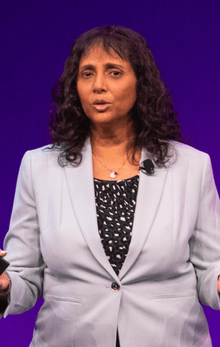
Asa Kalavade
VP, AWS Transform