
How Bumble’s AI Is Changing Dating
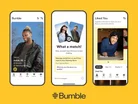
Last year, a Forbes survey found that 78% of singles were feeling “burnout” from dating apps – a trend that’s led to noticeable slowdowns across major platforms.
To reinvigorate user engagement, many companies are turning to advanced technology to reshape the digital dating experience.
Bumble is the latest to innovate, rolling out an AI-driven assistant designed to act as an “AI wingman” and matchmaker.
Its new Bee AI agent sits at the core of a pilot programme expected to fuel user growth – and potentially mark a pivotal moment for the industry as dating apps face slowing revenues and waning Gen Z interest in traditional swipe mechanics.
The mechanics behind the matchmaker
So, how does Bee work?
Bee interacts with users through private onboarding chats, gathering insights into their values, relationship goals, communication styles, lifestyles, and dating intentions.
It then analyses this input to recommend compatible matches, generating concise summaries that explain key alignments.
The system gives users full control over what information is shared, blending AI-driven matchmaking with privacy and user autonomy at its core.

To achieve this, Bee operates as a custom-built AI model – distinct from generic chatbots – that integrates natural language processing (NLP) to enable deep user profiling during private onboarding conversations.
It analyses user inputs on values, relationship goals, communication styles, lifestyle preferences, and dating intentions to generate semantic user embeddings – vector representations that capture nuanced compatibility beyond surface-level markers like photos or bios.
Bee’s matching engine uses machine learning algorithms to calculate similarity scores between embeddings, only alerting users when compatibility thresholds are exceeded.
Crucially, users maintain full control over their data: they can choose which conversation-derived insights are shared, with privacy safeguarded through on-device processing or federated learning to reduce server-side data retention.
Bumble is also preparing to pilot a new AI-driven dating experience called Dates.
True to its name, Dates – powered by Bee – connects matched pairs directly, without the need for public profiles or initial message exchanges.
Bumble’s Founder and CEO Whitney Wolfe Herd says the aim of Dates is to “remove some of the emotional friction that really sits between matching and meeting”.
She adds: “We don't see AI as a gimmick layer on top of swiping. It really needs to be an infrastructure for better relationships.
“It should not just be a chatbot layered on top of something.”
The business impact
Bee was unveiled during Bumble’s Q4 2025 earnings call, serving as the centrepiece of what the company is branding as Bumble 2.0.
In the same announcement, Bumble reported quarterly revenue of US$224.2 million – down 14.5% year-on-year but exceeding analyst expectations.
The platform’s paying user base reached 3.3 million, with average revenue per paying user (ARPPU) rising 7.9% to US$22.20.
Following the launch news, Bumble’s shares climbed more than 40%, marking a sharp recovery from earlier declines.
Ethical data handling at Bee’s core
Bumble has embedded user privacy at the core of Bee’s design, ensuring that all onboarding conversations remain strictly confidential and never appear on public profiles.
Users retain full control over data disclosure, choosing which derived insights – such as shared values or lifestyle preferences – are visible to potential matches.
This approach aligns with GDPR requirements and emerging AI ethics standards.
Bee employs ephemeral data processing, generating temporary semantic embeddings for compatibility matching without long-term server storage.
This design significantly mitigates breach risks while maintaining transparency and user trust.
“Daters across the industry are dissatisfied with being reduced to images and potentially dismissed with a swipe.
“Bumble 2.0 introduces a chapter-based structure designed to help members tell their stories more authentically and understand one another more deeply.”
Company portals

Executives
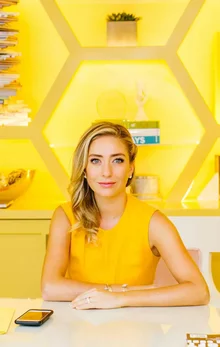
Whitney Wolfe Herd
Founder and CEO