How Formula 1 Tech is Boosting Train WiFi Connectivity
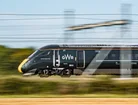
Formula 1 technology is helping supercharge train Wi-Fi.
But how is tech behind the highest class of worldwide racing changing internet connectivity for people on the move?
The tech turns a slow, frustrating experience into a seamless connection for passengers by adapting techniques that already keep racing teams connected at 200mph.
Railway networks – which operate at similar top-end speeds – are now trialing hybrid connectivity solutions for fast-moving trains that cover both urban and countryside routes, promising to transform passenger expectations for onboard internet.
Tapping into motorsport’s drive for reliability and speed
When you think of F1, what springs to mind? A relentless pursuit of speed? High-pressure precision?
F1 teams are renowned for their precision engineering, but behind the scenes, their ability to maintain stable communications throughout races is equally vital.
During Grand Prix weekends, F1 cars rely on advanced antennas, robust wireless networking and split-second switching between multiple connectivity sources.
These techniques are now migrating to rail.
In a UK pilot, Great Western Railway (GWR) has equipped a 125mph Intercity Express Train with a composite system, blending ground-based mobile signals and low Earth orbit (LEO) satellites.

GWR is working in conjunction with Peninsula Transport and Motion Applied (formerly McLaren Applied), as well as Network Rail and Hitachi to trial the new technology.
The tests commenced in mid-November and will last for around two months.
The approach – inspired by F1's dynamic beamforming and diversity antennas – hopes to solve the decades-old conundrum of sustaining high-speed internet as trains pass through rural areas and signal blackspots.
How does it work?
The hybrid system leverages trackside 5G infrastructure, sending focused connectivity beams – much like F1’s ‘pencil beam’ radio – to actively target trains as they zip by.
As GWR’s pilot rolls out, antennas mounted along the track communicate with those fitted at focal points on the train itself, switching to satellite relay whenever terrestrial signals dip.
The continual handoff is crucial for eliminating the notorious dead zones.
Councillor Dan Rogerson, Lead Member for Rail on the Peninsula Transport Board, says: “This is a major milestone in our mission to modernise transport infrastructure across the South West and South Wales.
“It’s not just about passenger Wi-Fi, this is about a whole new digital backbone for our transport networks.”
Nick Fry, Chairman of Motion Applied, adds: “Motion Applied recognised that rail networks have struggled with onboard WiFi for customers and we have used technology originally developed for F1 cars to reliably connect a fast-moving vehicle by reducing signal dropouts and seamlessly switching cell networks.
“The challenges faced in transmitting data to and from a fast-moving train have many parallels with motorsport and the application of our industry-leading data link aggregation systems specifically tailored to the unique demands of rail will provide an improved customer experience using racing technology.”
Is this the future of rapid rail connectivity?
Rail operators taking a leaf out of F1’s marks a step change for public transport – delivering reliable, high-speed Wi-Fi via motorsport-proven antenna systems, hybrid relays and real-time switching.
For railway passengers and tech leaders alike, could the end of sub-par train connection finally be in sight?
Company portals




Executives
Nick Fry
Non Executive Chairman