
How HP Balances Cybersecurity and Supply Chain Strength
Across the globe, companies continue recalibrating their procurement strategies amid ongoing market disruption.
While many enterprises are striving to diversify supply chains and lessen dependency on Chinese manufacturing, HP stands out as one of the few actively strengthening its sourcing footprint in the region.
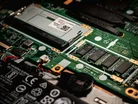
As the semiconductor landscape evolves, Chinese producers are seeing a surge in demand for advanced memory chips.

A market shortage
HP is a technology company committed to designing products that contribute to a better world.
It places responsible sourcing at the forefront of its operations, focusing on climate action, human rights and digital equity.
Through technological innovation, HP aims to drive meaningful progress – recognising that transformative ideas can emerge from anywhere.
Now, the company is diversifying its memory chip procurement towards Chinese manufacturers after years of depending on suppliers across the US, South Korea and Taiwan.
HP is among four major tech firms exploring this strategic pivot amid an ongoing global chip shortage.
The surge in AI applications has intensified pressure on data centres, which are consuming memory chips at record levels – rapidly depleting inventory from leading US suppliers such as NVIDIA.
Semiconductor giants Samsung, Micron and SK Hynix – which together control 90% of the DRAM market – have redirected much of their production capacity to high‑bandwidth memory (HBM) for AI‑driven infrastructure.
This escalating demand has triggered sharp price spikes across the sector.
One DRAM variant alone surged 75% between December and January, prompting widespread product price increases.
In response, consumer electronics companies like HP and Samsung are implementing new sourcing strategies to cushion the impact of tightening global supply.
“We stand at the cusp of something that is bigger than anything we’ve faced before,” says Tim Archer, Chief Executive Officer at Lam Research Corp.
“What is ahead of us between now and the end of this decade, in terms of demand, is bigger than anything we’ve seen in the past and, in fact, will overwhelm all other sources of demand.”
Diversifying sourcing
HP has begun qualifying DRAM chips from ChangXin Memory Technologies (CXMT), a process that involves rigorous testing of each component to verify performance and quality against HP’s strict standards.
Dell is currently in the same evaluation phase, while Acer and Asus have instructed their Chinese manufacturing partners to begin sourcing domestically produced memory chips.
This shift in market direction toward China – at a time when many global companies are distancing their supply chains from the region – highlights where future growth and innovation potential may lie.
CXMT, China’s leading memory‑chip manufacturer, recently completed a US$4bn share offering, building on a series of major technological breakthroughs that signal its rising influence in the global semiconductor market
Although entering the qualification phase doesn’t guarantee HP will adopt CXMT chips, the Chinese manufacturer represents a potential lifeline for PC producers navigating ongoing supply pressure.
If market constraints and elevated prices persist, HP may look to CXMT as a viable alternative – particularly for its non‑US operations.
The prolonged chip shortage has also elevated the role of Chinese electronics contract manufacturers within the global supply chain, as more brands encourage partners to broaden their sourcing base.
Acer, for instance, has steadily increased its reliance on Chinese contract manufacturers over the years to reduce production costs – and has shown growing openness to integrating Chinese‑made memory chips into its devices.
More risk mitigation
In addition to safeguarding its supply chain from future shortages, HP is also fortifying its cybersecurity posture by renewing its multi‑year partnership with Karamba Security.
Under this agreement, the company will continue deploying Karamba’s XGuard cybersecurity software across its portfolio of printer products.
The protection extends to HP’s networked and cloud‑connected printers, which include firmware that can serve as potential entry points for cyberattacks.
Throughout 2025, cyberattacks became a major threat to global enterprises, driven by accelerated digitalisation and the widespread adoption of AI.
This increasing dependence on connected firmware created new vulnerabilities, with numerous supply chains disrupted by cyber incidents over the past year.
By renewing its cybersecurity agreement and diversifying its sourcing strategy, HP is taking proactive steps to strengthen supply chain resilience under the guidance of its procurement teams.
With a data‑driven approach to monitoring market shifts, the company is reducing exposure to both component shortages and price volatility while assessing new, reliable supplier opportunities.




Executives

Tim Archer
President and CEO