What Huawei Pangu 5.5 Models Mean for Industrial AI
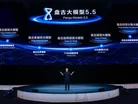
Huawei Cloud has released Pangu Models 5.5, a 718-billion parameter AI platform that marks a departure from general-purpose language models by focusing on industrial applications. The platform has been deployed across more than 500 scenarios in over 30 industries, according to company data presented at the Huawei Developer Conference 2025.
Zhang Ping’an, Executive Director of Huawei and CEO of Huawei Cloud, positioned the release as addressing specific industrial challenges that general AI models struggle to handle effectively.
“Pangu Models help customers tackle the most challenging issues in their specific scenarios and reimagine both operations and efficiency across numerous industries,” Zhang says.
The platform builds on Huawei’s original 200-billion parameter Chinese language model launched in July 2021, tripling the parameter count whilst adding capabilities designed for manufacturing, agriculture, and scientific research environments.
Huawei Pangu 5.5 uses mixture of experts architecture
The system employs a mixture of experts architecture featuring 256 specialists, allowing it to switch between processing approaches based on problem complexity. Huawei Cloud claims this delivers an eightfold improvement in model inference efficiency compared to previous versions.

The platform handles five data types: natural language processing, computer vision, multi-modal processing, prediction and scientific computing.
The Pangu-Weather model gained recognition after being made available on the European Centre for Medium-Range Weather Forecasts website in August 2023, where it reportedly outperformed traditional numerical weather prediction methods.
Industrial applications present different challenges to consumer AI systems. Manufacturing environments require processing multiple data streams simultaneously, whilst agriculture and scientific research demand domain-specific knowledge that general models lack.
Chinese organisations report productivity gains from Pangu deployment
The Chinese Academy of Agricultural Sciences developed its Agricultural Scientific Discovery Model using Pangu foundation models trained on professional literature and cross-species multi-omics data. CAAS researchers achieved a 25% reduction in rice plant height compared with conventional strains whilst maintaining yield levels and improving lodging resistance.
Conch Cement uses the platform to predict three-day and 28-day clinker strength, enabling the incorporation of solid waste including urban construction waste into raw material mixtures whilst maintaining cement quality standards. China National Petroleum Corporation built the Kunlun Large Model based on Pangu, deploying it across more than 100 professional fields. In equipment manufacturing, the model detects defects such as porosity and microscopic cracks in oil pipelines with sub-millimetre precision, delivering 40% higher identification efficiency and reducing manual workload by 25%.
Guangzhou Automobile Group collaborated with Huawei Cloud to achieve pixel-level mapping between videos and point clouds for autonomous driving development. The system reproduces corner cases in complex scenarios within minutes, supporting model iteration with version updates completed in two days. Weather services have implemented Pangu-based forecasting systems across China, with the Meteorological Bureau of Shenzhen Municipality upgrading the Zhiji Model for regional weather forecasting whilst Chongqing Meteorological Service built the Tianzi 12-hour Weather Forecast Model to enhance extreme weather warning capabilities.
Shenzhen Energy Group applies Pangu for wind and solar energy yield predictions, enabling more responsive power generation adjustments. These applications process domain-specific data, require high accuracy levels, and integrate with existing industrial processes.
Pangu Models 5.5 addresses industrial AI implementation challenges
The automotive application tackles a specific problem in autonomous vehicle development: gathering sufficient training data for unusual but critical driving scenarios. The Pangu World Model creates digital environments for intelligent driving scenarios, generating driving videos that simulate camera output and point cloud data that replicate lidar sensors. This eliminates the need for costly real road video collection whilst providing comprehensive training scenarios.

Computer vision applications within the platform address edge cases that traditional systems struggle with due to limited training data. Pangu generates synthetic samples for unusual but critical situations, expanding the range of scenarios the system can handle.
The Pangu Prediction Model uses triplet transformer unified pre-training architecture to process table data from manufacturing parameters, time series data from device logs, and image data from product inspections within a single framework. This unified approach reduces system complexity for organisations handling multiple data types.
Huawei has built foundation models that can be adapted for specific industry requirements rather than developing separate systems for each use case. This approach reduces implementation costs whilst maintaining sector-specific functionality.
“Pangu Models 5.5 have been fully upgraded to deliver new value for industries,” Zhang says.
Explore the latest edition of Technology Magazine and be part of the conversation at our global conference series, Tech & AI LIVE.
Discover all our upcoming events and secure your tickets today.
Technology Magazine is a BizClik brand