How Nvidia's New AI Chip Focuses on China Amid Tech Tensions
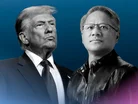
Nvidia has reportedly introduced a new AI chip designed specifically for the Chinese market, aligning its strategy with evolving geopolitical tech tensions.
The development of the B30A chip seeks to enhance computational capabilities in China despite persistent hurdles in US-China relations concerning tech exports.
The B30A, built on Nvidia's advanced Blackwell architecture, is engineered to surpass the H20 model available in China.
It represents Nvidia's strategic response to possibly amplified regulatory flexibility hinted at by US President Trump, who may authorise Nvidia to serve more sophisticated chips to the Chinese market.
Despite potential opportunities, the company faces the complexity of securing regulatory consent, a reflection of the significant hesitancy in Washington regarding AI technology sharing with Beijing.
Inside B30A’s design, purpose and impact
Nvidia's latest B30A chip showcases a consolidated approach by utilising a single-die structure that integrates the processor's elements on one silicon piece.
Although this results in approximately half the computational power compared to Nvidia's B300, it still offers a significant upgrade over the current H20.
The aim is to introduce initial samples of the B30A for evaluation in China shortly, although specifications are still being finalised.
“We evaluate a variety of products for our roadmap, so that we can be prepared to compete to the extent that governments allow,” the company says in a statement.
“Everything we offer is with the full approval of the applicable authorities and designed solely for beneficial commercial use.”
- Blackwell architecture
- Single-die design
- Performance boost
- High-Bandwidth Memory (HBM)
- NVLink support
- AI versatility
- CUDA ecosystem lock-in
The B30A will feature high-bandwidth memory and Nvidia's NVLink technology, facilitating efficient operation among multiple chips during demanding AI tasks.
This technology is critical as it supports both AI training and inference processes, thereby addressing the extensive needs of China's burgeoning AI industry, particularly in fields such as autonomous vehicles and translation systems.
Nvidia's robust software support further enhances the B30A's value, reinforcing its position through the CUDA platform that is pivotal in AI development.
This ecosystem loyalty challenges engineers to transition to competitors, promoting sustained reliance on Nvidia's offerings.
What does B30A and Nvidia’s development mean for the US?
Nvidia continues dialogues with US officials to secure a favorable position in US-China AI operations.
Commerce Secretary Lutnick acknowledges CEO Jensen Huang's efforts to navigate these discussions, stating: “Of course Jensen would like to sell a new chip to China,” referring to Nvidia’s CEO Jensen Huang.
“I’m sure he’s pitching the president all the time.”
He adds that he has witnessed the CEO’s presentations to Trump firsthand: “I’ve listened to him pitch the president – and the president listens to our great technology companies – and he’ll decide how he wants to play it.
“But the fact Jensen is pitching a new chip shouldn’t surprise anybody.”
Nvidia, which saw 13% of its revenue from China last year, recognises the market's crucial significance.
Still, there is bipartisan concern that easing technology sales might inadvertently empower China's AI advancements.
Trump is considering a version of the latest chips with reduced power for China while dismissing the H20 as outdated.
Nvidia's approach reflects a clear intention to sustain its competitive advantage in collaboration with US policies, thus reinforcing its market engagement.
The mounting global regulatory and competitive challenges
Nvidia, and similar enterprises, face intricate political landscapes when engaging the Chinese market.
The dialogue extends beyond policy to implications regarding the technological edge.
Efforts to regulate advanced semiconductor access are met with strategic considerations to maintain technological superiority over China.

To counter domestic alternatives, Nvidia's alignment with Chinese developers ensures the preservation of ecosystem involvement, challenging competitors like Huawei, which advances in hardware but lags in software capabilities.
Nvidia's efforts to mitigate perceived security risks, underscored by state media suggesting chips could present security threats, reveal the multifaceted challenges in the market.
Additionally, Nvidia prepares to introduce another chip model, the RTX6000D, aimed at less rigorous tasks, which complies with export guidelines, showing adaptable innovation within regulatory frameworks.
Nvidia's approach showcases resilience against expansive regulatory complexities and advancing international technological competitiveness.