How SAP’s Green Ledger Turns Carbon Emissions into Data

Enterprise technology is transforming sustainability, turning it from a compliance exercise into measurable and actionable metrics that align with business targets and tightening global regulations.
SAP’s green ledger integrates carbon emissions tracking directly into S/4HANA ERP, capturing Scope 1, 2 and 3 emissions data alongside financials to deliver product carbon footprints, making decarbonisation part of core operations, rather than an afterthought.
By using product carbon footprints (PCFs) as the core unit, data from smart meters, supplier platforms such as SAP Ariba, transport logs and other operational systems flows into what SAP calls structured “green” accounts that can be sliced by cost centre, business unit or SKU.
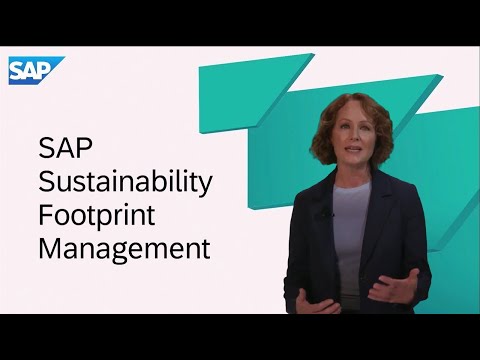
This data model unlocks a more granular view of emissions than traditional CSR tooling can offer.
Take the production of a bicycle, for example. Each product component – from materials to labour and licensing to overhead and shipping – has both a financial cost and a corresponding emission value.
- Direct materials: 1.5 tonnes CO₂e
- Direct labour (commuting emissions): 0.5 tonnes CO₂e
- Licensing (IP): 0.5 tonnes CO₂e
- Overhead emissions (factory and admin): 1.3 tonnes CO₂e
- Shipping: 2.5 tonnes CO₂e.
Powering sustainability with data
Every component of the build has a monetary cost and associated CO₂e figure.
SAP’s system can distinguish roughly 0.6 tonnes of Scope 1 and 2 emissions from 5.5 tonnes of Scope 3 per unit, giving product teams and procurement a precise map of where interventions will have the biggest impact.
Emissions from direct operations, purchased power and upstream supply chains can be logged and disclosed with full granularity using SAP, bridging gaps that corporate IT systems struggle to deliver when it comes to both compliance-grade reporting and real-time strategic insights.
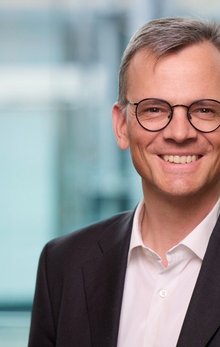
“By integrating PCFs into ERP systems like SAP S/4HANA, companies can assess and manage emissions at the transaction and product level, linking environmental data with financial metrics,” says Dominik Asam, Chief Financial Officer at SAP and Co-Author of SAP’s article, How Carbon Accounting Supports Corporate Decarbonisation.
“This enables the path to a green ledger, where carbon is treated with the same rigour as money in corporate decision-making. At SAP, this approach reflects our commitment to embed PCFs into core enterprise systems and elevate them as a strategic lever for both compliance and transformation.”
Gunther Friedl, Managing Director of Dieter Schwarz Stiftung, Professor and Former Dean at TUM School of Management and Co-Author of the article, adds: “The key to real progress in corporate decarbonisation lies in a familiar place: the company’s financial systems. A robust green ledger, treating environmental impact like money, could be the game-changer for aligning strategy, compliance (CSRD, SEC) and sustainability.”
SAP’s approach demonstrates how the development of carbon reporting will depend on how seamlessly carbon data flows across clouds, suppliers and partners.
The next and broader challenge lies in integrating that data model into connected ecosystems – from IoT-enabled factories to AI-driven procurement.
As platforms open interfaces to climate data, enterprise technology will not just measure sustainability – it will engineer it.
Did you know?
Company portals
Executives
Dominik Asam
Member of the Executive Board, CFO