
How ServiceNow Transformed Aston Martin F1 Operations

Formula One teams operate at a pace that few industries can match, with Aston Martin Aramco Formula One Team (AMF1) competing in 24 races per year while developing technology within strict regulations that govern everything from chassis specifications to tyre management.
In this environment, IT operations that might seem mundane elsewhere can become genuine performance differentiators.
Fabrizio Pilotti, CIO at Aston Martin Aramco Formula One Team, explains how these regulations fundamentally shape technology decisions across the organisation.
“What drives you forward is through the regulations,” Fabrizio says. “The rules are set by the FIA for each season, so this framework is different because the framework and the rules are pushed out and we interpret them.”
These constraints create workflows that require sophisticated data management, particularly around areas like tyre testing where physical testing isn’t feasible for every scenario.
“You may use laser measurement tools to accrue data for machine learning tests, because we don’t physically test tyres in the same way each time,” Fabrizio says.
Each process relies on tools that collect information for analysis, creating dependencies that demand both visibility and coordination.
Yet until recently, the team was running many of these operations on paper.
When Sioned Edwards joined as IT Operations Director, she discovered 15 people supporting a growing organisation without established processes or digital management tools.
Equipment provisioning was taking three months, staff onboarding was happening through forms passed between departments and performance metrics existed only as stacks of paper.
Building digital infrastructure from scratch
The team turned to ServiceNow to build operational foundations, starting with the basics rather than chasing advanced capabilities.
The company releases two platform updates annually, each containing between 600 and 700 features and has developed AI agents that customers can deploy immediately to handle repetitive work.
“We’ve got thousands of agents that deal with the mundane, repeatable, error-prone work that humans no longer want to do,” Paul says.
“We want to go and do the things that add real value back to a business.”
Max Eversfield, Solution Consulting at ServiceNow, worked directly with Aston Martin during implementation.
He needed to understand how time matters differently across roles within an F1 organisation.
“It’s a huge team that all have a particular role within this,” Max says.
“We need to understand the pain points these people have, the challenges around saving those milliseconds.”
The team began with joiners, movers and leavers processes to digitise employee onboarding and equipment provisioning, transforming a three-month timeline into three days.
“Two or three years ago, that was done on a piece of paper, which is wild today in an organisation in the 2020s,” Sioned says.
“We automated that process so that when we get a new joiner, we have the right equipment with the right department within three days.”
Paul says this foundational work is necessary before scaling into other business areas.
“It’s about getting this right, simplifying the way they work, taking time to understand what platforms are delivering value,” he says.
“This foundation is important for all our customers. It's where organisations really need to start.”
The implementation ran more smoothly than previous technology projects the team had experienced.
ServiceNow invested time understanding the organisational culture rather than simply deploying software.
“I’ve had my fair share of digital transformation projects, and they're hard work,” Sioned says.
“This is probably the cleanest one I’ve ever been involved in, and that's because they were part of us and understood our organisation.”
Visibility and cost control through automation
The ServiceNow platform created immediate financial impact through visibility into spending.
Managers could review equipment requests before approval and reject unnecessary purchases that would have passed through paper-based systems.
The team saved approximately £50,000 in the first quarter after implementation, money that could be redirected into developing the car.
The work expanded into IT service management, tracking resolution times, first-fix rates and department effectiveness through metrics that had been impossible to measure with paper records.
“Technology underpins the way they can deliver outcomes to the team,” says Max.
“Being able to have visibility of everything that goes on and the interconnection across that estate has been critical.”
ServiceNow's platform pulls information from ERP systems, CRM platforms and human capital management tools through what the company calls a zero-copy workflow data fabric, an architecture that avoids duplicating data whilst providing visibility across systems. The platform also integrates external AI providers from Google, Amazon and Microsoft whilst maintaining security controls.
“AI is a challenge, something everyone’s running at to try and achieve,” Max says. “We’re using that single platform to keep data models scalable and secure.”
Balancing innovation speed with operational controls remains challenging, particularly around embedding AI within workflows without creating friction.
“How do we put our hands around all the AI in the business, but also embed that within workflows?” Max says.
“That’s a key challenge, understanding how to operationalise it without putting friction with the rate and pace at which things are coming.”
Expanding beyond IT operations
The partnership is now expanding beyond traditional IT service management.
Travel operations represent one target, where moving hundreds of people to races worldwide requires coordination that manual systems cannot support.
“Years of partnerships with organisations allow us to think about not just traditional IT service management, but having that as a foundation of what we can do next,” Paul says, “and how we can drive the future, use AI across the organisation and leverage the platform to enable strategic changes.”
Max describes ongoing discussions with the team about where the platform can drive efficiency improvements.
“We’re working closely with them to leverage the platform in those areas,” he says.
“Where can we start to drive efficiencies and enhance what we’re doing today, and improve the efficiency of time that everyone spends on different tasks?”
The platform’s automation capabilities span a spectrum from basic approvals to full AI agents.
“It’s not one size fits all," Paul says. "When we’re delivering value, it’s iterative and it’s added value wherever we need to.”
Company portals


Executives
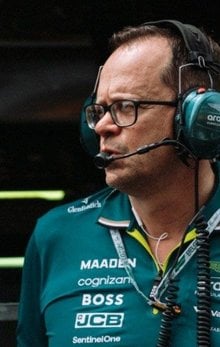
Fabrizio Pilotti
CIO at Aston Martin Aramco Formula 1

Paul Hardy
Innovation Officer, Chief Innovation Officer

Sioned Edwards
IT Operations Director