
Is Vogue's AI Model Use Sparking a Fashion Ethics Debate?
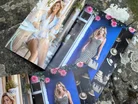
Gen AI has sparked cultural phenomena – from the Barbie doll trend and Ghibli character aesthetics to amusing videos turning celebrities into babies online.
Even Netflix is using Gen AI for the first time in its series The Eteranaut.
When it comes to technology, AI has been streamlining various processes across industries, improving business operations significantly.
However, the integration of AI in societal norms is raising concerns, particularly around its normalisation.
A pertinent issue arises around how society might begin to view these artificial creations as benchmarks, leading to the potential risk of regulations and risks escalating behind the façade of innovation.
Legal cases surrounding AI image generation are surfacing globally, prompting the creation of AI Acts aimed at harnessing AI's advancement while safeguarding affected individuals.
Vogue's introduction of an AI-created model in its August edition is the first time the publication has included an entirely artificial person in its pages.
What’s behind Vogue’s featured AI model?
Developed by tech firm Seraphinne Vallora, the blonde model wears pieces from Guess' summer line.
This initiative has ignited discussions in the fashion industry concerning the employment impacts and consumer perceptions tied to digitally fabricated images.
Despite a disclaimer labelling the model as AI-generated, criticisms have surfaced, particularly regarding the perpetuation of unrealistic beauty ideals and job security within the modelling sector.Seraphinne Vallora, founded by former architecture students Valentina Gonzalez and Andreea Petrescu, is pioneering in creating realistic human avatars for commercial purposes.
Their partnership with Guess began with an Instagram pitch, resulting in multiple AI models for the summer line, showcasing a tech-driven transformation in fashion marketing.
“We created 10 draft models for him and he selected one brunette woman and one blonde that we went ahead and developed further,” Valentina says, according to the BBC.
The process involves five employees and can take up to one month from conception to completion, with fees reaching six figures for major clients.
Seraphinne Vallora defending AI model technology amid industry pushback
Despite its innovative nature, the technology from Seraphinne Vallora has faced criticism from established models concerned about job displacement and the perpetuation of narrow beauty ideals.
Model Felicity Hayward, who has worked in the industry since 2011, says to the BBC: “Either Guess is doing this to create a talking point and get free publicity or they want to cut costs and don’t think about the implications of that.”
She warns that AI models represent “another kick in the teeth and one that will disproportionately affect plus-size models”.
However, Valentina and Andreea reject claims that their technology reinforces restrictive beauty standards. “We don’t create unattainable looks – actually the AI model for Guess looks quite realistic,” Andreea says.
“Ultimately, all adverts are created to look perfect and usually have supermodels in, so what we are doing is no different.”
The founders also acknowledge their Instagram content lacks diversity but attribute this to user engagement patterns. “We’ve posted AI images of women with different skin tones, but people do not respond to them – we don’t get any traction or likes,” Valentina says.
“At the end of the day, we are a business and use images on Instagram that will create a conversation and bring us clients.”
The AI split: Ethics vs innovation
The discourse on AI adoption in business extends beyond fashion, touching on global regulatory dynamics.
Former US President Joe Biden's AI regulatory measures contrast with President Donald Trump’s dismissal of “woke” ideologies in AI, pointing towards a division in AI developmental philosophies.
President Trump says: “The American people do not want woke Marxist lunacy in the AI models,” according to the Guardian.
“Once and for all, we are getting rid of woke. Is that OK?”
He said his predecessor Joe Biden had “established toxic diversity, equity and inclusion ideology as a guiding principle of American AI development”, the Guardian reports.
In Europe, tech giants are making pivotal decisions on the EU AI Act Code of Practice, with Meta’s Joel Kaplan cautioning the restrictive nature of the proposals.
He says "Europe is heading down the wrong path on AI” and warns the code would “throttle the development and deployment of frontier AI models in Europe and stunt European companies looking to build businesses on top of them”.
Meanwhile, the consequences of unregulated AI are becoming increasingly apparent — particularly with deepfakes, where hyper-realistic AI-generated images and videos have been crafted of individuals ranging from presidents to schoolchildren.
Mark Read, CEO of WPP, recently became a target when fraudsters created a fake WhatsApp account using his publicly available photograph.
“We have seen increasing sophistication in the cyber-attacks on our colleagues and those targeted at senior leaders in particular,” he says in addressing the attack.
Fashion industry grappling with AI adoption and worker displacement
While Guess' campaign suggests an economic push, Model Alliance's Sara Ziff emphasises the broader impact on jobs beyond modelling, affecting entire production teams traditionally involved in photo shoots.
“AI can positively impact the industry, but there need to be meaningful protections for workers,” Sara says.

Seraphinne Vallora disputes claims about job displacement, positioning its technology as supplementary rather than replacement. “We’re offering companies another choice in how they market a product,” Andreea says.
Sinead predicts AI opening avenues for bespoke fashion experiences, allowing users to envisage garments on personalised avatars.
However, she suggests public acceptance remains uncertain. “We may get to the stage of society opting out and not being interested in AI models because it’s so unattainable and we know it’s not real,” she says.