HPE-Led QSA Aims to Bring Practical Quantum Computers

Quantum computing could soon go mainstream.
HPE has announced it will be joining hands with seven other leading organisations to form the Quantum Scaling Alliance, to promote the mainstream adoption of quantum technologies.
The dream is to develop practical, mass producible, quantum computers by aligning quantum computing with the existing semiconductor ecosystem.
John Martinis, who won the Nobel Prize in Physics for his discoveries in the field of quantum mechanics, will be co-leading the alliance.
“Quantum computers hold the key to transforming industries through their unique ability to tackle intrinsically quantum problems,” John says.
“By harnessing quantum systems, we can achieve breakthroughs in areas ranging from semiconductor manufacturing to sustainable fertilizer production – solving challenges previously thought insurmountable.”
Oxford economics research revealed that the growing quantum technology in addition to improving productivity could add £212bn (US$279bn) to the UK economy alone.
What is the Quantum Scaling Alliance?
The Quantum Scaling Alliance is a consortium of organisations, each a leader in their field, formed with the mission to make quantum computing scalable, practical and impactful.
The founding members of the alliance are HPE, 1QBit, Applied Materials, Qolab, Quantum Machines, Riverlane, Synopsys and the University of Wisconsin.
Dr Masoud Mohseni, a distinguished technologist from HPE Labs will oversee the work of the alliance as the Quantum Systems Architect.
This collaboration will see the development of hybrid systems that integrate quantum capabilities in classical High-Performance Computing (HPC) and advanced networking.
The hybrid approach could open up new frontiers in scientific advancements, including drug discovery, materials research, optimisation and secure data processing.
It is also aimed at accelerating technologies to support post-quantum security challenges.
Dr Masoud Mohseni from HPE Labs says: “For quantum to succeed as a viable long-term computing paradigm, it must scale by integrating with classical supercomputing systems.
“The Quantum Scaling Alliance is offering a full-stack solution – a large partnership with horizontal integration that unlocks compute potential that is otherwise unachievable through a vertical approach.”
How are quantum supercomputers being built?
The Quantum Scaling Alliance’s aim of developing practical quantum computers stands on the solid grounds of the research headed by Dr Mohseni and his team.

They published the research paper How to Build a Quantum Supercomputer: Scaling from Hundreds to Millions of Qubits, which details comparatively cost-effective methods to get to mainstream quantum computing.
Research shows that adopting existing semiconductor technologies to develop higher quality qubits could pave the way towards scaling.
Rather than replacing classical computers as processors, the researchers say quantum computers could be co-processors that can compute specialised operations.
With many tech giants like IBM, Google and Microsoft constantly making breakthroughs in advancing quantum computing, and with the fresh new Quantum Scaling Alliance dedicated to the purpose, we could see quantum computing deployed for solving a barrage of previously unsolvable problems.
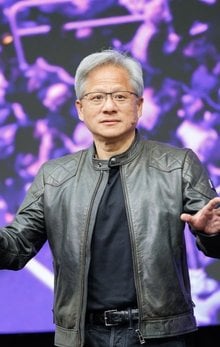
As Nvidia CEO Jensen Huang says, quantum technology might have truly reached its inflection point – and with practical scaling, we could all reap its rewards.
Company portals


Executives
Jensen Huang
Founder and CEO
Masoud Mohseni
Cofounder and Head of Emergent Machine Intelligence