Huawei Powers Integrated, Intelligent Global Supply Chains
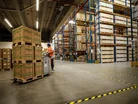
The global transport and logistics sectors are navigating a rapidly evolving environment, where technologies that once enabled only core functions are now driving complete transformation across port operations, air freight, rail infrastructure and warehouse management.
At the heart of this shift is Huawei, leveraging intelligent sensing, cloud platforms and AI to streamline operations, boost safety and help enterprises tackle persistent barriers around efficiency and cost.

Huawei’s SMART Logistics & Warehousing Solution is a key driver of this transformation, integrating advanced technologies to optimise every stage of the logistics and supply chain process.
Central to the solution is its 1+N architecture, which connects a single smart operations cloud with intelligent coordination across logistics parks and yards.
According to the company, this framework delivers seamless, end-to-end digital services for a diverse customer base, including corporate logistics teams and supply chain operators.
"Huawei is enabling a smarter, safer and more efficient future for transportation and logistics," says Dr Rachad Nassar, Huawei's Global Business & Strategic Partners Director.
"With its comprehensive ICT intelligent foundation and its innovative technologies, such as intelligent sensing, broadband connectivity, cloud-based digital platforms and AI, Huawei is turning concepts like Mobility as a Service and Logistics as a Service into reality – unlocking the full potential of digital intelligence."
AI, cloud and automation shape modern logistics
The logistics industry continues to contend with high operational costs and uneven levels of digital adoption, and Huawei believes the moment has come for intelligent reform.
Common pain points for logistics firms – ranging from high OPEX and fragmented data coordination to underutilised AI resources – are directly addressed through Huawei’s SMART Logistics & Warehousing Solution.
The platform delivers five core capabilities: platform-based services, digital operations management, intelligent resource allocation, automated cargo relocation and fully unattended transportation.
The solution incorporates secure data sharing via a trusted data space, accelerated document processing powered by Huawei’s Wukong intelligent recognition model, and optimised scheduling through an AI-driven planning engine. Logistics yards and parks also gain from expanded automation using intelligent machines.
Huawei highlights strong global adoption across infrastructure networks.
Its technologies are now deployed in more than 100 ports and more than 200 logistics and warehousing enterprises, as well as 300 urban rail lines across 70 cities, 180,000km of railways, 200,000km of road networks, 300 urban transport systems and upwards of 210 airlines and air traffic control organisations.
Ma Yue, Vice President of Huawei and CEO of Huawei’s Smart Transportation BU, emphasises that the company’s strategy continues to focus on aligning the right technologies with the most pressing industry challenges.
"By fitting the right technologies to increasingly diversified scenarios, the company helps optimise the flow of passengers, freight, businesses, revenue and information," he says.
He adds that Huawei continues to work on joint innovations in "communications networks, computing power, AI and talent cultivation to advance sustainable development of transportation".
Supply chains shift towards integrated intelligence
With traditional logistics models under pressure from evolving policy and global trade challenges, companies are finding new ways to adapt.
Guo Shuangqing, Assistant CMO of SF Technology, showcases the company’s air logistics platform, built on China’s first dedicated cargo airport.
Capable of processing terabytes of data with millisecond response times, the platform has successfully managed 1.9 million tonnes of cargo without a single switching error.
"SF Technology and Huawei will maximise respective strengths to expand capabilities in coordinating multiple airports, thus leading to a substantial efficiency increase across the entire air logistics sector," he says.
Kumpol Boonchom, Deputy Chief of State Railway of Thailand, shares the ambition to position Thailand as a regional transport hub, highlighting the Thailand–China Railway as a pivotal opportunity to develop strategic rail logistics capacity.
Moving beyond dockside operations
Ports are undergoing significant transformation as well.
Yang Bin, Chairman of Shandong Port Technology Group, describes the company’s evolution from a traditional port operator to a comprehensive supply chain service provider.
Leveraging Huawei’s technology, Shandong Port has deployed a digital infrastructure based on "one network, one cloud and one security system," maximising data centre reliability, supporting cloud platform rollout and ensuring stability across a 3,345-kilometre coastline.
Yang says that "convenient travel and smooth logistics capture the essence of port and maritime logistics," underscoring collaborative industry efforts to deliver smart port solutions that integrate physical assets and digital service layers.
Across air, sea, railway and road, operators increasingly rely on integrated smart technologies.
Huawei and its global partners continue to drive this shift, providing practical, scalable solutions that address contemporary infrastructure and operational needs.