IBM & NASA Launch Surya, New AI for Predicting Solar Weather
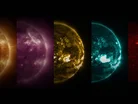
IBM and NASA have announced the open-source release of Surya, an AI foundation model built to interpret high-resolution solar observation data and forecast solar weather.
Shared openly on Hugging Face, Surya is ushering in a new era for researchers, technologists and policymakers around the world.

This comes as the world grows ever more dependent on sensitive, interconnected technologies, from GPS and power grids to satellites and telecommunications.
These technologies are at risk of the effects of the Sun’s activity.
Solar flares and coronal mass ejections (CMEs) can knock satellites offline, disrupt navigation and even threaten aviation safety.
A single extreme solar storm could inflict economic losses of up to US$2.4tn over five years, with US$17bn expected from a single event, according to Lloyd's systemic risk scenarios.
“Think of this as a weather forecast for space,” says Juan Bernabe-Moreno, Director of IBM Research Europe for the UK and Ireland.
“Just as we work to prepare for hazardous weather events, we need to do the same for solar storms.
“Surya gives us unprecedented capability to anticipate what’s coming and is not just a technological achievement, but a critical step toward protecting our technological civilisation from the star that sustains us.”
Why solar weather matters now more than ever
Despite the Sun’s surface being around 93 million miles away, its dynamic and capricious can have a far-reaching impact.
Bursts of activity can damage satellites and threaten astronauts, disrupt aviation or throw agricultural GPS navigation off track.
With plans for deep space exploration accelerating and more industries relying on space-based technology, accurate, timely solar weather forecasts are essential to safeguard lives and infrastructure.
Traditional forecasting methods, however, have struggled with the Sun’s complexity, often relying on incomplete satellite views and narrow datasets.
This made accuracy elusive, especially for real-time or targeted prediction such as pinpointing the source and intensity of upcoming solar flares.
Introducing Surya
Surya addresses the gaps left by traditional methods by training on nine years of NASA’s Solar Dynamics Observatory’s high-resolution solar imagery – data 10 times larger than typical AI datasets.
The technical challenges were formidable, given the scale and detail needed. The result is a model with exquisite spatial resolution, able to resolve the Sun’s features in remarkable detail.
Early tests demonstrate that Surya offers a 16% improvement in solar flare classification accuracy over previous approaches.
For the first time, researchers can now obtain visual predictions of where on the solar surface a flare will occur up to two hours in advance.
Surya also sets a new standard for predicting the emergence of active regions, the speed of solar winds and solar EUV spectra, vital for understanding and forecasting space weather impacts on Earth.
“We are advancing data-driven science by embedding NASA's deep scientific expertise into cutting-edge AI models,” says Kevin Murphy, Chief Science Data Officer at NASA Headquarters in Washington.
“By developing a foundation model trained on NASA's heliophysics data, we’re making it easier to analyse the complexities of the Sun's behavior with unprecedented speed and precision.
“This model empowers broader understanding of how solar activity impacts critical systems and technologies that we all rely on here on Earth.”
Democratising space weather research
By releasing Surya and its underlying dataset to the public via Hugging Face, IBM and NASA aim to accelerate data-driven scientific discovery and democratise solar weather prediction.
The largest known curated heliophysics dataset is now openly accessible, enabling researchers everywhere to develop their own solutions, diversify applications and contribute to technological resilience across industries and nations.
Surya also joins the Prithvi family of AI foundation models, which includes tools for geospatial and weather analysis, reflecting a broader IBM–NASA mission to bring state-of-the-art AI to the world’s most complex scientific and technological challenges.