Behind IBM's New Zero-Downtime Enterprise IT System, Power11
IBM is one of the original titans of computing.
Its systems helped put Neil Armstrong and Buzz Aldrin on the Moon, while its employees and alumni have won six Nobel Prizes and six Turing prizes for their work and research.
And while not all a company's projects can be as attention-grabbing as lunar landings, IBM has continued to produce some of the technology that is most important to modern society.
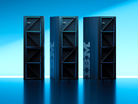
This month, the American tech giant announced its latest high-power computer, Power11.
With Power11, IBM is targeting enterprises around the world, offering them total sovereignty in their digital operations. The system's integrated AI capabilities and its promise of zero downtime make it a server that is capable of handling the most critical of workloads.
Crucially, this pledge of constant uptime extends to times when the server needs maintenance, meaning it is a perfect product for sectors like healthcare, energy, banking and energy.
What makes the Power11 so interesting?
So, what separates IBM's newest product from its predecessors?
Power11 can deliver up to 55% better core performance compared to Power9, while it offers up to 45% more capacity through higher core counts than Power10.
The platform also provides twice the performance per watt versus comparable x86 servers and achieves up to 28% better server efficiency when operating in Energy Efficient Mode compared to Maximum Performance Mode.
These improvements come as enterprises face increasing computational demands, with IDC research indicating one billion new logical applications are expected by 2028.
A server ready for the age of AI
For the first time, IBM will simultaneously release high-end, mid-range and entry servers alongside IBM Power Virtual Server in IBM Cloud.
Power11 becomes the first IBM Power server to support the IBM Spyre Accelerator, a system-on-a-chip designed for AI-intensive inference workloads, available in Q4 2025.
The system includes built-in, on-chip acceleration for inferencing and integrates with Red Hat OpenShift AI to support hybrid AI deployments.
"IBM Power11 changes the game for enterprise computing," says Tom McPherson, GM of Power Systems at IBM.
"With Power11, clients can accelerate into the AI era with innovations tailored to their most pressing business needs."

A new level of cybersecurity
With this new release also comes the Power Cyber Vault, a solution that provides users with less than one-minute ransomware threat detection.
The system includes NIST-approved quantum-safe cryptography designed to protect against 'harvest-now, decrypt-later' attacks and firmware integrity threats.
This year the level of cyberthreat has surged, as exemplified recently by the attacks on Microsoft SharePoint, Marks & Spencer and Qantas.
Bolstering defences against sophisticated cyber attacks has never been more important, so IBM's new offering will be welcomed across the board.

The response so far
So far, the early adopters of Power11 have said that their productivity has been significantly improved by the system.
"With just 20 minutes and the help of watsonx Code Assistant for i on Power, I was able to investigate a report, trace the field logic, understand the calculation and document the issue," says Jasmine Kaczmarek, VP of Technology at MR Williams.
"What had taken a senior developer six hours the day before, I was able to accomplish 18 times faster."
GuideWell's William Allarey speaks to the operational benefits of the system: "With the new IBM Power11 automation capabilities, we are very interested in faster and more frequent maintenance updates with no planned downtime to keep the servers secure, stable and current."
Where Power11 sits in the market
The launch represents IBM's response to increasing enterprise demands for AI-ready infrastructure while maintaining the reliability standards expected in mission-critical environments.
Power11's hybrid cloud capabilities and integration with IBM's broader software ecosystem position it against competing enterprise platforms from Oracle, HPE and Dell Technologies.
The platform becomes generally available on 25 July 2025, with the Spyre Accelerator following in Q4 2025.