IEA: AI and Skills Gap Shape Energy Efficiency's Future
According to the IEA’s Energy Efficiency 2025 report, global progress on energy efficiency is projected to see a 1.8% improvement in 2025.
This marks an increase from the approximate 1% seen in 2024.
However, this rate of progress has declined to an average of 1.3% per year since 2019, falling short of the 4% annual improvement target set at COP28 for 2030.
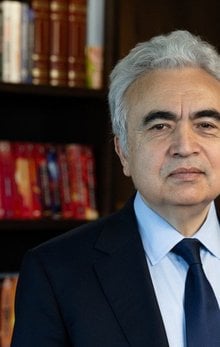
“The acceleration in global progress on energy efficiency that we’re seeing in 2025 is encouraging, including positive signs in some major emerging economies,” says Fatih Birol, Executive Director of the IEA.
Fatih explains: “Our analysis shows that governments need to work even harder to ensure efficiency’s full range of benefits are enjoyed by as many people as possible.
“Energy efficiency has the power to enhance people’s lives and livelihoods through greater energy security, more affordable bills, improved economic competitiveness and lower emissions.”

The economics of sustainable technology
The report from the IEA indicates that sustainable technology is increasingly becoming the more affordable option.
While certain efficient technologies may come with a higher initial cost, they are often priced similarly to less efficient counterparts.
The long-term cost benefits derived from lower energy consumption frequently outweigh these initial investments.
In a 2025 IEA survey focused on industrial competitiveness, a majority of firms identified energy efficiency as their primary defence against price volatility.
For instance, consumers who chose efficient air conditioners in 2025 are estimated to have saved as much as 30% in energy costs while facing comparable upfront prices.
This principle also extends to building retrofits designed to improve energy efficiency.
Since 2019, combined expenditure on building retrofits and envelopes in China, the US and the European Union saw an increase of over 20% reaching approximately US$120bn in 2024.
AI’s impact on energy consumption
The report highlights that energy for space cooling has experienced the most rapid growth of any end-use in buildings since 2000 at a rate of more than 4% annually.
This surge in energy demand is driven by wider access to air conditioners and rising living standards.
The IEA notes that this demand has largely been met with equipment that is not highly efficient.
The report suggests that if every air conditioner purchased since 2019 had been the most efficient model available, the world could have avoided an increase in electricity demand equivalent to that from data centres over the same period.
The IEA anticipates that electricity demand from data centres spurred by the AI boom will likely accelerate, doubling between 2025 and 2030 to around 945TWh.
This is equivalent to the entire electricity consumption of Japan in 2024. While AI contributes to this growth in demand, the IEA predicts it could also unlock 8EJ of energy savings by 2035.
This saving is roughly equivalent to the entire industrial demand of the European Union today, far surpassing the predicted demand from data centres.
AI algorithms can be used to identify inefficiencies or enhance physical process models without substantial extra investment.
The growing skills shortage
The IEA points out that for some companies, particularly SMEs, barriers such as digital infrastructure access to a skilled workforce and a culture of trust can hinder the use of AI for energy optimisation.
Beyond AI, specific skills are required to implement energy efficiency measures more broadly.
The report states that nearly 18 million people were employed in the energy efficiency sector worldwide in 2024.
Among employers in this field, 72% report a shortage of workers.
Approximately 60% of these employers anticipate that these shortages will have a moderate to significant impact within the next five to 10 years, and around 50% are already finding it difficult to replace retiring employees.
The skills shortage in energy efficiency is part of a wider trend in the sustainability sector.
According to LinkedIn's 2025 Green Skills Report, the demand for sustainability experts is growing nearly twice as fast as the development of green skills among the workforce.


Executives
Fatih Birol
Executive Director