
IEEFA Warns of Carbon Threat to South Korea’s Tech

A study from the Institute for Energy Economics and Financial Analysis (IEEFA) suggests South Korean companies face increasing supply chain carbon risks.
As global carbon regulations tighten, the nation’s key semiconductor and AI sectors could lose their competitive edge.
The IEEFA report explores how South Korea could be priced out of global supply chains without major changes to its energy policies.

Growing carbon regulations and the scope of emissions
Stronger global carbon regulations are an increasing focus for governments and businesses.
Markets now require company disclosures on Scope 1 and 2 greenhouse gas (GHG) emissions with plans to include Scope 3 reporting.
The IEEFA report, Navigating supply chain carbon risks in South Korea, examines how these regulations could affect the semiconductor and AI industries.
This focus on indirect emissions introduces considerable risks as carbon costs are set to increase through taxes, trading systems and the CBAM.
“The inclusion of indirect GHG emissions, such as Scope 2 and 3, could substantially increase supply chain carbon risks, including investment aversion, higher carbon cost exposure and counterparty and reputational risks,” says report author Michelle (Chaewon) Kim, IEEFA’s Energy Finance Specialist for South Korea.
Carbon intensity in South Korea's tech sector
The IEEFA study found South Korea is particularly at risk.
The analysis showed Samsung Device Solutions, the country’s leading chip maker, recorded Scope 1 to 3 emissions of around 41 million tonnes of carbon dioxide equivalent (tCO2e) in 2024.
This gives a carbon intensity of about 539 tCO2e per USD million of revenue. For another local manufacturer, SK Hynix, the figure was 246 tCO2e/USD million.
These figures are much higher than their global customer base. Apple has a carbon intensity of 37 tCO2e/USD million and Amazon Web Services (AWS) has 107 tCO2e/USD million.
IEEFA states this disparity is because firms like Apple and AWS use global strategies to minimise GHG intensity, including using clean energy in their operations.
International trade is a key part of South Korea's economy, making up about 70% of its Gross Domestic Product (GDP).
With the nation's competitiveness in semiconductors and AI data centres, rising carbon risks could disrupt the wider economy.
Future financial risks and CBAM
A key challenge is South Korea's lack of domestic renewable energy. This could lead global tech companies to seek alternative suppliers to reduce their own Scope 2 and 3 emissions.
If South Korean firms cannot switch to renewable energy, they may be seen as a riskier partner for investment and procurement.
While semiconductors are not yet part of the EU CBAM, IEEFA warns their future inclusion could be expensive.
IEEFA estimates a potential CBAM certificate expense of US$588m for South Korean chip importers between 2026 and 2034.
“The sharp increase in CBAM costs may prompt European importers to switch their chip suppliers from high-emission South Korean producers to low-carbon suppliers,” Michelle adds.
To mitigate these risks and ensure the country's technology sector remains integrated within global supply chains, IEEFA suggests South Korea should address several areas.
The report recommends the following transformations:
- Establish a public-private supply chain risk management system
- Enhance renewable energy access by modernising and expanding the grid
- Remove bottlenecks in Power Purchase Agreements (PPAs) and the Renewable Portfolio Standard (RPS)
- Address carbon risks with government-backed funds, tax rebates and low-interest loans
- Buffer carbon pricing impacts by developing domestic ETS markets
- Strengthen international decarbonisation initiatives to meet regulations
IEEFA suggests these changes are vital to secure South Korea’s position in global supply chains.
They will also protect their businesses from the financial impact of high carbon pricing. Companies with high emissions may otherwise be phased out of these critical networks

Executives
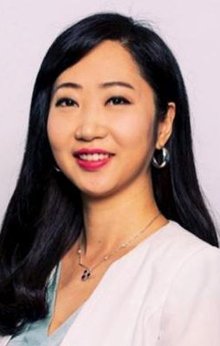
Michelle (Chaewon) Kim
Energy Finance Specialist, South Korea