
Inside McLaren’s Energy Tech Collab with Schneider Electric
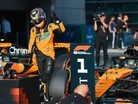
In sport, teamwork is everything – and nowhere is that more evident than in motor racing, where success rests on the efforts of thousands working in perfect sync.
Behind the drivers, pit crews and engineers lies a vast network of people and partners whose combined expertise powers every lap.
McLaren Racing exemplifies that spirit of collaboration.
Competing across Formula 1, IndyCar, F1 Academy and the World Endurance Championship, the iconic British team counts French technology leader Schneider Electric among its premier partners.
The partnership between the two goes back more than 20 years and it’s now shifting into an even higher gear.
Schneider Electric has become McLaren’s Official Energy Technology Partner across all race series, marking a significant expansion of their long-standing alliance.
So, what does this next phase involve?
Schneider will support McLaren by deploying advanced energy infrastructure at global race circuits and upgrading systems at the McLaren Technology Centre in Woking – with a clear focus on efficiency, sustainability and innovation.
Building on existing foundations
The expanded partnership will see Schneider Electric support McLaren’s pursuit of performance both on and off the track.
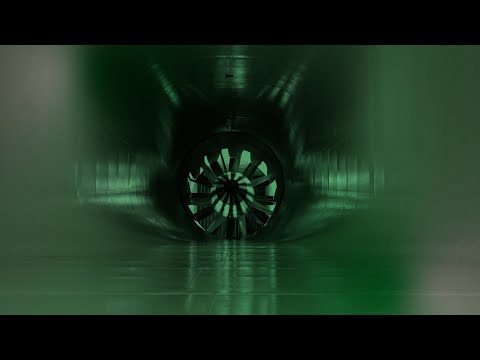
To start, the company will play a key role in optimising operations across McLaren’s wind tunnel, manufacturing facilities and IT data centres – critical hubs that drive everything from race simulations to real-time strategy and performance analysis.
Among the main areas of focus are improving energy efficiency through more resilient systems, advancing electrification technologies and deploying digital twin tools to deliver deeper insight into operational performance.
For Zak Brown, CEO of McLaren Racing, the move represents a natural evolution of a long-standing partnership – one that takes their collaboration into a new era of energy innovation and sustainable performance.
"We're proud to welcome Schneider Electric as our Official Energy Technology Partner," Zak says.
"This partnership builds on a strong foundation and reflects our shared commitment to innovation and energy efficiency.
"By combining Schneider's expertise in energy technology with McLaren's pursuit of performance, we'll explore new ways to make our operations smarter and more efficient."
High-pressure testing environment
Schneider Electric CEO Olivier Blum views the world of motorsport as the ultimate testing ground – a place where energy systems are pushed to their limits and forced to perform under the most demanding conditions.
"Racing is one of the most challenging environments to demonstrate the value of advanced energy and digital technology," Olivier explains.
"McLaren Racing pushes every system to its limits, which is exactly where our expertise in performance, reliability and efficiency makes the difference.
"We're proud to become the Official Energy Tech Partner of McLaren, providing energy intelligence they depend on, both on and off the track."
The renewed partnership extends to power solutions for McLaren’s trackside operations at race venues, as well as energy infrastructure at the team’s Woking headquarters.
Details on the financial terms and duration of the agreement have not yet been disclosed by either company.
Commercial and operational context
The announcement comes on the back of McLaren’s championship-winning 2025 season, during which British driver Lando Norris proved unstoppable on the track.
Financially, the team reported revenues of US$714m and a post-tax profit of US$73m.
Schneider Electric, meanwhile, posted revenues of €38.2bn (US$45.7bn) in 2024 and employs around 160,000 people across more than 100 countries.
Together, the two represent a meeting of powerhouses operating at the top of their respective fields.
Even so, there remains room for improvement in motorsport’s approach to sustainability – something racing series like Formula 1 recognise deeply, with emissions reduction forming a central pillar of the sport’s long-term roadmap.
By teaming up with Schneider Electric – consistently ranked among the world’s most sustainable companies – McLaren is positioning itself ahead of the curve.
Sustainability is not the only motivator.
Cutting emissions brings tangible long-term financial benefits, particularly as the McLaren Technology Centre in Woking consumes vast amounts of energy to power its wind tunnels, manufacturing facilities and simulation systems.
As a result, electricity and fuel remain among the company’s largest operating expenses.
Strategic alignment
Both McLaren and Schneider Electric highlight data analytics and digital systems as central to their operations.
McLaren continues to invest heavily in simulation and computational fluid dynamics (CFD) to advance aerodynamic design while adhering to Formula 1’s strict wind tunnel testing limits.
For its part, Schneider Electric has broadened its software and digital services portfolio, with recurring software revenues accounting for 77% of its agnostic software business in 2024.
This digital strength allows Schneider to deploy advanced technologies across a range of racing environments – from temporary trackside installations to permanent factory infrastructure.
For McLaren, the collaboration offers access to industrial-scale energy systems built with the adaptability required for the high-intensity demands of motorsport.
The two companies also plan to apply digital twin technology to generate deeper insights around efficiency and sustainability, though no specific rollout dates have been confirmed.
Across the wider motorsport industry, energy partnerships are increasingly shifting focus from outright performance gains to operational efficiency, reflecting growing pressure to reduce costs and environmental impact.
Notably, the timing of this announcement aligns with the start of the 2026 Formula 1 season – a new era marked by power unit regulations that significantly increase the electrical contribution of hybrid systems.
Company portals



Executives

Olivier Blum
Chief Executive Officer