'It’s Culture': Why is Amazon Cutting 14,000 Jobs?
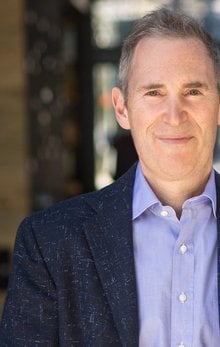
Andy Jassy, Amazon’s CEO, has spoken up about the thousands of job cuts in the company, claiming that the motive was not based on financial grounds.
Discussing the topic at the company’s quarter earnings call on 30 October, Andy said: “The announcement that we made a few days ago was not really financially driven and it’s not even really AI driven, not right now.”
His reason for the 14,000 corporate job cuts: “It’s culture.”
The CEO said Amazon has increased headcount significantly in recent years, and addressed that this type of growth can lead to consequences.
“You end up with a lot more people than what you had before, and you end up with a lot more layers”, he said.
“Sometimes without realising it, you can weaken the ownership of the people that you have who are doing the actual work and who own most of the two-way door decisions.”

Announcing Amazon’s job cuts
The job cuts impacting 4% of Amazon’s corporate workforce were announced on 29 October, with the company characterising the move as reinvention rather than retrenchment.
According to the BBC, Beth Galetti, Senior Vice President at Amazon, told employees in a company memo: “We’re convinced that we need to be structured more leanly, with fewer layers and greater ownership, so we can move as quickly as possible for our customers and business.”
She added that the shift would strengthen the company, enabling Amazon to “reallocate resources to focus on our biggest bets and the priorities that matter most to our customers’ present and future needs”.
Andy has previously pushed to streamline Amazon’s management layers to maintain its identity as “the world’s largest startup”.
In late 2024, he sent a memo to employees explaining that, to operate like a startup, the ecommerce giant would “end its previous hybrid work policy” and require corporate teams to return to the office full-time.
Andy said that this model demands “a mix of constant invention, high ownership, strong urgency and shared commitment”, adding that it is designed to “increase the ratio of individual contributors to managers, boost innovation and strengthen collaboration” by flattening the organisation.
In a 2024 letter to shareholders, Andy expanded on the company’s philosophy of speed, writing: “The leadership team has to believe it's a priority, reinforce it constantly, organise and remove structural barriers and build in modular ways that enable pace.
“But speed does not happen unless the entire company and culture embrace it.”
Job cuts elsewhere
According to CNN, Amazon said this week that the recent layoffs were intended to keep the company “nimble” as it prepares for future efficiencies driven by AI.
Amazon is far from alone, as several major corporations have announced similar moves in recent months, including Salesforce, Paramount and Target, each citing different strategic reasons.
On 28 October, UPS revealed during its Q3 earnings call that it plans to cut tens of thousands of jobs as part of a broader effort to enhance efficiency through expanded automation.
Commenting on the restructuring, CEO Carol B. Tomé said: “We are executing the most significant strategic change in direction in UPS’s history, and the changes we are implementing are designed to deliver long-term value for all stakeholders.”
Salesforce has also made significant reductions, trimming nearly half of its customer support workforce with 4,000 job cuts this year as AI assumes a greater role in handling customer interactions.
Marc Benioff, CEO of Salesforce, explained on The Logan Bartlett Show: “I was able to rebalance my headcount on my support. From 9,000 heads to about 5,000 because I need less heads.”
Marc noted that roughly half of Salesforce’s customer service enquiries are now managed by AI.
Layoffs of this scale are fuelling broader debate about the balance between technology and human labour and what the next phase of AI-human collaboration will look like.
Company portals


Executives
Andy Jassy
President and CEO
Carol B. Tomé
Chief Executive Officer
Marc Benioff
Chair & CEO