Japan Pairs With NVIDIA to Build Huge 140MW Physical AI Site
Japan has partnered with NVIDIA and industrial leaders to build what could be the first national infrastructure dedicated to physical AI applications.
The initiative focuses on an AI factory that will provide 140MW of data centre capacity using NVIDIA’s DSX platform.
NVIDIA announced its work with Japanese AI consortium Noetra to establish an NVIDIA Vera Rubin AI factory.
The project has backing from Japan’s Ministry of Economy, Trade and Industry (METI) as part of its FRONTia Project, which targets AI agents, digital twins and industrial robotics development.
According to Japan’s AI Robotics Strategy, released in March 2025, the country aims to secure more than 30% of the global AI robotics market by 2040.
This could represent an estimated US$133bn opportunity.
Japan produces 45% of the global supply of industrial robots, as reported by the International Federation of Robotics.
However, China represents 54% of global robot deployments, making it the world’s largest robotics market.

Infrastructure for physical AI
NVIDIA will partner with Noetra to construct the NVIDIA Vera Rubin AI factory with 13,750 Vera CPUs and 27,500 Rubin GPUs.
Noetra’s private sector backers include Honda and Softbank.
The hardware foundation could accelerate Japan’s AI development timeline. Physical AI applications require substantial electrical grid power to operate the advanced AI chips needed for robotics applications.
The 140MW data centre capacity based on NVIDIA’s DSX platform illustrates the infrastructure scale required for national AI strategies.
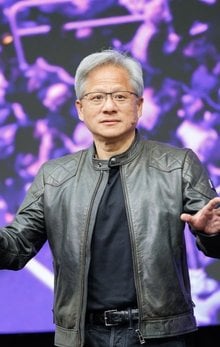
“Japan invented modern manufacturing,” says Jensen Huang, Founder and CEO of NVIDIA. “Now, it is building the AI factories that will power the next industrial revolution.
“NVIDIA is honoured to partner with Japan and its industrial leaders to build the AI infrastructure that will power the country's industries, its economy and a new generation of innovation.”
The project targets multiple sectors including manufacturing, logistics, healthcare and telecommunications.
Computing architecture and capabilities
Noetra will architect the AI factory with NVIDIA Vera Rubin NVL72 racks using the NVIDIA DSX platform. The system will connect and scale with NVIDIA Spectrum-X Ethernet networking.
The infrastructure will enable development of open multimodal foundation models. These models could power AI agents, digital twins, robotics and other physical AI applications.
Hironobu Tamba, CEO of Noetra, says: “Bringing physical AI into the real world requires enormous computing, data and foundational technologies, challenges no single company can solve alone.”
The facility will provide the computing foundation for Japan’s FRONTia Project.
“Japan has launched the FRONTia Project, which will serve as the core of the country's physical AI ecosystem,” says Ryosei Akazawa, Japan's Minister of Economy, Trade and Industry.
“By fostering collaboration between Japan and leading global innovators, including NVIDIA and leveraging Japan’s strengths, such as its onsite expertise and manufacturing technology infrastructure, we will build highly reliable multimodal foundation models and contribute to solving global social challenges.”
Project scope and funding
According to the Japanese news service NHK, the industry ministry decided to commission the project to Noetra and the National Institute of Advanced Industrial Science and Technology.
The project is worth ¥380bn (US$2.3bn).
“Japan has launched the FRONTia Project, which will serve as the core of the country’s physical AI ecosystem ”
Japan’s industry ministry aims to introduce 10 million AI-equipped robots across 18 sectors by 2040 in response to the country’s growing labour shortage.
The country’s 2040 market share goal of more than 30% reflects its position as the largest robot manufacturer. However, installation figures tell a different story.
Almost 300,000 industrial robots were installed in China in 2024, as reported by the International Federation of Robotics (IFR). Japan, the second largest market for industrial robots, installed 44,500 units in 2024.
- 295,000 industrial robots have been installed in China in 2024
- Japan aims to introduce about 10 million AI-equipped robots across 18 sectors by 2040
- Japan installed 44,500 industrial robots in 2024
- Japan aims to capture 30% of the global AI robotics market by 2040
- Japan is the world´s number one industrial robot manufacturer delivering 45% of the global supply
Changing market dynamics
China’s domestic manufacturing capacity is expanding. According to the IFR’s World Robotics 2025 Report, Chinese manufacturers sold more factory robots than foreign manufacturers in China for the first time in 2024.
The domestic share climbed to 57% across industries, up from 47% in 2023. This shift could show changing competitive dynamics in the robotics sector.
Japan remains a major robotics exporter to China. According to the IFR, more than a third of Japanese exports of robotics and automation technology are destined for the Chinese market.
The new AI infrastructure could support Japan’s efforts to maintain its manufacturing position.
The FRONTia Project aims to build computing capacity that matches the scale of Japan’s industrial robotics ambitions through 2040.


Executives
Hironobu Tamba
Senior Vice President
Jensen Huang
Founder and CEO