What does Nvidia's Jensen Huang Think About UK AI Talks?
As US President Donald Trump touches down in the UK for talks with Prime Minister Sir Keir Starmer, the UK announces an unprecedented surge in AI investment.
Starting with Google’s £5bn (US$6.82bn) commitment, Microsoft has followed with a £22bn (US$30bn) infrastructure pledge, forming the centrepiece of a landmark technology pact with several US firms, dubbed the “Tech Prosperity Deal”.
Microsoft’s investment marks its single largest outside the United States, emphasising the scale of the pledge.
The challenge remains that while President Trump has pledged US dominance in AI, Prime Minister Starmer is determined for the UK to lead – as is China’s President Xi Jinping.
And as Trump begins formal discussions with UK lawmakers and royalty, the CEO of the world’s premier AI powerhouse is setting the stage for the next chapter in AI’s global evolution – spanning Britain, international markets and the industries it is set to transform.
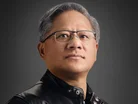
Jensen Huang, CEO of Nvidia, tells the BBC that the UK will become an “AI superpower”.
The UK’s data centre conundrum and solution
Jensen says Britain has the talent and research strength to become a global AI leader.
“What’s missing is the AI infrastructure,” he notes, “and we are here to build it.”
Nvidia sits at the heart of the wider “Tech Prosperity Deal” – with infrastructure as the decisive factor.
Earlier this year at London Tech Week, Jensen foresaw the barrier the UK would face, saying: “It is surprising this is the largest AI ecosystem in the world without its own infrastructure.”
Even so, he described Britain’s AI environment as a “Goldilocks circumstance” – signalling conditions balanced enough to encourage growth without being either stifling or uncontrolled.
In response, Nvidia has joined forces with UK data-centre specialist Nscale, which provides the facilities essential for AI compute, to build out new capacity nationwide.
Jensen adds that his vision is “building an AI infrastructure company here in the UK and then helping it scale out globally”.
The chipmaker has separately revealed an equity investment in Nscale, with Jensen telling journalists at a London press conference that “we convinced ourselves that Nscale could be a national champion for AI infrastructure in the UK”.
This collaboration will see the development of data centres powered by Nvidia’s processors.
Jensen explains that modern data centres are “AI factories” rather than traditional computing centres.
“You apply energy to it and it produces something incredibly valuable – and these things are called tokens,” he says, referring to the basic units of data that AI systems process.
How energy consumption is driving infrastructure debate
The power demands of AI systems have emerged as a critical issue as the technology continues to expand worldwide.
Microsoft CEO Satya Nadella concedes that AI’s energy use remains “very high,” but maintains the advantages outweigh the costs, especially across healthcare, public services and business productivity.
“Using AI to solve problems will use less energy than using calculation to solve problems,” Jensen notes in separate remarks to industry analysts.
He points to weather forecasting as an example, arguing AI models can predict weather patterns a thousand times more efficiently than traditional computing methods.
Jensen also backs nuclear power as part of the solution to AI’s energy demands.
“Nuclear is wonderful as one of the sources of energy, one of the sources of sustainable energy,” he adds.

“We’re going to need energy from all sources and balance the availability and the cost of energy as well as the sustainability over time.”
For shorter-term solutions, Jensen mentions gas turbines that can operate “off the grid so we don’t burden people on the grid.”
He contends that AI will ultimately drive the creation of advanced energy generation technologies, spanning next‑generation solar panels, wind turbines and fusion energy systems.
The campaign group Foxglove warns that the UK could end up “footing the bill for the colossal amounts of power the giants need.”
However, Jensen maintains that the productivity gains from AI will offset increased energy consumption.
The importance of supply chain resilience for a manufacturing boom
There is no AI expansion without more data centres and no data centres without the supply chains and manufacturing that sustain them.
Jensen highlights concerns over global supply chain vulnerabilities, particularly the heavy concentration of semiconductor manufacturing in Asia.
“The ecosystem of manufacturers and suppliers to the chip industry is sprawling and complex and particularly concentrated in Asia,” Jensen notes in remarks to Goldman Sachs.
He stresses that companies need “enough intellectual property” to enable shifting production between sites when required.
According to Jensen, building and maintaining resilient supply chains is a daily challenge that demands vast scale and scope.
He adds that Taiwan will continue to grow as a hub for manufacturing, since “we’re at the beginning of a breed of a new industry. This new industry builds AI factories”.
Jensen further observes that manufacturing worldwide, and by extension supply chains, will undergo significant growth in response to surging AI demand.
The future AI development for China, the UK and the US
In the interview with the BBC, Jensen expresses he is “disappointed” over China’s reported order for its technology companies to halt purchases of Nvidia’s AI chips.

He states that the US must “make sure that people can access this technology from all over the world, including China.”
Jensen believes ongoing trade disputes will ultimately be settled diplomatically, remarking “the conversation will sort itself out,” and voicing his backing to “support the US” as it navigates geopolitical challenges.
Nonetheless, it’s clear that China is advancing its own chip development to rival US leadership in AI, with firms like DeepSeek, Tencent and Alibaba previously among Nvidia’s clientele.
Despite the tensions, Jensen maintains: “The advance of human society is not a zero-sum game.”
“President Trump is very clear. He wants America to win – and President Xi wants China to win – and it’s possible for both of them to.”
But what does this mean for the UK?
He says the US needs “to make sure that people can access this technology from all over the world, including China.”
He expects diplomatic conversations to resolve current trade disputes, saying “the conversation will sort itself out,” and that he would “support the US” as it tries to resolve geopolitical issues.
Yet it’s no secret that China is developing its own chip capabilities to compete with US dominance in AI, with companies like DeepSeek, Tencent and Alibaba previously among Nvidia’s customers.
Despite geopolitical tensions, Jensen says: “The advance of human society is not a zero-sum game.
“President Trump is very clear. He wants America to win – and President Xi wants China to win – and it’s possible for both of them to.”