Joby’s Air Taxi eVTOLs Take Flight Across New York
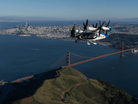
New York has become a live testbed for electric vertical take-off and landing aircraft as Joby Aviation flies point to point across the city. The demonstrations preview a quieter, zero operating emissions service designed to beat traffic and link key transport hubs.
McKinsey & Company predicts that passenger advanced air mobility operators could rival the largest airlines by 2030 in flights per day and fleet size. The New York campaign suggests the building blocks for that scale already exist.
JoeBen Bevirt, Founder and CEO of Joby Aviation, says: “New York has always been a city that defines the future by demanding better. We first flew here in 2023 and now we are showing what the next chapter looks like.
“This week, flying between JFK and Manhattan, we showed what federal initiatives to integrate new aircraft make possible and offered New York a look at what is coming.”
The demonstration
Joby’s flights mark the start of a week-long campaign operating across the city’s existing heliport network. The company says the aim is to show real routes and realistic turnarounds rather than a single showcase hop.
By using heliports, Joby is demonstrating that eVTOL services can scale without waiting for an entirely new infrastructure build. The network effect matters in New York, where time-sensitive trips are frequent and multimodal travel is routine.
The company says its aircraft can connect vertiports, major international airports and communities across the wider metropolitan area. Linking New York to its airports by air taxi is central to Joby’s vision for early services.
Joby frames the campaign as a systems test covering airspace integration, ground handling and passenger flow. The question is whether these hops reliably beat road and rail at peak times.
Aircraft and technology
Joby’s aircraft uses six electric motors driving six propellers, with power from four battery packs. A triple-redundant flight computer manages critical functions for safety.
The company targets speeds of up to 200 mph, or about 322 km/h, and operations up to 10,000 ft or roughly 3,048 m. It also emphasises a low noise footprint to suit dense urban environments.
The airframe combines titanium, aluminium and carbon fibre. Joby says it supports this structure with components produced using robotic 3D printing to improve precision and repeatability.
The aircraft’s all-electric architecture delivers zero operating emissions in flight. That positions the platform as a cleaner option than conventional helicopters while promising lower operating costs over time.
Regulation and competition
The US Government has launched programmes pairing industry with state, local, tribal and territorial partners to integrate new aircraft types safely into the airspace. Joby says it is named on five selected projects across 12 states that are designed to accelerate rollout.
These projects focus on real-world operations, community engagement and data-sharing with regulators. The work is intended to build confidence in safety, reliability and noise performance.
The global race is also intensifying. In China, Xpeng says it expects to release its consumer-focused “flying cars” in 2027 as part of a wider rollout of urban air mobility.
New York’s live demonstrations show how early services could look once certification, infrastructure and operating frameworks align. The challenge now is to translate trials into scheduled, scalable operations.

Partnerships and passenger journey
Joby’s New York strategy leans on established urban air networks. In 2025, the company acquired Blade Air Mobility’s passenger business, which it describes as the foundation for an at-scale electric air taxi service.
Blade operates helicopter services that connect key hubs and city centres. Joby says integrating eVTOLs into this footprint provides immediate routes and customers.
Alongside Blade, Joby has partnerships with Delta Air Lines and Uber. The company’s goal is a single end-to-end journey that links ground transport and air travel in one booking flow.
A seamless experience matters as much as the aircraft. If riders can get a car, lift into the sky and connect to a flight in minutes, air taxis could move from novelty to a daily habit.