Lenovo Combines AI and Digital Skills for Global Growth
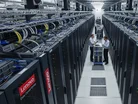
Lenovo has climbed to seventh place globally in Gartner’s 2026 Global Supply Chain Top 25, advancing from eighth the previous year and 10th in 2024.
The technology giant’s recognition stems from its deployment of AI-driven automation and commitment to building a digitally skilled workforce capable of operating alongside intelligent systems.
As enterprises increasingly adopt autonomous technologies, Gartner’s research suggests that chief supply chain officers must prepare for integrated human-machine workflows.
The report emphasises that organisations need to align their learning and development programmes with emerging technologies and digital systems to enable seamless collaboration between human workers and automated processes.
AI orchestration transforms operations
The cornerstone of Lenovo’s technological advancement is iChain, an AI-powered orchestration platform that continuously learns and adapts.
The system coordinates thousands of suppliers and manages operations across more than 30 manufacturing sites worldwide through intelligent automation and machine learning capabilities.
The platform represents a significant shift in how supply chain operations are managed at scale. By leveraging advanced algorithms and real-time data processing, iChain enables Lenovo to maintain visibility across its entire global network whilst responding dynamically to changing conditions.
The technology has delivered measurable improvements in operational efficiency. According to Lenovo, iChain has enabled 60% faster decision-making and near real-time responses to supply disruptions. Tasks that previously required two to three weeks of manual analysis can now be completed in hours, with 90% of network simulations running autonomously.
This emphasis on continuous digital learning and AI integration represents a key trend Gartner identified among its top-ranked organisations.
Environmental data automation through AI
Lenovo’s technology strategy extends beyond operational efficiency to include environmental sustainability.
The company has developed a platform featuring an ESG gen AI agent that automates supplier interactions and validates life cycle assessment data, demonstrating how AI can support corporate sustainability goals.
The automated system streamlines the collection and verification of environmental data across Lenovo’s extensive supplier network. This reduces the administrative burden on both Lenovo and its partners whilst improving the accuracy and consistency of sustainability reporting.
By integrating AI into environmental monitoring, Lenovo can identify potential sustainability issues earlier and work collaboratively with suppliers to address them.
- #7 - Lenovo was ranked number 7 in Gartner’s 2026 Global Supply Chain Top 25
The technology has delivered measurable improvements in operational efficiency.
According to Lenovo, iChain has enabled 60% faster decision-making and near real-time responses to supply disruptions. Tasks that previously required two to three weeks of manual analysis can now be completed in hours, with 90% of network simulations running autonomously.
This emphasis on continuous digital learning and AI integration represents a key trend Gartner identified among its top-ranked organisations.

Environmental data automation through AI
Lenovo’s technology strategy extends beyond operational efficiency to include environmental sustainability.
The company has developed a platform featuring an ESG gen AI agent that automates supplier interactions and validates life cycle assessment data, demonstrating how AI can support corporate sustainability goals.
The automated system streamlines the collection and verification of environmental data across Lenovo’s extensive supplier network. This reduces the administrative burden on both Lenovo and its partners whilst improving the accuracy and consistency of sustainability reporting.
By integrating AI into environmental monitoring, Lenovo can identify potential sustainability issues earlier and work collaboratively with suppliers to address them.
The technology enables more transparent tracking of environmental metrics throughout the supply chain.
“What sets Lenovo apart is our ability to combine a global manufacturing footprint with localised operations, deep digital capabilities, and a strong ecosystem of suppliers and technology partners,” says Che Min Tu, Senior Vice President and Group Operations Officer at Lenovo.
“That combination gives us the agility to navigate disruption, scale innovation, and deliver the best possible experience for our customers and partners around the world.”
Digital integration drives resilience
Commenting on the recognition, Che Min adds: “At Lenovo, we’ve always considered our Global Supply Chain as a key pillar of our operational excellence.
“By fully integrating AI into our operations, we’ve been able to meet our customer needs more quickly and respond to complex situations.”
The company’s approach demonstrates how technology can transform supply chain resilience from a reactive capability into a proactive strategic advantage.
Rather than simply recovering from disruptions, Lenovo’s systems anticipate challenges and adapt operations accordingly.
“We not only withstand disruption; we become stronger because of it,” Che Min says. “It’s this approach that’s helped Lenovo navigate changing market conditions, maintain a competitive advantage and deliver its strongest year in the company’s history.”
Technology-enabled global expansion
Lenovo’s digital infrastructure supports operations spanning more than 30 manufacturing sites across 10 markets, including Africa, Europe and South America.
This year, the company opened a new manufacturing base in Riyadh, Saudi Arabia.
Lenovo said it is “committed to supporting the creation of thousands of local jobs, enabling knowledge transfer, and driving long-term economic value creation in Saudi Arabia”.
The company continues to invest in technology-enabled facilities, including its US manufacturing and fulfilment campus in Whitsett, North Carolina.
The campus spans more than 800,000 square feet and employs approximately 1,100 people, serving manufacturing, rack integration and order fulfilment for its US customers.
Gartner’s report highlighted end-to-end digital orchestration as a critical trend, with organisations leveraging technology platforms to enable deeper ecosystem collaboration in response to supply constraints.
Looking ahead, Che Min says: “As AI continues to reshape every industry, we see a tremendous opportunity to further transform how supply chains operate and set the standard for operational excellence.”
Company portals

Executives
Che Min (Jammi) Tu
SVP, Group Operations Officer