Azure Cloud Latency Rises After Red Sea Cable Disruptions
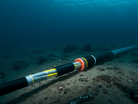
Microsoft has reported disruptions to its Azure cloud platform after multiple subsea cable cuts in the Red Sea caused latency issues for internet traffic passing through the Middle East.
The incident underscores the increasing vulnerability of global data infrastructure and the risks that cable damage presents to both cloud operators and the wider telecommunications industry.
Azure customers affected by latency
In a public status update, Microsoft confirmed that Azure traffic across the Middle East “may experience increased latency due to undersea fibre cuts in the Red Sea”.
It added that “traffic that does not traverse through the Middle East is not impacted”.
Despite rerouting services via alternative paths, enterprise cloud users across Asia and the Gulf continue to report slower speeds.
As the world’s second-largest cloud provider, Microsoft underpins hyperscale telecommunications workloads, AI-driven applications and BSS/OSS systems, making service reliability a critical priority for operators relying on Azure for latency-sensitive functions.
The company has acknowledged ongoing disruptions to its platform after multiple subsea cable cuts in the Red Sea, which have affected internet traffic routed through the region.
The event illustrates the growing fragility of global data infrastructure and the vulnerabilities subsea cable outages pose to both cloud platforms and the telecommunications sector.

Subsea cable routes disrupted
Reports from NetBlocks, which monitors global connectivity, confirm that “a series of subsea cable outages in the Red Sea have degraded internet connectivity in multiple countries”.
The watchdog highlighted that India, Pakistan and the UAE were particularly affected.
Its analysis points to failures in the SMW4 (South East Asia–Middle East–Western Europe 4) system, operated by Tata Communications, and the IMEWE (India–Middle East–Western Europe) cable, managed by a consortium led by Alcatel Submarine Networks.
Supporting these findings, the Pakistan Telecommunication Company stated that the outages occurred in waters near Jeddah, Saudi Arabia.
Officials warned that services could suffer “significant degradation during peak hours” and advised both business and consumer users to expect reduced performance while repair crews work to resolve the issue.
Regional service providers impacted
UAE-based operators du and Etisalat also reported connectivity issues, with users experiencing slow speeds and intermittent access.
Although regional authorities have not publicly acknowledged the disruption, NetBlocks confirmed that Emirati networks were actively working to stabilise connections amid ongoing subsea cable repairs.
Satellite links and terrestrial cables typically act as backups during such outages, but global internet traffic – more than 95% of which flows through undersea cable infrastructure – relies heavily on these subsea routes.
This reliance underscores the critical need for resilient and diversified network infrastructure to safeguard against disruptions.
Previous incidents and security risks
The Red Sea has emerged as a hotspot for subsea cable disruptions.
In February 2024, multiple communication cables between Asia and Europe were severed, causing substantial connectivity interruptions.
At that time, Yemen’s internationally recognised government accused the Iran-aligned Houthis of attempting to sabotage these critical digital arteries, though the rebel group denied involvement.

Investigations later revealed that the cables were cut not directly by sabotage but by the anchor of the Rubymar, a UK-owned vessel sunk by a Houthi missile strike.
This incident fits a broader pattern of subsea cable risks in geopolitically sensitive waters.
Since 2022, unexplained damages in the Baltic Sea, including sabotage suspicions and incidents like a vessel suspected of intentionally striking cables with its anchor, have heightened security concerns.
While accidental causes like anchoring remain a major factor in cable damage, the possibility of deliberate targeting has intensified the focus on subsea network security.
Implications for Telcos
Industry analysts emphasise that this disruption highlights how dependence on subsea cables continues to shape service continuity in the telecommunications sector.
As cloud adoption accelerates among telcos, vulnerabilities in undersea cable infrastructure translate directly into operational risks for both enterprise and consumer services.
Operators running critical workloads on Azure and other hyperscalers face increased exposure to bottlenecks when key routes are compromised.
Failover systems offer some relief, but performance often degrades when rerouted traffic must travel longer, less efficient pathways.
The Pakistan Telecommunication Company says this strain intensifies “especially during peak hours”.
For global operators, the incident underscores the importance of active coordination with hyperscaler partners and regional carriers to maintain service resilience.
To mitigate these risks, investments are rising in diverse subsea routes, terrestrial infrastructure and emerging satellite backhaul solutions.
The recent Red Sea cable cuts serve as a stark reminder of how fragile subsea infrastructure can have cascading effects across international networks, cloud platforms and telecom ecosystems.
With Microsoft rerouting Azure traffic and regional carriers striving to stabilise services, urgent questions remain about resilience planning for these critical data pathways.
Company portals
du
Etisalat

Microsoft
Tata Communications