
Microsoft and Orbia: Sustainable Water Management
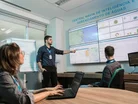
Microsoft and Orbia have established a partnership to create sustainable urban solutions with a focus on tackling global water stress.
The collaboration is a direct response to the mounting pressure on water resources from climate change, urban growth and ageing infrastructure.
Their first initiative is a project with SANASA, the public water and sanitation utility in Campinas Brazil, a region that has faced seven droughts in the last 10 years.
The project supports Microsoft’s corporate goal to become water positive by 2030, meaning it aims to replenish more water than it consumes.
“We believe that Microsoft has an important role to play in helping to address water stress in the areas we operate”, says Eliza Roberts, Water Lead at Microsoft.
“Water is a shared challenge that requires a collective approach, and we look forward to partnering with Orbia and SANASA to support a water project that is bringing public and private sector partners to the table to reduce water loss in São Paulo.”

Cloud-based platforms for water management
The Campinas project is situated within the Piracicaba Capivari and Jundiaí (PCJ) watershed, which is critical to the region, supplying more than 70% of its water.
The work combines the efforts of Orbia, Microsoft and SANASA to decrease water losses and improve network performance.
Central to this is Orbia’s Water Network Management (WNM) service a cloud platform powered by TaKaDu.
The WNM platform helps utilities to detect, analyse and manage network events such as leaks, bursts and faulty assets.
Orbia’s Building & Infrastructure business, Wavin, has deployed the technology, which uses advanced machine learning to interpret data in real time.
This is complemented by a central control room where Orbia water engineers provide continuous oversight of the network, helping SANASA to move from reactive to predictive maintenance.
“We are excited about joining forces with Microsoft and Orbia”, explains Manuelito Magalhães Júnior, CEO of SANASA.
“Our vision is to be a leader and benchmark in sustainable water management that can be shared throughout Brazil.
“We will do this using state-of-the-art technologies delivered through innovative partnerships that will help us to be more efficient in different areas of the business.”
Meeting data-driven sustainability goals
Global demand for fresh water continues to rise while existing supplies are strained.
According to Orbia: “By 2030 global consumption is expected to climb by 30% yet half of the world’s population already lives in water-stressed regions.”
In response, companies are setting measurable goals to address their water impact.

Microsoft’s strategy rests on five key pillars:
- Reducing water-use intensity across its global operations
- Replenishing more water than it consumes in priority locations
- Expanding access to water and sanitation services for communities
- Promoting innovation and data digitisation in the water sector
- Advocating for effective water policy worldwide
The partnership with Orbia and SANASA directly contributes to these goals. Under a 10-year agreement, the project has already delivered quantifiable results.
From July 2024 to the end of June 2025, it achieved a volumetric water benefit of more than 370,000 cubic metres.
The target for the second year is 622,000 cubic metres, with a long-term goal of saving more than 2.5 million cubic metres annually as the system is fully implemented across the network.
Strategic partnerships enabling water security
The success of the Campinas project could show the importance of collaboration between the public, private and technology sectors.
By combining Microsoft’s global reach, Orbia’s specialised solutions and SANASA’s local infrastructure, the partnership creates a model for addressing complex environmental challenges.
The project uses data from flow meters and pressure sensors to provide SANASA with actionable insights, allowing SANASA to prioritise repairs and reduce non-revenue water.
“At Orbia, we recognise the interdependencies between climate and water and are committed to delivering solutions that the world needs for water security”, says Tania Rabasa Kovacs, Vice President of Sustainability and Corporate Affairs at Orbia.
“A key component of our ambition to achieve net positive water impact is to engage in collective action, and we are thrilled to collaborate with Microsoft and SANASA on such an important global topic.
“It's only through collaborating that we can achieve our ambitions and ensure water security is preserved for future generations.”
As SANASA expands its network with more district-metered areas and sensors, the coverage of the WNM platform will grow, leading to greater water savings.
This scalable approach demonstrates a practical application of technology and long-term partnership in the protection of a critical global resource.
Company portals

Executives

Eliza Roberts
Director of Water
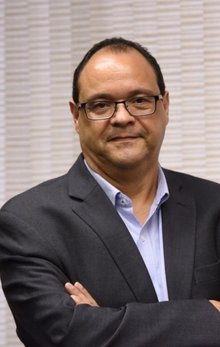
Manuelito Magalhães Júnior
CEO
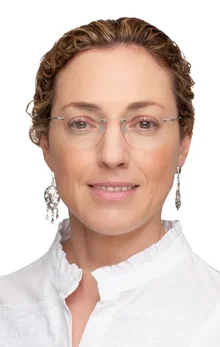
Tania Rabasa Kovacs
Chief Sustainability Officer, Vice President of Corporate Affairs, President of Orbia Mexico