
How Microsoft is Using Gen AI to Clear Clean Energy Permits
Time is of the essence in the energy sector. With irreparable climate crisis looming, the race for renewables is well and truly on.
With that said, the process of getting a permit for the construction of a renewable energy project can be long, difficult and expensive.
In recent months, Microsoft has been exploring ways in which technology can help to streamline this process and get more clean energy installations off the ground.
This idea came about during one of Microsoft's recent 'hackathons' – social events in which coders, computer engineers and creative thinkers collaborate to improve software in short timeframes.

Since then, the tech giant has begun investing time and resources into revolutionising permitting using Gen AI.
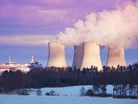
For this project, Microsoft's team has put a special focus on nuclear power – an energy source for which planning and permitting often takes more than a decade and costs millions of dollars before a single watt of electricity is generated.
"Permitting is the single biggest bottleneck to deploying clean energy fast enough to avoid runaway climate change," Microsoft says of the issue.
"That's not just inefficient – it's existential."
Collaboration and innovation
The project's origins trace back to a 2022 gathering of the Repowering Coal Consortium at Microsoft's Dublin offices.
Fifty industry representatives from across the advanced nuclear sector identified permitting as a critical obstacle to scaling nuclear deployment from one reactor per decade in the Western world to the 2,500 needed globally to replace coal power.
Mark Tipping, Global Offshore Power to X Director at Lloyd's Register, believes this initiative will be hugely impactful.
"Together, we're tackling one of the biggest challenges in deploying nuclear technology, which is navigating complex, slow and costly licensing processes," he says.
The technical breakthrough
The team initially attempted to solve permitting challenges using traditional software approaches but found the problem intractable.
Conor Kelly, a key team member, explains: "We first started trying without Gen AI... just normal software programming. It was an intractable problem."
The breakthrough came when the team realised generative AI could dynamically pull from massive, varied datasets and generate content in the flexible formats required by different licensing documents.
By integrating Azure OpenAI and Kernel Memory, the system can now create first drafts of permitting documents in five minutes – a process that previously took months or years.
Microsoft's three-pronged approach
The solution addresses three core challenges in the permitting process.
Automated document creation uses Gen AI to draft permitting documents from historical and project-specific data.
A Copilot system provides permitting engineers with access to entire regulatory datasets through ad-hoc queries, running entirely on companies' own Azure tenants to prevent data leakage.
Pre-submission review capabilities flag missing information before formal submission, reducing costly delays with regulators.
Permitting is the single biggest bottleneck to deploying clean energy fast enough to avoid runaway climate change... That's not just inefficient – it's existential.
Delivering a measurable impact
The project has delivered tangible results with 25-75% productivity gains in permitting workflows across multiple companies in the energy industry.
Ed Essey, Senior Director of Business Value at Microsoft, believes this project speaks to the importance of pursuing ideas with curiosity and an open mind.
"It's incredible to see that what began as a side project got Microsoft into nuclear," he says.
The initiative has catalysed a cross-Microsoft task force on AI for permitting, with support from senior executives including Chief Sustainability Officer Melanie Nakagawa and President Brad Smith.
Going beyond nuclear
While initially focused on nuclear permitting, the project has expanded to cover renewables, mining and other clean energy sectors.
The team is now working under Microsoft's MCAPS Energy & Resources division, developing new applications for mining and offshore wind projects.
"This project was about realising much wider applicability – not just this specific nuclear permitting document, but right across the nuclear permitting field and into wind and other renewable energy permitting," Connor says.
The team is also collaborating with regulators to improve their productivity, ensuring faster industry permitting doesn't overwhelm public sector capacity.
