
Mitsubishi: The Role of Semiconductors in Renewable Energy

Mitsubishi Electric has signed a basic agreement with Taiwan's Industrial Technology Research Institute (ITRI) to develop high-voltage power conversion systems for renewable energy applications.
The collaboration, announced on 15 October, is set to combine Mitsubishi's power semiconductor modules with the ITRI's expertise in high-voltage electricity conversion technology, with the aim of developing a megawatt-class power conversion system prototype that can be used for demonstration testing.
Power conversion systems are a critical piece of infrastructure that connect renewable energy sources and electricity grids, converting power between direct current and alternating current.
The agreement between Mitsubishi and the ITRI will see the two organisations work to create systems capable of handling large volumes of electricity, such as those from mega-scale solar PV arrays.
As one of the world's largest and most well-resourced tech firms, Mitsubishi's influence will be integral to the project's success.
The Japanese company will contribute marketing capabilities to the initiative, while the ITRI will provide more hands-on expertise, taking charge of things like system integration.
The collaboration will also see ITRI supply design documents and demonstration test results to Taiwanese power conversion system manufacturers as reference information for future projects.

The market context
As the global demand for solar and wind power has increased, so too has the demand for power conversion systems.
Mitsubishi Electric has been at the vanguard of this surge, supplying power semiconductor modules for renewable energy generation, storage, transmission and distribution applications across international markets for many years.
The company's modules are recognised for their stable performance, even in the harshest of environmental conditions.
On the other side, the ITRI is known for developing technologies focused on the circular economy, low-carbon manufacturing and environmental protection, with particular strength in power generation and distribution systems.
So, when it comes to an endeavour like the one in question, the partnership between these two bodies makes perfect sense.
For Mitsubishi, the collaboration represents an opportunity to expand its power semiconductor module business by providing users with design information and demonstration test results.
Masayoshi Takemi, Executive Officer and Group President of Semiconductor & Device at Mitsubishi Electric, sees the agreement with the ITRI as an important step in speeding up the implementation of renewable energy systems, not just for Mitsubishi, but for the economy more broadly.
"By combining our high-efficiency power semiconductor technology with ITRI's expertise and strengths in system integration, we aim to innovate megawatt-class power conversion systems that incorporate Mitsubishi Electric power semiconductors and thereby contribute to the establishment of a sustainable energy society," he says.
Jwu-Sheng Hu, Executive Vice President at ITRI, also regards the deal as significant, particularly to the region.
"As Taiwan and the world actively pursue a transition to a decarbonised society, the composition of power sources is drastically changing," he explains.
"In the future, the power grid will not only need to accommodate the proliferation of renewable energy but also ensure stability, resilience and reliability.
"This technological partnership combines ITRI's system integration capabilities with Mitsubishi Electric's power semiconductor technology, enabling a more efficient introduction of green energy into the power grid and supporting the development of advanced high-tech industries."
Industry implications
The collaboration positions Taiwan within the global green energy supply chain through technology partnerships with established semiconductor manufacturers.
The agreement does not specify investment amounts, production targets or timelines for commercial deployment of the developed systems.
ITRI's role in nurturing and providing advanced technologies to Taiwanese companies could support broader development of power conversion system manufacturing capabilities in the region.
The partnership follows established patterns of international semiconductor companies working with Taiwanese research institutions and manufacturers to develop specialised applications.
Both organisations stated aims to contribute to global decarbonisation efforts through the efficient conversion of renewable electricity, though the practical impact will depend on successful prototype development and subsequent market adoption.


Executives
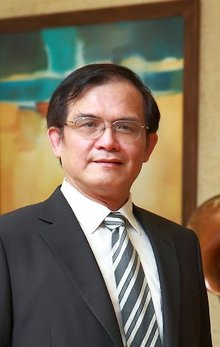
Jwu-Sheng Hu
Executive Vice President
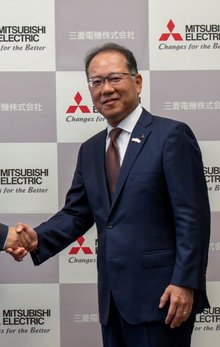
Masayoshi Takemi
Executive Officer and Group President of Semiconductors & Devices