AI-Managed Solar Rewrites Rural Connectivity in Africa

Africa’s digital networks are expanding fast, but extending reliable coverage into sparsely populated, off‑grid regions remains one of the continent’s toughest engineering problems.
With operations in 18 markets and more than 179 million subscribers, Orange Middle East & Africa (OMEA) is attacking that problem head on by pairing renewable power with AI to change the cost, reliability and speed equation for rural rollout.
From coverage to availability: the rural equation
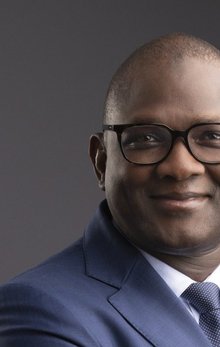
For Ben Cheick Haidara, Deputy CEO of Orange and CEO of OMEA, closing the rural gap is as much an energy and operations challenge as it is a radio one.
“The main challenge in rural areas, first of all, is the coverage,” he says. “Device affordability is another, along with electricity. Energy is a great challenge in rural areas, too.
“We’re trialling a lot of solutions to overcome this. One of them is the HEHA solar solution, which we’re working on with Huawei.”
In Côte d'Ivoire, Orange’s rural build has accelerated, but keeping sites live is where operating expenditure (OPEX) and service quality are won or lost.
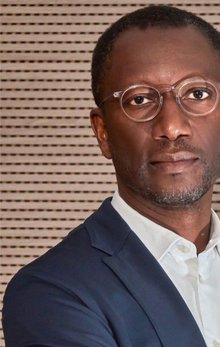
“With Huawei, we’ve rolled out almost 1,200 sites in rural locations,” says Mamadou Coulibaly, Deputy CEO and COO of Orange Côte d'Ivoire.
“Power consumption is our biggest obstacle – keeping these sites live is a constant challenge. This solution has reduced downtime by 45%, which is huge.”
HEHA: AI-first power orchestration for off-grid sites
HEHA – Huawei Enhanced Hybrid power Architecture – targets the core bottleneck for rural sites: erratic or absent grid power and the operational drag of diesel logistics.
Traditional configurations prioritise diesel gensets with solar as a static supplement.
HEHA flips that model with AI-driven energy management that treats generation, storage and load as a coordinated system.
According to Huawei’s Wireless Product Line representative He Yunru, the design brief started from the operator reality of irregular energy supply, long downtime windows, and the need to preserve service where and when it matters most.
Key elements included forecast-led control, where the controller fuses traffic prediction with weather forecasting to anticipate both demand and supply yield, as well as dynamic energy allocation, which optimises charging/discharging strategies and runtime across solar, battery and diesel sources in real time.
HEHA also applies granular, policy-based reductions to non-critical functions to maximise overall uptime and sustain service in priority windows.
The practical outcome is a site that “thinks” about power as a scarce, schedulable resource – trading watts for availability and user experience with minimal human intervention.
Measured impact and path to scale
Early field results indicate material gains.
In Côte d'Ivoire, Orange reports a 45% reduction in downtime on rural sites using the solution.
Huawei cites deployments achieving up to 55% downtime reduction while maintaining more than half of traffic during peak stress periods – evidence that prediction plus policy beats static power plans in harsh environments.
The roadmap pushes beyond individual site resilience.
Huawei aims to transform passive power stacks into “active, sensible, manageable and controllable” assets – telemetry-rich nodes that feed central operations, tighten fault isolation and enable fleet-level optimisation of energy and maintenance across thousands of locations.
Why this matters for network economics
It provides availability where grid power is unreliable through AI-guided solar-battery-diesel orchestration cushions sites from weather volatility and fuel constraints.
More solar utilisation and fewer diesel run-hours reduce operating costs and emissions while improving resilience to fuel price swings and logistics risks.
Plus, forecasting, control loops and remote observability reduce truck rolls and speed recovery.
AI as a horizontal capability
For OMEA, the gains from intelligent energy are a proof point for broader automation.
“We’ll be using AI across our network – from zero-touch operations to customer experience,” Ben says.
“From customer value management and next best action tools, there are a lot of use cases where our customers will feel the benefit.”
The bigger picture
Rural coverage has long been a financial dilemma, balancing the high cost of capital expenditure against the often-low average revenue per user.
AI-managed renewable power shifts that equation by improving uptime, trimming OPEX and aligning energy usage with real demand – making sustainable expansion economically viable in places previously considered too hard to serve.
By coupling predictive intelligence with hybrid solar architectures, Orange and Huawei are turning remote radio sites into self-optimising infrastructure.
It’s a practical blueprint other emerging markets can adopt – and a reminder that the frontier of connectivity is as much about smart power as it is about spectrum.


Executives
Ben Cheick Haidara
Deputy CEO and Chief Operating Officer at Orange Middle East & Africa
Mamadou Coulibaly
Deputy Chief Executive Officer and Chief Operating Officer at Orange Côte d’Ivoire