Samsung to Invest US$73bn in AI Chip Development in 2026
Samsung Electronics plans to spend more than ₩110tn (US$73bn) on chip capacity expansion and research this year, devoting a record amount of capital towards an effort to seize the lead in AI semiconductors.
South Korea’s largest company is hiking its investment by 22% in 2026, in an outlay that surpasses the roughly US$50bn that Taiwan Semiconductor Manufacturing Company is setting aside for capital expenditure this year.
This decision marks a strategic shift toward AI-driven demand. Consequently, Samsung will focus heavily on next-generation AI chips and advanced foundry processes.
Samsung’s position in the AI chip sector
For Samsung, this massive investment is primarily aimed at retaking the lead in AI chips from SK Hynix, which has become the dominant provider of high-bandwidth memory (HBM) to NVIDIA.
Despite the fierce competition, Samsung has shown recent strength, reclaiming its technical lead early this year by becoming the first company to commercially ship HBM4 to customers.
This achievement came after overcoming years of struggles and qualification delays that allowed its rival to dominate the global semiconductor market.
Samsung’s fortunes rose further earlier this month with the debut of its next-generation HBM4E chip at NVIDIA’s GTC event.
It also received an endorsement from NVIDIA President and CEO Jensen Huang, who revealed that Samsung’s advanced 4-nanometer technology will be used to manufacture Groq 3 processors.
This partnership with NVIDIA, together with a new deal to supply HBM4 chips to Advanced Micro Devices (AMD), is cementing Samsung’s role as a pivotal player in the AI hardware ecosystem.
The importance of Samsung’s investment
Samsung’s decision to commit a record amount of capital – an amount representing more than half of its projected operating profit for the year – is a clear recognition of the tectonic shift in demand driven by AI.
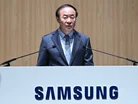
At the company’s annual general meeting on 18 March 2026, Jun Young-hyun, Vice Chairman and CEO of Samsung, described how the rise of agentic AI is fuelling an explosive surge in orders – not just for high-bandwidth memory, but also for server-grade storage.
The investment highlights that capturing the AI market requires not just innovation, but unparalleled physical capacity.
Macquarie analysts indicated that memory has become a chokepoint in the AI inference era. Plus, the firm sees Samsung as uniquely equipped to meet these demands.
Jun also provided a positive outlook on the market, noting that Samsung’s performance had improved markedly since the second half of 2025 and that strong AI demand could support a favorable memory market, potentially including tighter supply.
Despite facing risks such as US tariff issues and cost burdens, Jun says: “We will do our best to deliver solid results by strengthening technology competitiveness and managing risks”.
Impact on AI, data centres and manufacturing
Samsung’s investment holds crucial implications for the broader technology industry, particularly the AI, data centre and manufacturing sectors.
The strong demand for high-end memory, which is essential to NVIDIA accelerators, has created a supply environment where physical capacity constraints and long lead times for new fabrication facilities are reinforcing suppliers’ pricing power.
The explosive surge in orders for server-grade storage, driven by agentic AI, underscores the immediate need for Samsung’s capacity expansion.
The priority customers place on securing memory for AI infrastructure is expected to keep DRAM and NAND prices strong for at least two more years, with Macquarie forecasting net profit to rise tenfold between 2025 and 2028.

Plus, the shift in production towards high-end memory is creating a shortage of conventional memory chips that go into most modern devices, from cars to smartphones. This deficit is beginning to hammer profits, derail corporate plans and inflate price tags on everything, from laptops and smartphones to cars and data centres.
Samsung’s efforts to expand capacity may go some way toward resolving this global deficit of traditional memory that is hindering production across many industries. However, the issue is structural and long-term.