Siemens and Alibaba set to Bring Industrial AI to Scale
Siemens and Alibaba have unveiled a broad partnership aimed at accelerating AI-powered manufacturing in China, announcing 26 new automation and control technologies that run on Alibaba Cloud alongside fresh AI applications from Siemens.
The move aligns a mature industrial automation portfolio with hyperscale cloud infrastructure and LLMs to make AI more deployable on the factory floor.
Announced in Beijing, China, the collaboration spans industrial infrastructure, computer-aided engineering (CAE), and infrastructure-as-a-service (IaaS).
Siemens says it will bring industrial simulation software, virtual simulation appliances and high-performance computing (HPC) clusters to Alibaba Cloud, enabling manufacturers to run design, prototyping and optimisation workloads closer to their operations and data.
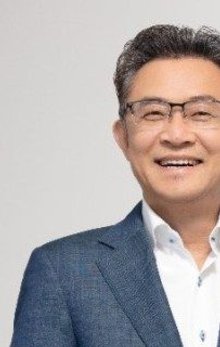
“Siemens has long been an indispensable part of China’s industrial ecosystem,” says Xiao Song, President and CEO of Siemens Greater China.
“As we enter the era of Industrial AI, we are more convinced than ever that only a strong ecosystem can truly unlock AI’s vast potential.
"Siemens is combining its global technological strengths with China’s speed of innovation, industrial scale and rich application scenarios to enable high-quality growth for customers in China and beyond.”
Bringing AI to the production line
Beyond cloud deployment, Siemens introduced new AI-powered applications for industrial operations, including predictive maintenance software designed to reduce downtime and optimise service intervals.
The company also announced a new generation of programmable logic controllers (PLCs) – the real-time “control brain” of production lines – with expanded performance and memory.
These PLCs coordinate machines at the edge, while advanced motion technologies like compact servo systems execute precise robotic and machine movements from digital commands.
Roland Busch, President and CEO of Siemens, says: “Bringing AI into the real world requires more than great models.
"It requires an industrial AI operating system: a technology stack that connects data, software and intelligent hardware.
"Here in Beijing, we are showing how this system is advancing, with deeper partnerships and new products built around our customers’ real needs.
"Through Siemens Xcelerator, our open digital business platform, we bring these capabilities together and make industrial AI accessible at scale.”
On the software side, Siemens will explore how Alibaba’s Qwen LLMs could augment AI-driven capabilities within Siemens’ product lifecycle management (PLM) software.
Potential use cases include faster requirements search, design change impact analysis, engineering knowledge retrieval and automated documentation. These are areas where generative and agentic AI can shorten engineering cycles.
Why it matters
Lowering the barriers to using agentic AI in manufacturing – via cloud-based HPC for simulation, standardised data pipelines and out-of-the-box AI agents – could compress time-to-value.
Siemens’ pairing of cloud-based engineering and on-premises control hardware speaks to a hybrid pattern in manufacturing IT/OT, where manufacturers train and simulate in the cloud, and then deploy inference and controls at the edge for deterministic performance.
By localising the stack on Alibaba Cloud, the collaboration also addresses data residency and latency considerations for China-based operations.

Key takeaway
By coupling Alibaba Cloud’s scale with Siemens’ industrial stack of PLCs, motion systems, simulation and PLM, the partnership aims to make AI more practical for factories, from predictive maintenance to engineering productivity.
If Siemens can demonstrate measurable improvements in uptime, throughput, quality and energy use while keeping integration and governance manageable, this could be a template for large-scale industrial AI adoption in China and potentially beyond.
Company portals

Executives

Joe Tsai
Chairman
Roland Busch
President and CEO of Siemens AG
Song Xiao
Chairman and CEO Siemens China; President and CEO Siemens Greater China