
Siemens and nVent: Designing Scalable Infrastructure for AI

Siemens and nVent have unveiled a joint reference architecture aimed at helping operators accelerate the buildout of hyperscale AI data centres.
Bringing together their strengths in electrical systems and liquid cooling, the companies have developed a Tier III-ready blueprint purpose-built for high-density Nvidia AI deployments, including Nvidia DGX SuperPOD with DGX GB200 systems.

Sara Zawoyski, President of nVent Systems Protection, says the collaboration reflects the company’s long-standing focus on advanced cooling.
“We have decades of expertise supporting customers’ next-generation computing infrastructure needs,” Sara says.
“This collaboration with Siemens underscores that commitment. The joint reference architecture will help data centre managers deploy our cutting-edge cooling infrastructure to support the AI buildout.”
Designing for 100MW hyperscale AI campuses
The reference architecture targets data centres scaling to roughly 100MW, featuring liquid-cooled racks and dense compute clusters optimised around Nvidia’s AI designs.
By aligning with Nvidia DGX SuperPOD reference designs, Siemens and nVent aim to streamline integration and enable faster deployment of large-scale AI environments.
The blueprint combines Siemens’ industrial-grade power distribution, automation and energy management systems with nVent’s liquid cooling portfolio.
According to the companies, this pairing delivers a cohesive technical framework for high-density workloads, addressing rising power consumption, cooling demands and operational risk across hyperscale facilities.
Ciaran Flanagan, Global Head of Data Center Solutions at Siemens, explains how the architecture is intended to support scale and energy efficiency.
“This reference architecture accelerates time-to-compute and maximizes tokens-per-watt, which is the measure of AI output per unit of energy,” hey says.
“It’s a blueprint for scale: modular, fault-tolerant, and energy-efficient. Together with nVent and our broader ecosystem of partners, we’re connecting the dots across the value chain to drive innovation, interoperability and sustainability, helping operators build future-ready data centres that unlock AI’s full potential.”
Responding to rising density and greater complexity
Growing AI adoption continues to push rack densities upwards, increasing the operational significance of cooling efficiency and electrical resilience.
Power availability, heat rejection and modular expansion are emerging as the dominant challenges for operators building AI-class compute environments.
Reference architectures like the Siemens–nVent model give operators a standardised pathway for deployment.
By integrating electrical systems, cooling technologies and Nvidia reference designs, the architecture aims to remove fragmented engineering processes and shorten project timelines.
It also provides a unified framework for vendors and hyperscalers to develop compatible solutions.
Siemens’ intelligent electrical and automation foundation
As AI adoption accelerates, rack densities continue to climb, elevating the criticality of cooling efficiency and electrical resilience.
Power availability, heat rejection and modular expansion are becoming the primary hurdles for operators building AI-class compute environments.
Reference blueprints like the Siemens–nVent model provide a standardised pathway to deployment.
By integrating electrical infrastructure, cooling technologies and Nvidia reference designs, the architecture seeks to eliminate fragmented engineering and compress project timelines.
It also establishes a unified framework for vendors and hyperscalers to deliver compatible solutions.
Siemens’ intelligent electrical and automation foundation
Siemens contributes a wide-ranging set of technologies to the collaboration, spanning medium- and low-voltage power distribution, scalable automation, energy management software and digital services.
The offering includes IoT-enabled hardware, AI-driven applications and cloud-connected tools designed to enhance operational visibility and optimise energy performance.
For AI data centres specifically, Siemens’ electrical infrastructure underpins stable, high-density deployments.
Voltage regulation, monitoring and grid-interactive features help preserve uptime as operators increase the share of liquid-cooled racks and GPU-based clusters.
Within the reference architecture, this integration is designed to ensure consistency from design through to operations across hyperscale footprints.
nVent’s liquid cooling capabilities
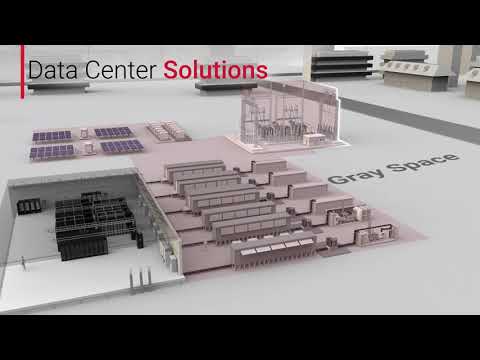
nVent brings liquid cooling solutions engineered for high-density compute, developed in collaboration with chipmakers, OEMs and hyperscalers.
These systems are built to manage thermals at scale, sustain efficiency and support future compute generations without major infrastructure changes.
With experience delivering cooling environments for global cloud providers and large operators, nVent has embedded those learnings into a deployment-ready blueprint.
The reference architecture details approaches for direct liquid cooling integration, coolant distribution and thermal management across modular data hall configurations.
Siemens and nVent say the joint blueprint will support operators building the next wave of AI-ready data centres, where performance, sustainability and deployment speed are tightly coupled to electrical design and advanced cooling.


Executives

Ciaran Flanagan
Vice President & Global Head of Data Center Solutions & Services

Sara Zawoyski
President of nVent Systems Protection