SoftBank CEO Questions Elon Musk’s Space Data Centre Vision
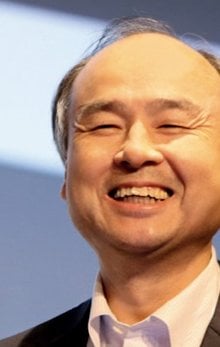
SoftBank CEO Masayoshi Son has cast doubt on the feasibility of orbital data centre infrastructure, directly challenging proposals from SpaceX CEO Elon Musk that have captured the attention of the tech industry.
At SoftBank’s annual shareholder meeting this week, the CEO outlined significant technical and economic barriers to space-based data centre deployment.
His remarks come as the industry grapples with escalating infrastructure demands driven by AI workloads and the search for sustainable computing solutions.
“What’s the benefit of building an AI data centre in space?” Masayoshi asked during the meeting, responding to shareholder enquiries about the technology.
His position centres on the argument that potential energy savings fail to offset the operational complexities inherent in extra-terrestrial infrastructure.

The economics of space infrastructure
Masayoshi’s scepticism is rooted in the cost structure of AI infrastructure. He says electricity represents just 7% of AI operational expenses, while compute hardware – the chips required to train and run AI models – accounts for the remaining 93%.
This breakdown could undermine the core value proposition of orbital data centres, which proponents argue would benefit from abundant solar power and reduced cooling requirements in space.
Masayoshi contends that any electricity savings would be negated by increased costs related to maintenance, network connectivity and latency challenges associated with space-based operations.
The technical trade-offs required for space-ready infrastructure could take years to resolve, he argued.
Rather than pursuing uncertain orbital ventures, SoftBank plans to maintain what Masayoshi described as a “near-sighted perspective” focused on terrestrial AI development, positioning the company to become a “first-comer in any businesses related to AI”.
Masayoshi suggested that competitive advantage in AI infrastructure “will be decided in the next some years”, emphasising SoftBank’s intention to lead the global AI race through more immediate opportunities.
Industry division on orbital computing
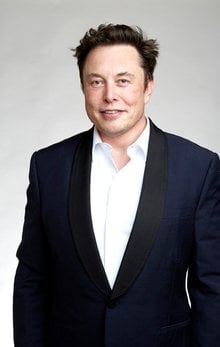
The concept gained momentum following Musk’s announcement in March, where he claimed space-based, solar-powered data centres would prove more cost-effective than ground-based facilities.
“Increasing power on Earth becomes harder over time and more expensive over time, but in space it becomes actually cheaper and easier over time,” he said.
SpaceX has already begun recruiting engineers for what it describes as a “constellation of a million satellites that operate as orbital data centres”.
The initiative represents one of the more ambitious infrastructure proposals in the current AI boom.
Other technology leaders have expressed interest in the concept.
Amazon founder Jeff Bezos and Google CEO Sundar Pichai have both explored potential applications for space-based computing infrastructure. The latter of which characterised the idea as a “moonshot” but suggested the industry would eventually need to seriously consider such possibilities as AI scaling demands intensify.
However, OpenAI CEO Sam Altman has joined Masayoshi dismissing the near-term viability of orbital data centres.
During a February interview with the Indian Express, Sam called the notion “ridiculous”, stating: “We are not there yet. There will come a time. Space is great for a lot of things. Orbital data centres are not something that's going to matter at scale this decade.”





Executives
Elon Musk
Tesla CEO

Jeff Bezos
Founder and Executive Chairman at Amazon
Masayoshi Son
CEO & Founder

Sam Altman
Sundar Pichai
CEO