Software Flaw Prompts Waymo to Recall 3,791 Robotaxis
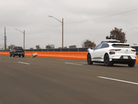
Waymo is recalling 3,791 robotaxis over a software issue that may allow vehicles to proceed into standing water on higher speed roads.
The action follows an event in San Antonio, US, where a Waymo vehicle drove into a flooded roadway.
The move comes as robotaxis scale rapidly, with Waymo stating it now conducts more than 500,000 paid rides per week.
Recall details and risk
According to a letter posted by the US National Highway Traffic Safety Administration (NHTSA), the recall covers certain fifth- and sixth-generation automated driving systems (ADS).
Waymo’s sixth-generation ADS is equipped with thirteen cameras, four lidar, six radar and external audio receivers.
The NHTSA filing describes a software condition in which a vehicle may slow, then continue into standing water on higher speed roads.
Entering a flooded roadway can cause a loss of vehicle control, increasing the risk of a crash or injury.
Waymo has initiated the recall following its internal review of the issue.

Texas incident prompts action
On 20 April 2026, an unoccupied Waymo autonomous vehicle encountered an untraversable flooded section of a 40 mph (64 km/h) roadway in San Antonio, US.
The vehicle detected potentially untraversable floodwater and proceeded at reduced speed, according to the NHTSA filing. Waymo’s Safety Board reviewed the incident data and decided to conduct a recall.
The company states the action is part of its safety processes for identifying and addressing edge cases.
Concerns about autonomous vehicle safety have grown alongside deployments in the US and China.
On 31 March 2026 in Wuhan, China, a large-scale technical failure caused more than 100 Apollo Go driverless taxis to stall in traffic.
In the US, the NHTSA has opened a probe after a Waymo vehicle struck a child near an elementary school in Santa Monica. The child sustained minor injuries, Reuters reported.
Plus, a power outage in San Francisco in December 2025 disrupted Waymo’s robotaxi operations across the city.
Expansion strategy in Texas
In February 2026, Waymo announced an US expansion in Dallas, Houston, San Antonio and Orlando.
Tekedra Mawakana, Co-CEO of Waymo, says: “Waymo is serving more riders than ever, as we are on track to serve over one million rides per week by the end of this year.
“Dallas, Houston, San Antonio and Orlando are critical to our plans, as we lay groundwork for service in over 20 cities. Each community has its own unique charm and transportation needs, and we are eager to provide a safe, reliable and magical way for locals and visitors to travel.”
The expansion underscores Waymo’s aim to build a broader commercial network despite operational challenges.
Global deployments
Waymo has outlined plans to expand to the UK and Japan as part of a broader international strategy.
McKinsey research estimates that Europe has hosted more than 35 autonomous vehicle pilots. The US and China each see more than 450,000 and 250,000 commercial rides per week respectively.
Jack Stilgoe, Professor of Science and Technology Policy at University College London, told the BBC News that all self-driving systems have limits on when and where they can operate safely.
Jack says more issues are likely to emerge as fleets scale, adding: “That is not to say the technology will not be hugely beneficial.”
Company portals

Executives
Tekedra N. Mawakana
Co-Chief Executive Officer (CEO)