How Google And Microsoft Use AI In Weather Forecasting
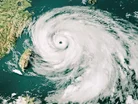
For millennia, humans have attempted to forecast the weather, but with climate change making conditions more extreme, the stakes are getting higher.
Accurate and timely weather predictions are important for protecting people and reducing economic losses.
As weather patterns evolve, continuous forecasting and recalibration are necessary to manage what could happen next.
AI is now being used to help make weather predictions with greater speed and accuracy at a lower cost.
According to the World Meteorological Organization (WMO), extreme weather, climate and water-related events were responsible for almost 12,000 disasters between 1970 and 2021.
The economic losses from these events reached US$4.3 trillion while the death toll stood at two million.
While early warning systems have helped to reduce the number of deaths, economic losses have grown from US$183.9 billion in the 1970s to US$1.47 trillion in the 2010s.
AI is improving weather forecasting
AI has the potential to improve weather forecasts by increasing their speed, accuracy and scale while also offering cost savings.
Research organisations and private companies are developing ways to use AI for this purpose.
Aardvark Weather, an AI prediction system from the University of Cambridge supported by partners including Microsoft Research learns from data, making it a simple and flexible tool.
This gives it the potential to be adapted for bespoke forecasts for specific sectors or locations.

- Google - WeatherNext
- Microsoft - Aurora
- Nvidia - Earth-2
- IBM - Environmental Intelligence Suite
- Amazon - AWS
- Huawei - Pangu-Weather
- Alibaba Group - DAMO Academy’s “Baguan” model
- Fujitsu - supplies supercomputer for Japan Meteorological Agency
- Atos - BullSequana
- HPE - Cray EX systems
The university says that using just 10% of the input data of current systems, Aardvark can outperform the US national Global Forecast System (GFS) forecasting system on many variables.
Nowcasting, which focuses on the immediate hours ahead, can enhance disaster preparedness by using real-time information from sources like weather radars.
The WMO is running the AI for Nowcasting Pilot Project (AINPP), which brings together experts from national meteorological services, universities and companies like Google, Microsoft and Nvidia.
NASA has also partnered with Planette to develop QubitCast, a platform that uses quantum-inspired AI to predict extreme weather months in advance.
Google and Microsoft's AI models
Google has introduced WeatherNext, a family of AI models from Google DeepMind and Google Research.
Google says these models are “faster and more efficient than traditional physics-based weather models and yield superior forecast reliability”.
Google has made WeatherNext available to its Cloud customers to help businesses in energy retail and financial services prepare for extreme weather.
"WeatherNext will change how businesses use AI for business-critical operations affected by weather, including better planning for retail inventory logistics disruptions, manufacturing production needs, distribution line maintenance and many other uses," says Carrie Tharp, Vice President, Global Solutions and Industries at Google Cloud.
Pete Battaglia, Director of Research for Sustainability at Google DeepMind, explains that "Opening WeatherNext to enterprises expands its applications from the research lab to the real world".
"It puts companies in control to proactively prepare for extreme weather and better serve their communities," he adds.
Microsoft Research has developed Aurora, a foundation model for forecasting a wide range of environmental events.
The model has more than a billion parameters and can handle various prediction tasks even in areas with sparse data.
It can be specialised for tasks beyond weather forecasting, such as predicting air pollution or tropical cyclones.
“We’re not putting in strict rules about how we think variables should interact with each other,” says Megan Stanley, a Senior Researcher at Microsoft Research AI for Science.
“We’re just giving a large deep-learning model the option to learn whatever is most useful. This is the power of deep learning in these kinds of simulation problems.”
Nvidia's digital twin platform
Nvidia’s Earth-2 is a cloud and GPU platform for building and running AI-accelerated weather and climate digital twins.
It includes development tools, microservices and reference implementations for simulation and visualisation.
The platform features models like FourCastNet for emulating atmospheric dynamics, CorrDiff for creating kilometre-scale guidance and StormCast, a generative AI model for high-fidelity atmospheric dynamics.
Nvidia states that its CorrDiff model is up to 1,000 times faster and 3,000 times more energy efficient than traditional methods for a comparable task.
“The production of computationally tractable storm-scale ensemble weather forecasts represents one of the grand challenges of numerical weather prediction,” Tom Hamill, Head of Innovation at The Weather Company, told Nvidia.
“StormCast is a notable model that addresses these challenges and The Weather Company is excited to collaborate with Nvidia on developing, evaluating and potentially using these deep learning forecast models.”
Company portals









Executives
Carrie Tharp
VP Global Solutions & Industries - Google Cloud
Peter Battaglia
Senior Director