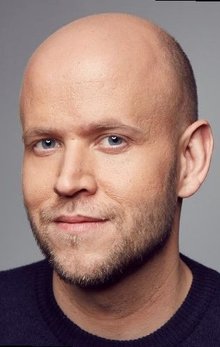
Spotify CEO Daniel Ek to Step Back Following Controversies

Spotify has announced a significant restructuring in its leadership that will see the company’s Founder and CEO, Daniel Ek, step back from the driver’s seat for the first time. He will begin his new role as Executive Chairman from 1 January, 2026.
The world’s most popular music streaming platform has also confirmed that Gustav Söderström, currently co-President and Chief Product and Technology Officer, and Alex Norström, co-President and Chief Business Officer, will assume the roles of co-CEOs in the new year.
Both will report to Ek and are expected to join the company's Board of Directors, pending approval from Spotify’s shareholders.
The announcement formalises an operational structure that has been in place since 2023, when Norström and Söderström were first appointed as co-presidents.

Is the reshuffle the result of recent controversies?
Spotify’s announcement does not give away too much about the motivations behind the leadership reshuffle, though the news comes at a time of growing discontent among the platforms artists and users.
In the past few months, several high-profile musicians have pulled their catalogues from Spotify, with many directly citing Daniel Ek’s investment in military technology company Helsing as the reason.
British band Massive Attack’s recent criticism of Spotify was scathing.
"The economic burden that has long been placed on artists is now compounded by a moral and ethical burden whereby the hard-earned money of fans and the creative endeavours of musicians ultimately funds lethal, dystopian technologies," the band wrote in a statement on social media," the band said in a statement.
"Enough is more than enough. Another way is possible."
The controversy stirred up by Ek’s involvement in military AI technology has also reawakened disputes that artists have about the way in which they are remunerated for their work, with Spotify paying out around US$0.004 per stream.
While it is unclear whether the outgoing CEO’s future at Spotify has been decided by this backlash, the timing of the announcement makes a connection possible.
A gradual handover
The transition reflects a multi-year process in which Ek has progressively delegated operational responsibilities to his lieutenants.
"Over the last few years, I've turned over a large part of the day-to-day management and strategic direction of Spotify to Alex and Gustav – who have shaped the company from our earliest days and are now more than ready to guide our next phase," he explains.
In his new role as Executive Chairman, Ek will focus on capital allocation decisions and long-term strategic planning, rather than small-picture matters.
This structure is typical of the European chairman model, which typically involves greater strategic oversight than the largely ceremonial chairman positions that are common in American corporate governance.

Spotify’s long-term plans
Woody Marshall, Spotify's Lead Independent Director, has indicated that the board has been collaborating with Ek on this leadership evolution for a number of years now.
"We have tremendous confidence in Alex and Gustav as they step into these roles," he says.
"They each have more than 15 years with the company and have been instrumental in driving our success and enabling Spotify to lead our industry."
The extended tenure of both incoming co-CEOs provides continuity at a time when Spotify is dealing with growing pressure to demonstrate consistent profitability while also maintaining its market position against its rivals, like Apple Music.
Co-CEOs with complementary skills
Alex and Gustav will bring different but complementary expertise to the new co-CEO arrangement.
Gustav’s background in R&D has been central to Spotify's user experience evolution in recent years, while Alex has overseen the business operations and commercial partnerships that have come to underpin the platform's revenue model.
In a joint statement, the incoming co-CEOs acknowledged their long partnership and emphasised operational continuity.
"Nearly three years ago, when we stepped into our roles as co-Presidents, we charged our teams with relentlessly focusing on building the best and most valuable experience available anywhere and that ambition hasn't changed," the two say in a statement.
We have tremendous confidence in Alex and Gustav as they step into these roles. They each have more than 15 years with the company and have been instrumental in driving our success and enabling Spotify to lead our industry.
Will the co-CEO structure work?
The change in leadership comes at a time when Spotify is hoping to continue to grow its user base. At the moment, the streaming service has 700 million users globally, including 276 million paying subscribers across 184 markets.
However, the company has faced persistent questions about its path to sustainable profitability, particularly given the royalty payments it makes to rights holders.
While the co-CEO structure is quite unusual in the technology sector, the Swedish firm hopes that it will prove effective in delivering results, especially since the two already have good chemistry after working together for several years.
The changes will take effect on 1 January 2026, which will give both Alex and Gustav several months to prepare.
Meanwhile, Daniel Ek will continue to strategise for the company’s future.
“I’m going to keep pushing for us to look around the corner, stay focused on the long term,” he says.
Company portals

Executives
Daniel Ek
Chairman & Co-Founder