Tesla Challenges Waymo in Autonomous Robotaxi Market
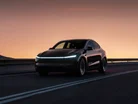
Tesla has commenced commercial operations of its Robotaxi service in Austin, Texas, marking the electric vehicle manufacturer’s entry into the autonomous transportation market and, according to CEO Elon Musk, representing the culmination of a decade of internal development.
The service operates through a dedicated mobile application, requiring users to authenticate with Tesla Account credentials. Customers can request rides within designated service areas, with the fleet initially comprising Model Y vehicles equipped with Tesla's autonomous driving technology. The company operates the service from 6AM to 12AM Central Time, with passengers prohibited from occupying the front-left seat.
“Super congratulations to the @Tesla_AI software & chip design teams on a successful @Robotaxi launch!! Culmination of a decade of hard work,” Elon Musk wrote on X. “Both the AI chip and software teams were built from scratch within Tesla,” he adds.

The service allows passengers to modify destinations during transit and provides climate control, seat adjustmen, and entertainment streaming capabilities through both the mobile application and vehicle touchscreen interfaces. Tesla has incorporated safety features including the ability to request immediate stops and access to customer support during journeys.
Tesla's launch of its Robotaxi comes at a time of rapid development, with established operators expanding their services and new competitors preparing commercial launches across multiple US cities. German car maker Volkswagen believes the driverless taxi market could swell to €450bn in size by 2035, according to a recent report by Fortune magazine.
Waymo leads autonomous taxi market as competitors prepare launches
Alphabet subsidiary Waymo has established itself as the market leader in autonomous transportation, operating commercial taxi services since 2020. The company initially launched in Phoenix, Arizona, before expanding to San Francisco, Los Angeles, Austin, and Silicon Valley. As of March 2025, Waymo was offering 200,000 paid rides per week in its existing markets, including Phoenix, San Francisco and Los Angeles.
Waymo utilises Jaguar I-PACE vehicles equipped with proprietary sensor arrays including lidar, cameras and radar systems. The company uses 29 cameras mounted on the sides and top of vehicles, six radar sensors tracking larger objects and four LiDAR sensors, which use laser pulses to detect surroundings in three dimensions.
In March 2025, Waymo expanded its commercial robotaxi services to Silicon Valley and Austin, Texas. Meanwhile, in Austin, Waymo partnered with Uber, allowing riders to hail autonomous vehicles through the Uber application.
“Opening our fully autonomous ride-hailing service in Silicon Valley marks a special milestone in our Bay Area journey,” said Saswat Panigrahi, Waymo’s chief product officer. “Now we’re bringing seamless rides, safer streets and sustainable transportation to our local community.”
Amazon-owned Zoox has pursued a different approach, designing vehicles specifically for autonomous operation, where up to four passengers face each other and there is no steering wheel.
Zoox has opened a serial production facility in the San Francisco Bay Area that will help grow its robotaxi fleet, eventually producing 10,000 vehicles per year once at full scale. The subsidiary has not yet launched commercial passenger services, continuing to conduct testing and validation programmes ahead of a planned commercial launch later in 2025. Zoox is preparing to start public rides in Las Vegas, with San Francisco to follow.
How Tesla aims to scale Robotaxi deployment
Tesla’s existing vehicle production capabilities provide advantages in scaling autonomous taxi operations, as Tesla can leverage manufacturing expertise and supply chain relationships established through consumer vehicle sales of the Model Y platform, used for Robotaxi services.
Tesla's charging infrastructure network also supports the Robotaxi fleet operations, providing dedicated access to its Supercharger network of charging stations for vehicle maintenance and energy replenishment.
The company has indicated plans to expand the service from the initial 10-20 vehicles in Austin to thousands if the launch proceeds without incidents, with subsequent rollouts planned for Los Angeles and San Francisco later in 2025.
“It’s prudent for us to start with a small number, confirm that things are going well and then scale it up,” Musk told CNBC.
“We could start with 1,000 or 10,000 on day one, but I don’t think that would be prudent. So we will start with probably 10 for a week, then increase it to 20, 30, 40. And I think by, say -- we will probably be at 1,000 within a few months.”
Explore the latest edition of Technology Magazine and be part of the conversation at our global conference series, Tech & AI LIVE.
Discover all our upcoming events and secure your tickets today.
Technology Magazine is a BizClik brand