This Week's Top Five Stories in Technology
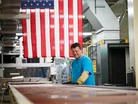
1. Can Apple Revive US Manufacturing With US$600bn Investment?
Apple will partner with TSMC, Samsung, Corning & Texas Instruments in ambitious US$600bn American Manufacturing Program spanning iPhone chips to AI servers
In the 20th century, many of the world’s largest economies began to outsource the manufacturing of goods, with emerging markets overseas offering cheaper alternatives to home-based production.
Now, in the 21st century, it appears that the pendulum is beginning to swing back the other way, with many tech giants looking to establish manufacturing hubs a little closer to home.
Apple has just thrown its considerable weight behind this trend, announcing a huge US$600bn commitment to American manufacturing across the next four years.
This new domestic investment strategy forms part of Apple’s American Manufacturing Program (AMP) – an initiative designed to bring advanced manufacturing back to the US.
2. Why Salesforce & ServiceNow Have Invested $1.5bn in Genesys
Genesys has announced a US$1.5bn investment from Salesforce and ServiceNow, the company says reinforces the importance of AI to connect with customers
If you’re invested in the tech world, it’s hard not to take notice when two of Silicon Valley's heavyweights write cheques worth US$1.5bn.
This week, Salesforce and ServiceNow have joined up to back Genesys, a customer experience and cloud-based software provider based out of the US.
For a while now, Genesys has been helping businesses to change the way they interact with customers, using AI to save time and craft communications more effectively.
With this new financial backing from Salesforce and ServiceNow, it seems as though Genesys is well and truly on the up.

While Genesys already enjoyed working relationships with both investors, this partnership will help to deepen those connections, creating an impressive triumvirate geared around a new era of CX.
"Genesys is delivering long-term value to enterprises through end-to-end customer experience orchestration that can drive loyalty, grow revenue and reduce operating costs," explains Tony Bates, Chairman and CEO of Genesys.
"We're proud to have the support of industry leaders like Salesforce and ServiceNow, and we believe this reflects growing momentum around agentic AI and the importance of connected, autonomous customer experiences."
3. Microsoft vs Google: The Latest Case of AI Talent Poaching
Microsoft has poached more than 20 Google DeepMind AI engineers as the world’s major tech giants battle for AI supremacy in an escalating war for talent
There’s a war going on at the heart of the US tech sector.
Rivalries have always been fierce between the industry’s biggest players, but tensions have never been quite as high as they are today.
The reason, quite simply, is AI.
Over the past few months, an arms race for talented AI engineers has reached boiling point, with dozens of executives and computer scientists jumping ship to join their competitors.
Meta, OpenAI, Apple, Amazon and many more of the US’s top AI companies have sought to poach talent either from one another, or from promising AI start-ups.
The latest victim of this trend is Google’s DeepMind, from which Microsoft has recruited more than 20 AI specialists in an effort to boost the capabilities of its Copilot technology.
Amar Subramanya, former Head of Engineering for Google's Gemini chatbot, confirmed his move to Microsoft as Corporate Vice President of AI this week
"The culture here is refreshingly low-ego yet bursting with ambition," Amar, who is the most senior DeepMind executive to join Microsoft's ranks, wrote in a post on LinkedIn.
Microsoft’s recruitment swoop has also secured the services of Engineering Lead Sonal Gupta, Software Engineer Adam Sadovsky and Product Manager Tim Frank, according to sources familiar with Microsoft's hiring strategy.
The Redmond-based company has successfully persuaded at least 24 DeepMind staff to switch sides over the past six months.
4. Microsoft & Meta Join Forces in Global Cybercrime Fightback
Microsoft and Meta join the Global Signal Exchange (GSE), strengthening a unified tech-driven campaign to combat scams, fraud and cyber threats worldwide
The tech industry stands at a pivotal turning point when it comes to cybersecurity.
Rising cyber threats — including those propelled by AI — mean that organisations must come together to combat malicious actors across online scams, fraud and cyber abuse, with next-generation technology, open data and unprecedented collaboration best utilised in this fight.
In light of these industry trends, Microsoft and Meta have joined The Global Signal Exchange.
Launched in 2024 by Oxford Information Labs Research (OXIL), Google and the Global Anti-Scam Alliance (GASA), the GSE was established as the world’s first multistakeholder, cross-sector clearinghouse for actionable cyber threat signals.
Its mission? To empower accredited partners to share real-time abuse intelligence, coordinate rapid response and outpace the rapidly evolving threat landscape.
André Naumann, GSE Project Lead at Google, says: “At Google, we’re committed to working collaboratively to create a safer web for our users.
“Through the Global Signal Exchange, we’ve been sharing actionable threat signals with a wide variety of actors to quickly identify and disrupt scams and we’re delighted to see more organisations joining the effort.”
5. Tesla Ordered to Pay Millions After Fatal Autopilot Crash
Tesla has been ordered to pay massive damages after a jury found Autopilot defective in a fatal 2019 crash, threatening Musk's robotaxi expansion plans
Tesla has been ordered to pay approximately US$243m in damages after a Florida jury found the company's Autopilot driver-assistance software to be defective in a fatal crash in 2019.
The case centred on George McGee, who was driving a Tesla Model S with Autopilot mode engaged — a software advertised as capable of auto-steering, auto-stopping and recognising obstacles.
While driving McGee allegedly leaned forward to pick something up from his footwell. With his eyes off the road, his car failed to detect a parked Chevrolet Tahoe at an intersection, and he did not brake or steer away.
The Tesla then collided with a couple standing by the parked car. Naibel Benavides Leon was killed in the crash, while her partner Dillon Angulo suffered major injuries.
Since the incident, Tesla has maintained that the driver was solely responsible for the accident. The EV manufacturer has stated that it plans to appeal the decision of the Florida jury.
Despite McGee admitting fault, the jury determined that Tesla's Autopilot system contained a defect and held the company partially liable for the incident.
Tesla argues that the self-driving functions of the car in question should only have been undertaken under full supervision.