
Tim Cook’s Final WWDC Keynote Sparks an Apple AI Pivot
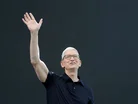
Tim Cook’s final Worldwide Developers Conference (WWDC) as Apple CEO concluded with the company delivering a high-stakes keynote under immense pressure to prove it can compete in AI.
Behind the product reveals, tech leaders will recognise a more consequential story: how talent dynamics are reshaping Apple’s approach to building the future.
Recruiters describe a “crisis of confidence” among AI specialists, the Financial Times reports, following a run of senior departures that narrowed Apple’s choices.
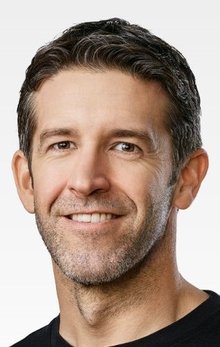
The keynote – which showcased a major Siri overhaul and an expanded Apple Intelligence platform – landed just months before Tim hands the reins to Hardware Chief John Ternus this September.
The org chart behind the roadmap
Analysts say Apple’s long-time bias toward in-house development left it short of the talent and technologies rivals raced to secure.
“They have a bias to doing everything in-house,” Jack Gold, Principal Analyst at J. Gold Associates, told CNBC, capturing a posture that has served Apple for decades yet now collides with the pace and pay dynamics of the AI market.
Apple employs roughly 164,000 people and is valued near US$3tn.
Even at that scale, the AI challenge narrows to winning back the specialists who matter most.
An exodus that hollowed out the AI team
The most visible departure is Ruoming Pang, the distinguished engineer who led Apple’s foundation models team, who joined Meta in a package deal reported at around US$200m. He did not leave alone.
Roughly 10 members of the foundation models team have moved on in recent months, with at least a dozen AI specialists departing since January.
John Peebles and Nan Du went to OpenAI, while Zhao Meng joined Anthropic.
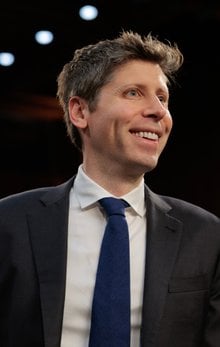
The pay gap is stark. OpenAI CEO Sam Altman has said Meta was offering signing bonuses as high as US$100m to lure AI talent – numbers Apple has shown limited appetite to match.
While Apple is increasing compensation for parts of its foundation models group, the moves trail the market’s most aggressive bids.
Build versus buy
The exits are already reshaping how Apple builds.
A company famous for tight control and end-to-end integration is, out of necessity, choosing to buy.
Apple partnered with Google to roll out Apple Foundation Models based on Gemini models and cloud technology.
According to Bloomberg, opening its platform so developers can draw on outside models signals a philosophical shift for a business built on in-house ownership.
Every leader running an AI strategy will recognise the reframing: build versus buy is rarely just a technology choice; it’s a verdict on whether the organisation can attract, afford and retain the people needed to build at all.
Analysts say Apple’s long-time bias toward in-house development left it short of the talent and technologies rivals raced to secure.
Apple employs roughly 164,000 people and is valued near US$3tn.
Even at that scale, the AI challenge narrows to winning back the specialists who matter most.
The Siri overhaul: AI for the masses
The talent constraints directly shaped what Apple delivered on stage at Apple WWDC at Apple Park on 8 June in Cupertino, California, US.
Rather than chasing fully autonomous agents like its rivals, Apple focused on practical features integrated into everyday tasks.
The company unveiled Siri AI, a more conversational assistant featuring a standalone app, with the ability to analyse on-screen content, and the capacity to pull information from the web and past interactions.
During the keynote, Apple Software Chief Craig Federighi levelled an unusual public critique at competitors, stating, “Some appear to be racing forward, seemingly pursuing AI for the sake of AI, without clear regard for the people, all of us, that it’s ultimately meant to serve,” as reported by Reuters.
The strategy behind this delivery highlights a pragmatic pivot.
As Bob O’Donnell, President and Chief Analyst at TECHnalysis Research, told Reuters: “This finally delivers on the promise of Siri from 15 years ago. It’s AI for the masses; it’s not really agentic.”
However, external talent gaps still pose execution hurdles.
Ben Wood, Chief Analyst at FDM CCS Insight, noted to the BBC that Apple still has to prove how its approach translates into everyday utility rather than just parity with rivals, saying that “whether it has succeeded or not will come down to user reaction when new capabilities are in their hands”.
The rollout will also face regulatory friction, with a beta version launching later this year in English, though notably excluded from the EU due to regulatory disagreements over virtual assistant support.
Following the announcements, market reception was measured, and Apple shares closed 1.9% lower at US$301.54.

Tim’s final act and the legacy question
Bloomberg has framed this AI push as Tim’s “final act.”
The conference marked an emotional milestone for the CEO, who received a standing ovation from thousands of employees and developers as he reflected on his 15-year tenure. He called serving as the head of the company the “honour of a lifetime”.
While incoming CEO John Ternus did not speak during the main address, he was seated next to Tim at subsequent media briefings.
Francisco Jeronimo, VP for Data and Analytics at IDC EMEA, told the BBC that the event gives John a clear strategic runway, noting that if Apple delivers on this integration, “this could be remembered as the moment Siri and Apple Intelligence moved from the background of Apple’s ecosystem to the centre of its future”.



Executives
John Ternus
CEO
Sam Altman
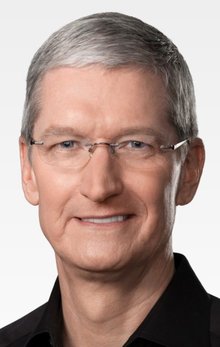
Tim Cook
Executive Chairman