Top 10: Predictions for 2026
As 2025 draws to a close, the business and technology landscape is being redefined by a powerful mix of innovation and disruption. Gen AI, for example, continues to mature, evolving from creative companion to strategic co-pilot as organisations unlock efficiencies once buried in complexity. Sustainability is a key influence on tech trends, with it shifting from compliance-driven to growth-focused, now deeply embedded in the design and training of AI systems. As well as this, quantum computing is edging closer to practical reality. To wrap up 2025, Technology Magazine lays out the defining trends set to shape 2026 – and beyond.
10. AI-driven vertical platforms
Company in focus: ServiceNow
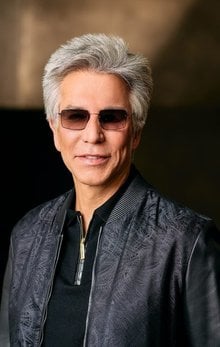
CEO: Bill McDermott
Founded: 2004

AI-driven vertical platforms are set to transform enterprise workflows in 2026.
ServiceNow’s AI Platform has evolved beyond workflow automation into an orchestration hub, integrating intelligence and real-time data across domains like IT, HR and customer service.
Its AI Agent Fabric and Orchestrator allow organisations to deploy domain-specific agents, automate complex tasks and bridge previously unconnected systems.
Recent deployments show rapid improvements: up to 30% lower operational costs, 25% faster resolution times and a significant drop in escalations.
9. Data and cloud sovereignty
Company in focus: AWS
CEO: Matt Garman
Founded: 2002

AWS is driving the future of data and cloud sovereignty with its European Sovereign Cloud, set to launch by the end of 2025.
This independent, fully managed platform ensures that both data and metadata remain entirely within the EU, governed and operated exclusively by EU-based teams.
With advanced sovereignty controls such as customer-managed encryption keys, strict data residency guardrails and operational autonomy supported by a German-led governance structure, AWS offers compliance, accountability and innovation for regulated industries.
8. Enterprise assets become digital tokens
Company in focus: Maersk
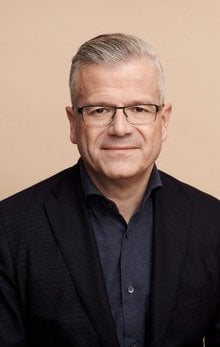
CEO: Vincent Clerc
Founded: 1904

In 2026, expect enterprise assets – from shipping containers to invoices – are expected to be represented as digital tokens, streamlining global trade.
Maersk stands out with its push toward IoT integration and platforms that digitise container movements and supply chain activities.
Blockchain projects like TradeLens, with IBM, and real-time asset tracking now enable instant authentication, automated payments via smart contracts and reduced paperwork.
Maersk’s new IoT network, rolling out across 450 vessels, provides real-time data on cargo, energy usage and environmental impact.
7. Quantum-proofing enterprise security
Company in focus: Cloudflare
CEO: Matthew Prince
Founded: 2010

Cloudflare is at the forefront of quantum-proofing enterprise security, transitioning its network to post-quantum cryptography.
By September 2025, more than 45% of human-generated Internet traffic sent to Cloudflare’s global network is already protected with hybrid post-quantum key agreements, using ML-KEM algorithms as recommended by NIST.
Cloudflare's WARP client and Zero Trust platform now employ post-quantum encrypted tunnels, securing sensitive data and future-proofing organisations against harvest-now/decrypt-later threats posed by quantum computing – helping enterprises meet regulatory milestones as 2026 comes around.
6. Zero trust architecture
Company in focus: Zscaler
CEO: Jay Chaudhry
Founded: 2007

Zscaler’s zero trust architecture delivers end-to-end protection for cloud, hybrid and remote environments by verifying user identity and device trust before granting access only to specific applications rather than entire networks.
The Zscaler Zero Trust Exchange integrates with leading identity providers, inspects all traffic – including encrypted – and uses AI-driven analytics to block malware, ransomware and phishing threats in real time.
Features like app-level microsegmentation, continuous verification and digital experience monitoring minimise the risk of lateral movement and breaches – all features of increasing importance as we look ahead to 2026.
5. ESG compliance and sustainability
Company in focus: Salesforce
CEO: Marc Benioff
Founded: 1999

In 2026, ESG compliance will morph into a technology-driven, regulated race, with enterprises integrating AI-powered analytics, supply chain transparency and circular economy strategies to stay ahead of stricter global mandates.
Salesforce is accelerating ESG compliance and sustainability through predictive AI and real-time analytics, responding to both rising regulatory demands and stakeholder scrutiny.
New tools in Net Zero Cloud leverage intelligent automation to proactively spot emissions spikes, optimise reductions and ensure granular CSRD and SBTi compliance, while AI-augmented reporting helps enterprises demonstrate transparency and combat greenwashing.
4. Hyper-automation
Company in focus: UiPath
CEO: Daniel Dines
Founded: 2005

Hyper-automation in 2026 will be driven by advanced AI, process mining and cross-platform orchestration – automating complex, end-to-end workflows with minimal human input.
UiPath exemplifies this trend, integrating agentic orchestration, intelligent document processing and ML-powered decision-making to enable enterprises to connect RPA bots, AI agents and people across departments and legacy systems.
As hyper-automation platforms become more cloud-native and intelligent, organisations will unlock transformative efficiency improvements, cost reductions of up to 30% and real-time adaptability to changing business needs.
3. AI-augmented workforce
Company in focus: Microsoft
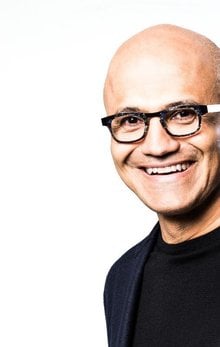
CEO: Satya Nadella
Founded: 1975
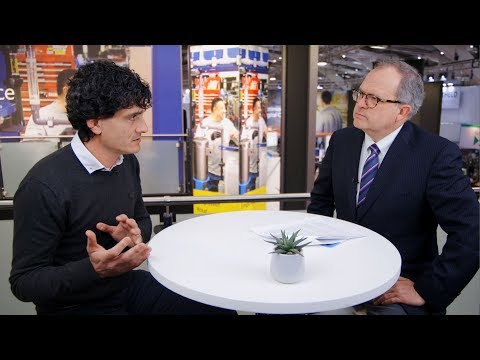
The AI-augmented workforce is becoming an increasingly defining trend, with enterprises adopting intelligent agents and copilots to maximise human productivity and unlock new business value.
Microsoft’s approach highlights this shift: rather than simply automating tasks, the company is redesigning work processes to fully integrate AI into day-to-day operations.
Employees are transitioning to roles requiring skills in prompt engineering and AI supervision, while independent AI agents are being deployed to handle meetings, document editing and routine communications autonomously.
2. Digital twins optimising operations
Company in focus: Siemens
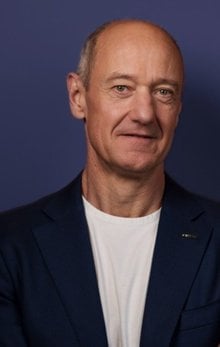
CEO: Roland Busch
Founded: 1847

Digital twins’ role as essential tools for optimising operations across manufacturing, energy and infrastructure sectors is becoming more apparent.
Siemens exemplifies this, providing comprehensive digital twin solutions that simulate and optimise entire products, machines and production plants throughout their lifecycle.
These digital twins enable real-time operational insights, predictive maintenance and design validation, reducing downtime and improving sustainability.
Siemens’ Industrial Copilot integrates AI directly on the shop floor for rapid decision-making, while collaborations with companies like JetZero showcase the use of digital twins to de-risk manufacturing and accelerate innovation.
1. Gen AI: From pilot to platform
Company in focus: OpenAI
CEO: Sam Altman
Founded: 2015

Gen AI is shifting rapidly from pilot projects to full-scale platform integration – a trend that will continue into 2026.
This enables enterprises to embed AI deeply into workflows, talent management and decision-making.
OpenAI is at the forefront of this trend with its AI-powered Jobs Platform scheduled for launch in mid-2026, designed to match employers with AI-skilled candidates more efficiently than traditional job sites.
Complementing this, OpenAI offers AI certifications to upskill millions of workers, fostering an AI-ready workforce.
Company portals







Executives
Bill McDermott
Chairman and CEO
Daniel Dines
Chief Innovation Officer
Jay Chaudhry
CEO, Chairman & Founder
Marc Benioff
Chair & CEO
Matt Garman
Chief Executive Officer
Matthew Prince
CEO & Co-Founder
Roland Busch
President and CEO of Siemens AG

Sam Altman
Satya Nadella
Chairman and CEO
Vincent Clerc
Chief Executive Officer