How Technology is Revolutionising Climate Intelligence
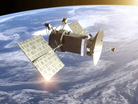
A whitepaper from the World Economic Forum (WEF) and the MIT Media Lab explores how Earth observation (EO) technology can advance climate intelligence.
Charting the Future of Earth Observation shows how satellite data, AI and other digital tools are reshaping climate action.
The collaboration identifies technology pipelines that accelerate the processing of satellite data to provide new insights into climate change.
The paper also stresses the need for accessible climate insights, especially for communities most vulnerable to its effects.
Advancements in satellite and AI integration
Earth observation (EO) involves collecting and analysing data on the planet’s systems, mainly using satellite remote sensing.
More than half of all essential climate variables can only be measured from space, placing EO at the heart of climate intelligence.
The sector is expected to generate more than two exabytes of data by 2032.
Historically, using this data was hampered by slow processing and limited access.
Technological shifts are removing these barriers, with enhanced satellite sensors providing more detailed and frequent observations.
Modern AI and ML platforms can now process these huge datasets in near real time, converting raw satellite images into climate insights within minutes.
ML models can deliver predictions up to 1,000 times faster than older methods.
The development of smaller satellites also means more organisations, including SMEs, can access and launch their own systems.
Enhancing disaster response and climate adaptation
As climate-related disasters increase, decision-makers need timely information for everything from wildfire detection to post-hurricane recovery.
New low Earth orbit satellite constellations are being developed to deliver near-real-time data to improve rapid response efforts.
In post-disaster scenarios, AI-powered models can analyse satellite imagery to assess damage.
For example, after Hurricane Beryl in 2024, a partnership between Microsoft and Planet rapidly mapped building damage in Grenada to target the emergency response.
These efforts are supported by edge computing, where satellites with onboard AI process images in orbit.
This allows them to transmit only essential insights, reducing data latency for emergency planners.
The new era of climate forecasting
Advances in EO data are matched by progress in high-resolution climate forecasting and the development of digital twins.
Machine learning models now enable forecasting at speeds and scales that traditional physics-based models cannot achieve, predicting things like air pollution or potential floods.

Digital Earth Twin initiatives, such as the European Commission’s Destination Earth programme, are creating digital replicas of the planet.
These twins integrate EO data with AI, allowing researchers to simulate complex climate scenarios and test adaptation strategies.
The WEF whitepaper also highlights a focus on democratising access to climate intelligence.
Converting vast EO datasets into interactive decision-support tools is closing the gap between data and actionable insights.
Tools like augmented reality (AR), virtual reality (VR) and open-source platforms are helping policymakers and community leaders understand and use climate data in more intuitive ways.
However, realising the potential of EO requires addressing challenges like data interoperability, infrastructure investment, digital literacy and workforce development.
The report concludes that continued cross-sector collaboration and investment in open-source platforms are needed to build a scalable and inclusive ecosystem for climate intelligence.
Company portals


Executives
Dava Newman
Apollo Professor of Astronautics; Aeronautics and Astronautics
Sebastian Buckup
Managing Director