WEF: What Are the Key Leadership Lessons from Davos 2026?

The World Economic Forum (WEF) in Davos came to a close on 23 January, concluding a week of leadership discussions centred on the accelerating role of AI, emerging technologies and the challenges of navigating global trade dynamics.
Drawing insights from hundreds of influential business and political figures, this year’s WEF placed emphasis on fostering “a spirit of dialogue” amid the evolving complexities of international economic growth.
Commenting at the end of the week’s discussions, WEF CEO Børge Brende said on LinkedIn: “The forum is the world’s leading platform for multi-stakeholder dialogue on the most complex - and often most contested - issues of the day.
“We convene diverse voices from across governments, business and civil society, which means we don’t always see agreement.
“Sometimes, we see strong disagreement. This is okay. Because the purpose of the week - and the Forum’s work over the year - is to create a trusted space for dialogue.”
At the opening of the event, Larry Fink, Co-Chair of the WEF and CEO of BlackRock, urged attendees to avoid turning the forum into an “echo chamber”, noting that its purpose isn’t to host panels “where everyone agrees 95% of the time” – because, as he put it, “the world doesn’t.”
He said: “most of the people affected by what we talk about here will never come to this conference.
“That’s the central tension to this forum: Davos is an elite gathering trying to shape a world that belongs to everyone.
“We’re here for something bigger than ourselves and the organisations we represent.”
AI has a huge factor in the global economy
At the forefront of discussions throughout the week stood one unmistakable theme: AI.
While executives differed on the finer details, leaders across industries aligned on one point – the technology’s transformative potential to reshape both the workplace and the global economy.
Olivier Blum, CEO of Schneider Electric, highlighted in a WEF blog post that the key challenge for business leaders lies in addressing the paradox between growing energy demand and the limitations of existing energy systems.
“AI is redefining the global energy infrastructure,” he says.
“AI is the digital engine of growth, but it is also a massive consumer of one of the world’s most in-demand resources - energy.
“And here’s the twist: AI is also the very technology we need to optimise the energy, infrastructure and systems it is powering.”
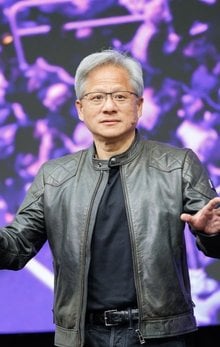
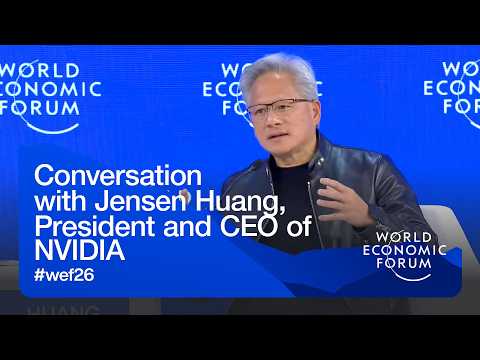
In his discussion with Larry, NVIDIA CEO Jensen Huang underscored the need to view AI not just as an innovation, but as critical infrastructure for the future.
“AI is infrastructure and there’s not one country in the world I can’t imagine that you need to have AI as part of your infrastructure,” he said, “because every country has its electricity, you have your roads - you should have AI as part of your infrastructure.”
He added that nations can easily import AI, saying it “is not so incredibly hard to train these days” and that “with local expertise, you should be able to create models”.
Understanding AI is the secret to its potential
Jensen also shared what he considers the foundation of his AI success – a clear understanding of how each element fits within what he calls the “layer cake”.
The first layer, he explained, is energy, followed by chips – “the layer that I live in” – and then cloud infrastructure.
Above that sits the fourth layer, focused on AI models.
“This is where people think AI is,” he noted, “but don’t forget that for those models to exist, every layer beneath them must be in place.”
The final layer is the application stage – where AI becomes tangible through tools and services that people and businesses can actively use.
Accenture CEO Julie Sweet reinforced the call for deeper understanding of AI, stressing that its implementation must be both trusted and effective.
“When Accenture first started on our journey, the first thing we did was take our top 50 leaders,” Julie says.
“They got the most training in the first few months because if you don’t have the leaders understanding it, they can’t explain it to our people. They can’t drive the transformation.”
Staying one step ahead
Beyond the focus on AI adoption and implementation, the forum also underscored the importance of corporate resilience in the face of shifting tariffs and evolving regulatory landscapes.
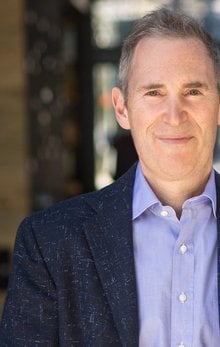
Amazon CEO Andy Jassy addressed the impact of President Donald Trump’s proposed tariffs during the forum.
He says: “We did a lot of pre-buying in the early part of 2025 to enable us to try and keep prices as low as possible for customers.”
But he added that some supplies ran out in autumn.
He adds that consumers have dealt with the changes at Amazon so far but added: “We’ll have to wait and see what happens in 2026.”






Executives
Andy Jassy
President and CEO
Børge Brende
President and CEO
Jensen Huang
Founder and CEO
Julie Sweet
Chair
Larry Fink
Chairman and Chief Executive Officer

Olivier Blum
Chief Executive Officer