What Leaders are Saying about ‘The Woodstock of AI’
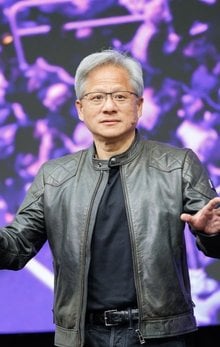
San Jose, California, has once again been transformed into the epicentre of the technological universe, hosting the NVIDIA GTC 2026 summit.
Dubbed the “Woodstock of AI” by industry insiders, GTC has transitioned from a developer conference into a high-stakes summit where the world’s most powerful chief executives outline the future of the global economy.
As NVIDIA moves toward its ambitious goal of becoming the world’s first US$1tn sales organisation by 2027, the 2026 event has focused heavily on physical AI and the transition to the Vera Rubin architecture.

For technology companies, GTC is no longer just about the chips that power AI – it has shifted to the fundamental infrastructure required to make AI work at scale.
This includes:
- Finding ways to power and cool the massive, high-density AI infrastructure with integrated energy systems
- Developing “smart” AI systems that can reason, plan and act autonomously via agentic software platforms
- Testing and proving these new AI systems across huge, production-ready, global cloud networks.
These three challenges are what industry leaders believe will define the next decade of computing.
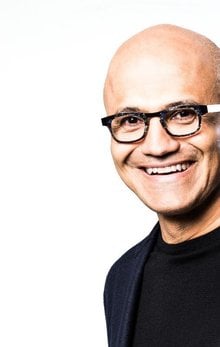
Satya Nadella: Microsoft Azure leads the Rubin charge
Microsoft has wasted no time in asserting its position at the front of the queue for NVIDIA’s latest hardware.
CEO Satya Nadella confirmed that the firm is the first cloud provider to operationalise the new Vera Rubin NVL72 system.
This rack-scale solution, which is 100% liquid-cooled, represents a massive leap over the previous Blackwell generation, offering up to five times the inference performance.
“We’re the first cloud to bring up an NVIDIA Vera Rubin NVL72 system for validation, another big step in building the next generation of AI infrastructure with NVIDIA,” says Nadella.
By moving these systems into a “lab” environment for immediate validation, Microsoft aims to roll out Rubin-based instances to Azure data centres within months.
This collaboration ensures that Microsoft’s cloud customers will be among the first to access the 36-CPU, 72-GPU configuration designed for the most demanding LLM workloads.
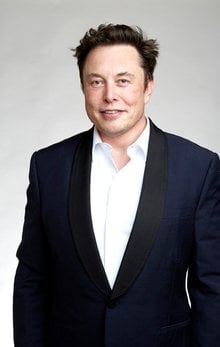
Elon Musk: A ‘huge admirer’ commits to scale
Despite industry rumours that Tesla and SpaceX might pivot entirely to in-house silicon, Elon Musk used the “Woodstock of AI” to clarify his long-term reliance on NVIDIA.
While Tesla continues to develop its own processors, Musk played down the idea that they would fully replace NVIDIA’s hardware in the immediate future.
“I am a huge admirer of NVIDIA and Jensen [Huang],” Musk writes on X.
“That market cap is well-deserved.”
He further solidified the partnership, stating: “SpaceX AI and Tesla expect to continue ordering Nvidia chips at scale.”
For NVIDIA, this endorsement from one of its largest and most vocal customers provides a significant vote of confidence in its roadmap through 2027.
David Brown: AWS scales to a million GPUs
For AWS, GTC 2026 marks a massive expansion of its 15-year partnership with NVIDIA.
David Brown, Vice President of Compute and Networking at AWS, detailed a roadmap that includes the deployment of more than one million NVIDIA GPUs across AWS Regions starting this year.
AWS is positioning itself as the premier destination for agentic AI, which are systems capable of autonomous reasoning and planning.
“AI is moving fast and, for most of our customers, the real opportunity isn’t in experimenting with it – it’s in running AI in production where it drives meaningful business outcomes,” he says.
To support this, AWS is integrating the NVIDIA Inference Xfer Library to speed up data movement between nodes, alongside offering new EC2 instances powered by the RTX PRO 4500 Blackwell Server Edition.
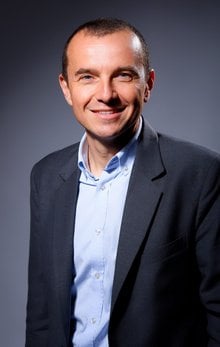
Olivier Blum: Schneider Electric tackles the energy crisis
As compute density skyrockets, the conversation at GTC has shifted from the GPU to the power grid.
Olivier Blum, CEO of Schneider Electric, highlights that AI success now depends as much on energy systems as it does on silicon.
Schneider is working closely with NVIDIA on the Vera Rubin NVL72 reference design to ensure that high-density compute can scale sustainably.
“One of the clearest signals coming out of NVIDIA GTC this week is how quickly the industry is moving toward a more connected model for AI infrastructure,” Blum says.
He emphasises that the industry is moving away from fragmented tracks toward “coordinated energy centric systems”.
By using digital twins and agentic AI in operations, Blum believes facilities can finally reduce manual risk in these increasingly complex environments.
Adrian McDonald: The era of ‘tokens as a service’
Adrian McDonald, President of Dell Technologies EMEA, echoes the sentiment that GTC has lived up to its “Woodstock” billing.
For Dell, the focus is on the practical economics of AI, where the “new currency” is defined by cost per token and tokens per watt.
"The world is moving to AI Inference at pace and NVIDIA intends on leading the way," McDonald says.
He notes that as AI becomes central to government and business services, “tokens as a service” is likely to become a dominant business model.
Dell continues to work as a primary infrastructure partner, helping organisations turn “power into revenue” by deploying NVIDIA’s full-stack capabilities across the global enterprise.





Executives
Adrian McDonald
President Dell Technologies EMEA

David Brown
VP of Compute and ML Services
Elon Musk
Tesla CEO
Jensen Huang
Founder and CEO
Olivier Blum
Chief Executive Officer
Satya Nadella
Chairman and CEO