Why ABB is Selling its Global Robotics Division to SoftBank
Swiss engineering giant ABB has agreed to sell its Robotics division to Japan's SoftBank Group for an enterprise value of US$5.375bn, abandoning earlier plans to spin off the business as a separately listed entity.
The transaction is expected to close in mid-to-late 2026, depending on regulatory approvals.
The deal marks a significant strategic pivot for both companies, with SoftBank positioning the acquisition as central to its Physical AI ambitions.
"SoftBank's next frontier is Physical AI," says Masayoshi Son, Chairman & CEO of SoftBank Group.
"Together with ABB Robotics, we will unite world-class technology and talent under our shared vision to fuse Artificial Super Intelligence and robotics – driving a ground-breaking evolution that will propel humanity forward."
But why has ABB decided to sell its world-class robotics business now?
The statements released by the firm note that ABB's board evaluated SoftBank's offer against their original intention to spin off the company, ultimately concluding that the divestment would create more immediate shareholder value.
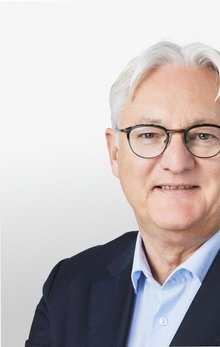
"It reflects the long-term strengths of the division, and the divestment will create immediate value to ABB shareholders," says Peter Voser, ABB's Chairman.
"ABB will use the proceeds from the transaction in line with its well-established capital allocation principles.
"Our ambitions for ABB are unchanged and we will continue to focus on our long-term strategy, building on our leading positions in electrification and automation.”
The financial implications
The transaction will generate net cash proceeds of approximately US$5.3bn after transactional costs, alongside a non-operational pre-tax book gain of around US$2.4bn.
ABB expects to incur separation costs of approximately US$200m, with half already factored into 2025 guidance. The firm also estimates transaction-related cash tax outflows of between US$400-500m.
The Robotics division, which currently employs around 7,000 people, generated revenues of US$2.3bn in 2024, representing roughly 7% of ABB's entire revenues. Its operational EBITA margin was 12.1%.
From the fourth quarter of 2025, the business will be reported as discontinued operations as ABB consolidates into three business areas, with the Machine Automation division moving into Process Automation.

Limited synergies drive decision
ABB has acknowledged that it has experienced limited business and technology synergies between its Robotics division and its remaining divisions, with team members highlighting the different demand and market characteristics between robotics and its core operations.
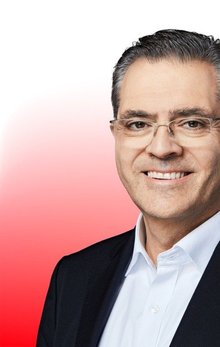
"ABB and SoftBank share the same perspective that the world is entering a new era of AI-based robotics and believe that the division and SoftBank's robotics offering can best shape this era together," says Morten Wierod, CEO of ABB.
"ABB Robotics will benefit from the combination of its leading technology and deep industry expertise with SoftBank’s state-of-the-art capabilities in AI, robotics and next-generation computing," he adds.
"This will allow the business to strengthen and expand its position as a technology leader in its field.”
This acquisition is another huge name for SoftBank's portfolio this year, with the Japanese firm already purchasing a US$2bn stake in Intel earlier this summer.
A transition in leadership
In conjunction with the divestment, Sami Atiya, President of Robotics & Discrete Automation and Executive Committee member, will depart ABB by the end of 2026.
Sami will step down from the Executive Committee at the end of 2025 but will continue as a strategic adviser to support the Robotics business and carve-out process throughout 2026.
In his statement, Morten praises the work Sami has done and will continue to do under the ABB name.
"Sami has played an instrumental role in building a robotics business that covers everything from industrial robots to state-of-the-art collaborative and autonomous mobile robots, backed by some of the most advanced software and AI solutions," he explains.
The departure concludes nearly a decade with ABB for Sami, during which he established AI as a key value driver across the organisation.
ABB will deploy the proceeds according to its established capital allocation principles whilst maintaining its strategic focus on electrification and automation.
Company portals



Executives
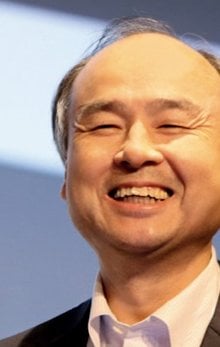
Masayoshi Son
CEO & Founder
Morten Wierod
CEO
Peter Voser
Chairman of The Board of Directors
Sami Atiya
President of Robotics & Discrete Automation business