
Why Google's Alert System Failed During Turkey Earthquake
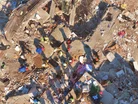
Google has admitted that its Android Earthquake Alerts (AEA) system severely miscalculated the magnitude of the deadly earthquake that hit Turkey on 6 February 2023.
The tech giant's algorithm estimated the first tremor at between 4.5 and 4.9 on the moment magnitude scale (MMS) when it was actually a catastrophic 7.8.
Only 469 people received Google's highest-level ‘Take Action’ warnings for the initial quake, which killed more than 55,000 people across south-east Turkey.
Instead, 500,000 users received the lower-tier ‘Be Aware’ notifications designed for light shaking that do not override Do Not Disturb settings on smartphones.
The distinction proved critical as the first earthquake struck at 04:17 when most were asleep in buildings that subsequently collapsed.
The limitations of technology exposed by tragedy
Google’s researchers have acknowledged the "limitations to the detection algorithms" in a detailed analysis published in Science, an academic journal.
Post-earthquake simulations revealed the system should have generated 10 million Take Action alerts for those within 98 miles of the epicentre.
A second major earthquake later that day was also underestimated, though the system performed marginally better by sending 8,158 Take Action alerts and nearly four million Be Aware notifications.

"We continue to improve the system based on what we learn in each earthquake", a spokesperson for Google says.
The company had previously told the BBC in 2023 that the system had "performed well" following an initial investigation.
Concerns surround the technology
Android devices constitute more than 70% of Turkey's mobile phone market, making Google's system the primary earthquake warning mechanism for millions across the country.
The AEA operates across almost 100 countries as what Google describes as a "global safety net" often functioning in nations without alternative warning systems.
Elizabeth Reddy, Assistant Professor at Colorado School of Mines, expressed frustration at the delayed disclosure.
"I'm really frustrated that it took so long," she says.
"We're not talking about a little event — people died — and we didn't see a performance of this warning in the way we would like."
The demand for transparency
Following this revelation, scientists are beginning to question whether governments are placing too much faith in unproven technology.
Harold Tobin, Director of the Pacific Northwest Seismic Network, is advocating for a higher level of transparency.
"I think being very transparent about how well it works is absolutely critical", Harold told the BBC.
"Would some places make the calculation that Google's doing it, so we don't have to?"
Google maintains the system serves as supplementary technology rather than replacing national warning infrastructure.
"Every earthquake early warning system grapples with the same challenge — tuning algorithms for large magnitude events", Google says.
This situation speaks to the challenges facing private technology companies attempting to provide critical public safety services at global scale, particularly when dealing with rare but catastrophic natural disasters that provide limited real-world testing opportunities.
