Why are Warehouse Leaders Embracing Digital Automation?

Zebra Technologies Corporation (Zebra) reveals that warehouse leaders across Europe recognise the advantages of integrating automation technologies into their operations, yet they confront ongoing uncertainties about implementation strategies.
Within the insights of the company's 2025 Warehouse Vision Study, the narrative remains that while many decision-makers are inclined towards technological transformations, over 50% express difficulty in commencing the automation journey.
As technological capabilities continue to evolve, warehouse environments are increasingly adopting automation solutions to enhance supply chain efficiency and minimise human error in operational tasks.
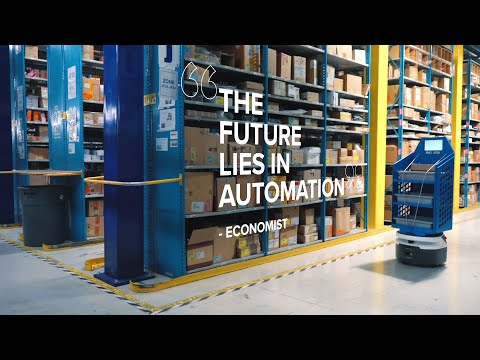
Why modern warehouses are integrating digital solutions
With customer demands intensifying, modern warehouses are compelled to integrate digital solutions for improving operational agility and maintaining a competitive edge.
Acknowledging this, many executives are turning to innovative technologies.
Zebra's study, "The Great Warehouse Convergence: Where Technology, Efficiency and Innovation Align," explores the current positioning of warehouse leaders within this technological evolution.
Phil Sambrook, Transport and Logistics Vertical Lead, EMEA, Zebra Technologies, says: “Human-centred solutions are set to reshape warehouses - nearly 80% of warehouse decision-makers in Europe agree that innovation makes warehouse jobs more appealing, attracting workers and supporting long-term workforce stability."
Phil further advises leaders embarking on automation to partner with experienced technology solution providers to streamline their operational transformation.
However, despite these strategies, 62% of decision-makers remain uncertain about where to initiate automation, indicating potential delays in streamlining the supply chain.
- 84% of decision makers view technology as essential to stay competitive
- 82% agree that increased automation boosts frontline worker productivity
- 80% understand that warehouses require modernisation but the slow pace is a challenge
- 79% agree new technology makes the warehouse environment more enticing for workers
- 73% believe the investment in automation outweighs the risk of not implementing
- 67% agree that more frequent downtime occurs as a result of issues using the devices
How automation is transforming processes and productivity
In the upcoming five years, considerable investment is anticipated from warehouse leaders into digital technologies aimed at refining supply chain processes and boosting workforce productivity.
Technological innovations such as AI and Gen AI are being planned for implementation to advance task management, provide predictive analytics, and enhance machine learning.
These technological tools are specifically tailored to improve operational flows, diminish error rates and elevate user experiences for both employees and customers.
AI and Gen AI are pivotal in process optimisation and delivering predictive insights, respectively.
Their incorporation is crucial for enhancing risk management within the supply chain.
Over the forthcoming years, expectations show:
- 63% of decision-makers intend to adopt Augmented Reality (AR)
- 63% will introduce AI
- 65% plan on using Predictive Analytics
- 68% foresee implementing Gen AI
The move towards automation has already sparked more streamlined operations globally.
Automation is versatile and can seamlessly operate within various facets of warehouse functions, encompassing risk anticipations and precise real-time data capture technologies which are instrumental for asset tracking and location-oriented management.
This approach not only fine-tunes quality control but also optimizes inventory management and picking efficiency, resulting in faster, more effective operations.
Phil adds: “Warehouse, distribution and logistics operators can meet evolving customer expectations by adopting advanced technologies that drive efficiency and competitiveness. Intelligent automation and improved asset visibility will improve order accuracy, accelerate fulfilment and enhance returns management.”
Zebra introduces the EM45 Series Enterprise Mobile computer
To address the needs of logistics professionals and elevate warehouse productivity, Zebra has introduced the EM45 Series Enterprise Mobile computer.
The EM45 RFID version is particularly suited for precise inventory evaluations and task completion, thanks to its integrated radio frequency identification capabilities.
Its features, such as a high-performance 50MP rear camera, are ideal for detailed photographic documentation, swift barcode scanning, proof of delivery and elevating route management efficiency.
About 74% of European warehouse leaders believe utilising machine vision and fixed industrial scanning technologies can save time and reduce errors.
Zebra's Fixed Industrial Scanners are equipped to execute complex machine vision tasks, thereby fostering the automation and efficiency streamlining within warehouses.
Despite continual technological advancements, particularly in AI, many leaders are still challenged with beginning its application in supply chain operations.
Nevertheless, as the market grows more competitive and consumer expectations surge, automation remains high on the priority list for warehouse leaders to maintain operational excellence.