
Yubico and OpenAI Partner on Hardware Security for GPT-5.6
OpenAI’s GPT-5.6 model family launch introduces more than performance improvements and reduced token consumption.
The frontier AI company is enforcing hardware-backed passkey authentication for individual members of its Trusted Access for Cyber (TAC) programme, marking a decisive shift in how high-risk AI capabilities are protected at the account level.
From 1 September 2026, individual TAC members must enable advanced account security using a hardware-backed passkey to maintain access to OpenAI’s most cyber-capable frontier models. Users who fail to meet the requirement will revert to default access.
The security mandate accompanies the release of GPT-5.6 Sol, OpenAI’s latest model, which delivers significant gains across cybersecurity benchmarks while expanding the defensive tasks available to verified users through the TAC programme.
Model performance and security benchmarks
According to OpenAI, GPT-5.6 Sol is its strongest cybersecurity model to date, delivering major improvements across software security benchmarks while using significantly fewer tokens than its predecessor.
The model achieved 73.5% on ExploitBench, up from GPT-5.5’s 47.9%.
It almost doubled peak performance on ExploitGym from 15.1% to 24.9% within a two-hour limit. It also improved its score on SEC-Bench Pro from 45.8% to 71.2%, demonstrating stronger capabilities in proof-of-concept generation for complex software.
Beyond benchmark performance, OpenAI says GPT-5.6 supports defensive security tasks including secure code review, patching, threat modelling and blue teaming.
Through the TAC programme, qualified members can also use enhanced capabilities for vulnerability triage and validation, malware analysis, detection engineering and patch validation within authorised environments.
Hardware-backed authentication as access control
The capabilities delivered by GPT-5.6 require authentication mechanisms that can withstand sophisticated account takeover attempts.
To amplify the defences around these higher-risk capabilities, OpenAI is requiring individual TAC members to secure their accounts with hardware-backed passkeys.
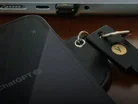
The company had previously partnered with Yubico to bring hardware-backed security keys directly to ChatGPT users. For those who do not already have hardware-backed passkeys, the company also introduced preferred pricing for Yubico security keys.
“By requiring hardware-backed passkeys rather than sync passkeys or software-based alternatives, OpenAI is validating that our product is the best defence for account takeover. ”
OpenAI says it is implementing additional restrictions for high-risk entities and jurisdictions. This represents a significant endorsement of hardware security keys and the growing industry focus on phishing-resistant authentication.
Yubico already supplies security keys to protect OpenAI employees and infrastructure. The new requirement also extends that relationship to users seeking access to OpenAI’s most advanced cybersecurity models.
“This directive represents a significant strategic and commercial validation for Yubico,” says Jerrod Chong, CEO of Yubico.
“By requiring hardware-backed passkeys rather than sync passkeys or software-based alternatives, OpenAI is validating that our product is the best defence for account takeover.
“This requirement will also help drive the adoption of our OpenAI YubiKey bundles across the TAC ecosystem.
“This milestone deepens our partnership with OpenAI – which already relies on YubiKeys for protecting its own employees and infrastructure – and further strengthens our leadership in providing the highest level of authentication as state-of-the-art models scales.”

Authentication architecture for frontier models
By making hardware-backed passkeys a condition of access for its most capable cybersecurity models, OpenAI could be signalling that phishing-resistant authentication is becoming a core architectural safeguard rather than an optional security feature.
The mandate effectively treats authentication strength as a control plane for capability access, linking account security posture directly to the risk profile of available model features.
For organisations deploying TAC programme access, this could mean reassessing authentication infrastructure and key management workflows to ensure hardware-backed credentials are provisioned and enforced at the identity layer.
The approach suggests that as model capabilities continue to advance, authentication requirements may become increasingly differentiated based on the security risk associated with specific model features or deployment contexts.
Company portals
OpenAI
Yubico


Executives

Jerrod Chong
Chief Executive Officer