Top 10: Electronics Manufacturers
While computer programs and AI increasingly dominate global industries, these systems remain entirely dependent on physical components to function and evolve.
Deloitte predicts that international Information Technology (IT) expenditure will exceed US$6tn for the first time in 2026. The organisation notes that physical equipment designed specifically for AI, alongside infrastructure for data centres, represent the most rapidly expanding markets.
Any corporation at the forefront of electronics manufacturing has successfully broadened its geographic reach, established vertical integration across its operations and achieved significant transparency throughout its supply chain.
Technology Magazine has ranked 10 of the top electronics manufacturers by market cap.
10. Garmin
CEO: Cliff Pemble
Headquarters: Kansas, US
Founded: 1989
Garmin distinguishes itself from rival businesses by operating as a vertically integrated entity which owns its own manufacturing sites.
The majority of product assembly occurs within dedicated Taiwanese locations, while the organisation has also launched a US$92 million facility in Thailand to broaden its supply network.
Advanced aviation production is based in Kansas and Oregon and a 6,968 square metre hangar in Arizona expanded the company's footprint in February 2026.
As the business builds goods for the armed forces and the Federal Aviation Administration (FAA), the production plants maintain compliance with International Organization for Standardization (ISO) 9001 and International Automotive Task Force (IATF) 16949 requirements.
9. AMETEK
CEO: David A. Zapico
Headquarters: Pennsylvania, US
Founded: 1930

AMETEK operates through two distinct divisions, with one concentrating on electronic tools while the other specialises in electromechanical equipment.
Each department functions with significant independence, which enables it to partner intimately with clients.
To safeguard its proprietary methods, the business maintains a portfolio of more than 3,800 patents.
Spanning more than 150 global locations, the organisation encompasses a collection exceeding 100 distinct labels.
This catalogue features names such as FARO Technologies, Hamilton Precision Metals and Orion Instruments.
8. TE Connectivity
CEO: Terrence Curtin
Headquarters: Galway, Ireland
Founded: 2007
TE Connectivity delivers interconnection and sensor hardware for multiple industries.
The corporation operates highly automated production facilities, including its automotive electronics site in Nantong, China, which manufactures 220 billion parts each year.
Operating 130 engineering and production centres enables the company to offer rapid prototyping and collaborative design alongside Original Equipment Manufacturers (OEMs).
In 2025, it surpassed its corporate responsibility targets by acquiring 87% of its power from renewable resources and expanding its total number of zero waste to landfill locations to 56.
7. Mitsubishi Electric
CEO: Kei Uruma
Headquarters: Tokyo, Japan
Founded: 1921

Mitsubishi Electric manufactures an extensive array of goods ranging from space satellites to climate control systems.
To run adaptable and automated assembly operations, the enterprise applies its proprietary MELSERVO motion controllers alongside MELFA industrial robots.
Instead of pursuing completely unstaffed facilities, it prioritises cooperation between people and machinery while allocating resources to internal staff education centres.
To bolster industrial output, the corporation funds multiple emerging technology and AI businesses such as Sakana AI and Tulip Interfaces.
6. Foxconn
CEO: Michael Chiang
Headquarters: New Taipei City, Taiwan
Founded: 1974
Foxconn manufactures a massive volume of retail electronics devices, such as the Google Pixel, Nintendo Switch and iPhone.
The business is integrating completely automated production facilities and broadening its geographical footprint to encompass the Americas and Southeast Asia.
Opened in 2010, the Zhengzhou-based Foxconn Technology Park is colloquially known as iPhone City and builds approximately 50% of all Apple smartphones.
Throughout the most demanding periods of the manufacturing cycle, the plant provides jobs for a maximum of 350,000 staff members.
This location ranks as the primary exporter in Henan province, generating approximately 60% of outgoing trade during specific periods.
5. Seagate Technology
CEO: Dave Mosley
Headquarters: Dublin, Ireland
Founded: 1979

As a producer of digital archiving hardware, Seagate Technology focuses primarily on the fabrication of solid state and hard disk drives.
Managing seven global production locations, the corporation has distributed more than 4.5 billion terabytes of memory volume.
The organisation notes that it integrates a broad spectrum of AI applications into its daily workflows to construct manufacturing spaces which are notably quicker, structurally sound and highly intelligent.
Through the application of AI for an enhanced automated vision system (EAVS), the factory personnel at Seagate successfully dropped product imperfections by 60% and retained millions in general operating expenditures.
4. Western Digital
CEO: Irving Tan
Headquarters: California, US
Founded: 1970
Western Digital creates data storage technologies that cater to commercial enterprises and everyday consumers.
The business manages more than 12 production and assembly centres and employs roughly 50,000 people across 36 nations.
The hard disk drives it manufactures incorporate up to 40% recycled materials, and the firm has converted six of its locations to rely entirely on 100% renewable power.
The exclusive helium-sealing method developed by Western Digital uses cleanroom settings in which regular air is swapped for helium, and the enclosure is hermetically closed to minimise turbulence and friction.
3. Sony
CEO: Hiroki Totoki
Headquarters: Tokyo, Japan
Founded: 1946

Managing manufacturing sites in nations such as Japan, Malaysia and the UK allows Sony to run global hubs dedicated to 4K innovations, visual sensors and broadcasting hardware.
The organisation supplies OLED screens, semiconductor lasers and visual sensors for integration into a wide variety of goods including industrial robots, clinical scanning mechanisms and mobile telephones.
Located in Wales, the UK Technology Centre belonging to the firm utilises highly precise manufacturing methods to assemble clinical apparatus, broadcasting cameras and various other items.
In Japan, the Kohda Site focuses on the production of lenses and photographic equipment while also encompassing the Sony Forest.
The business launched this ecological conservation project during 1993 to provide an accessible green space for visitors to explore.
2. Amphenol
CEO: R. Adam Norwitt
Headquarters: Connecticut, US
Founded: 1932
Focusing on the production of cable assemblies, sensors and interconnected systems, Amphenol manages a worldwide web of production plants spanning Europe, Asia and North America.
Instead of utilising a hierarchical corporate framework, the enterprise functions as a group of approximately 200 autonomous commercial divisions.
Every individual plant directs its own research and development, manufacturing timetables and financial outcomes.
The organisation maintains internal capacities for precision stamping, CNC machining and injection moulding to decrease its dependence on external suppliers.
Located in New York, Amphenol Aerospace creates both rectangular and cylindrical connectors from a 28,521 sq m property.
This particular location focuses on producing extremely dependable connectors designed for aerospace and defence uses.
Within China specifically, the business possesses a footprint of about 50 distinct production sites.
1. Samsung Electronics
Co-CEOs: Young-Hyun Jun and Tae-Moon Roh
Headquarters: Seoul, South Korea
Founded: 1938

Samsung began operating in the technology sector at the end of the 1960s and has subsequently grown into the biggest manufacturer of electronics.
The enterprise supplies essential components such as screens and lithium-ion batteries to major corporate buyers like Sony and Apple.
While the firm is a key supplier of these parts, it also produces consumer hardware including mobile phones, climate control systems and fridges.
The organisation manages production facilities across 76 nations and maintains a workforce exceeding 260,000 staff members.
By 2030, it intends to shift towards AI-led facilities, which will integrate this technology throughout the complete supply process from the delivery of raw materials to the dispatch of finished goods.
“The next phase of manufacturing innovation lies in building autonomous environments where AI truly understands operational contexts in real time and independently executes optimal decisions,” says YoungSoo Lee, Executive Vice President and Head of Global Technology Research at Samsung Electronics.
“We are committed to leading the transformation toward AI-powered global manufacturing innovation.”
Company portals









Executives
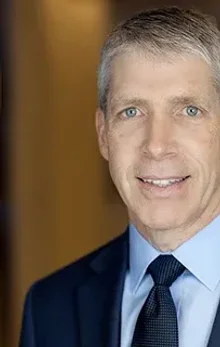
Clifton Pemble
CEO
R. Adam Norwitt
President and Chief Executive Officer
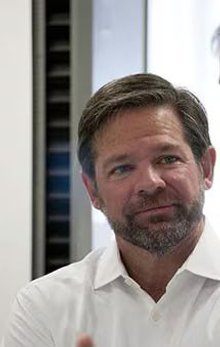
Terrence Curtin
CEO
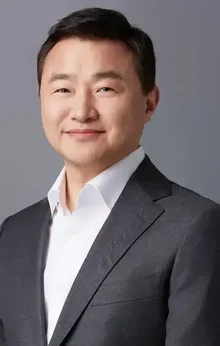
TM Roh
President and Acting Head of the Device eXperience DX Division
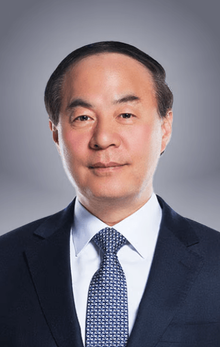
Young Hyun Jun
Vice Chairman, CEO and Head of Device Solutions (DS) Division