As IoT matures, enterprise attention is shifting from proof‑of‑concept pilots to connected ecosystems that deliver measurable business outcomes.
Today’s leading IoT platforms turn raw telemetry into actionable intelligence across manufacturing, logistics, energy and customer engagement.
From hyperscale cloud providers to industrial specialists, each vendor brings a distinct approach to device management, data integration and edge innovation.
This week’s Top 10 shines a light on 10 platforms that define how industries harness IoT for predictive insights, automation and sustainability.
10. Salesforce IoT
HQ: California, USA
CEO: Marc Benioff

Salesforce IoT focuses on turning device telemetry into customer‑centric workflows across sales, service and marketing rather than acting as a pure low‑level device backbone.
It ingests events from connected products, evaluates them against business rules and triggers actions such as case creation, proactive outreach, entitlement checks or personalised journeys.
Tight integration with the Salesforce platform makes it attractive where CRM is the system of record, but it relies on other layers for deep device management and edge control.
9. Particle
HQ: California, USA
Co-Founder and CEO: Zach Supalla

Particle combines hardware, connectivity and cloud services into a tightly integrated stack for connected products, particularly those using cellular or Wi‑Fi modules at fleet scale.
It handles secure provisioning, over‑the‑air firmware updates, remote diagnostics and data routing into cloud applications or analytics tools. The managed connectivity layer simplifies roaming and billing across geographies.
This opinionated, end‑to‑end approach accelerates time to market for device makers, but is narrower in scope than hyperscaler platforms aimed at heterogeneous, multi‑vendor environments.
8. Oracle IoT Cloud
HQ: Texas, USA
Co-CEOs: Clay Magouyrk and Mike Sicilia

Oracle IoT Cloud is designed for enterprises invested in Oracle’s SaaS and database ecosystem, providing a managed path from device telemetry into ERP, SCM and CX applications.
It supports secure device connectivity, streaming ingestion and rule‑based processing, with dashboards for asset monitoring and predictive maintenance.
Tight coupling with Oracle’s business applications helps link physical‑world events to financial, logistics and customer processes. Its IoT feature set is solid but less visible in the wider market than AWS, Azure or Google Cloud.
7. IBM Watson IoT Platform
HQ: New York, USA
CEO: Arvind Krishna

IBM Watson IoT Platform emphasises secure connectivity, device management and AI‑driven analytics, especially for industrial, automotive and building automation use cases.
It provides capabilities for onboarding and organising large device fleets, collecting time‑series data and applying ML to detect anomalies or predict failures.
Integration with IBM’s broader data, AI and automation portfolio supports complex workflows and governance requirements.
While technically capable and strong in specific verticals, it tends to see more niche adoption compared with the largest cloud IoT ecosystems.
6. Cisco IoT Control Center
HQ: California, USA
CEO: Chuck Robbins

Cisco IoT centres on secure connectivity, ruggedised networking and edge intelligence for industrial and service‑provider environments.
It spans industrial routers, gateways and management tools that connect OT assets using protocols like Ethernet, LTE and LoRaWAN, then bridge them securely into enterprise or cloud applications. Policy‑driven segmentation and monitoring help protect mixed IT/OT networks at scale.
Cisco’s strength lies in resilient, secure infrastructure and edge data handling – higher‑level application and analytics layers are typically delivered via partners or integration with public clouds.
5. Siemens MindSphere
HQ: Munich, Germany
CEO: Roland Busch

Siemens MindSphere is an industrial IoT platform aimed at manufacturers and operators of complex equipment.
It connects machines, PLCs and sensors, normalises their data and offers applications for performance monitoring, energy optimisation and predictive maintenance.
Integration with Siemens’ automation and design tools, plus industry‑specific templates, helps accelerate deployment in factories and plants.
MindSphere supports deployment across public cloud and industrial edge, but is largely focused on industrial and OT use cases rather than general‑purpose consumer or smart‑home scenarios.
4. PTC ThingWorx
HQ: Massachusetts, USA
President and CEO: Neil Barua

ThingWorx is an IIoT platform known for its model‑driven, rapid‑application‑development environment and strong ties to PTC’s CAD and PLM products.
It lets teams model assets, build mashups and dashboards and orchestrate workflows around data from machines and sensors. Built‑in connectors and industrial protocol support simplify integration with OT equipment.
When combined with tools like Vuforia for AR, it enables use cases such as guided maintenance and remote assistance.
Its sweet spot is smart manufacturing and service over broad consumer IoT.
3. Google Cloud IoT solutions
HQ: California, USA
CEO: Sundar Pichai

Google Cloud IoT focuses on highly scalable data ingestion, processing and analytics for telemetry workloads.
Devices connect using secure endpoints and feed messages into services like Pub/Sub, Dataflow and BigQuery for streaming analytics and long‑term storage.
Native integration with Google’s AI and ML tools makes it attractive for anomaly detection, forecasting and optimisation scenarios.
While the dedicated IoT service catalogue is leaner than some rivals, organisations already standardising on Google’s data stack often use it as the backbone for sensor‑driven applications.
2. Microsoft Azure IoT
HQ: Washington, USA
CEO: Satya Nadella

Azure IoT provides a broad portfolio spanning Azure IoT Hub for secure device connectivity, IoT Edge for local processing, Digital Twins for virtual representations of assets and environments and IoT Central for SaaS‑style solutions.
It supports large‑scale provisioning, bi‑directional messaging and integration with Azure services like Event Hubs, Data Explorer and Machine Learning.
Strong enterprise security, compliance and hybrid capabilities suit regulated industries and OT‑heavy environments.
Its deep ecosystem and tooling make it one of the most complete IoT stacks.
1. AWS IoT Core
HQ: Washington, USA
CEO: Matt Garman
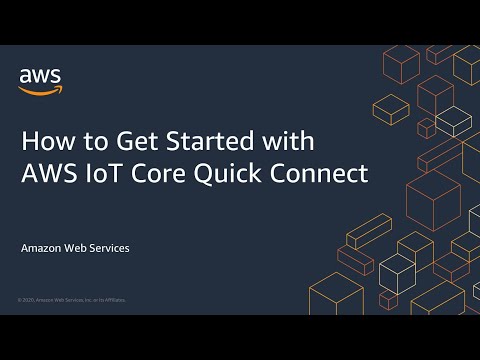
AWS IoT Core underpins a wide suite of AWS IoT services, enabling secure, two‑way communication with billions of devices over MQTT, HTTPS and WebSockets.
It offers features such as device registries, shadows for digital state, fine‑grained access policies and a rules engine that routes data into services like Lambda, Kinesis and S3 for processing and storage.
Paired with Greengrass, SiteWise and IoT Analytics, it supports edge computing, industrial telemetry and advanced analytics.
Company portals






Executives

Arvind Krishna
CEO

Chuck Robbins
Chair and CEO

Clay Magouyrk
CEO
Marc Benioff
Chair & CEO
Matt Garman
Chief Executive Officer

Mike Sicilia
Chief Executive Officer

Neil Barua
CEO
Roland Busch
President and CEO of Siemens AG
Satya Nadella
Chairman and CEO
Sundar Pichai
CEO