
Zero trust security has evolved from theoretical framework to operational necessity, with the principle of “never trust, always verify” now underpinning cybersecurity strategies across global enterprises as traditional perimeter-based defences crumble against sophisticated threats.
With remote work normalising and cloud adoption accelerating, organisations face attack surfaces that extend far beyond corporate networks. Modern threat actors exploit identity-based tactics in nearly 80% of cyberattacks, using compromised credentials and lateral movement to evade detection: transforming zero trust from optional enhancement to fundamental requirement.
10. Netskope
Headquarters: Santa Clara, California, USA
CEO: Sanjay Beri

Netskope serves one-third of Fortune 100 companies with particular strength in data-sensitive industries including financial services and healthcare. Sanjay Beri founded the company in 2012 after recognising that cloud adoption required fundamentally different security architectures. The Security Service Edge platform combines cloud access security broker, secure web gateway, zero trust network access and cloud firewall capabilities into unified protection.
Netskope filed for IPO in August 2025 targeting a US$6.5bn valuation, having raised US$1.4bn in VC funding. The company invests nearly 50% of resources in research and development.
9. Check Point Software
Headquarters: Tel Aviv, Israel
CEO: Nadav Zafrir
Founded by Gil Shwed – the inventor of the modern firewall – Check Point has evolved its pioneering network security expertise into a comprehensive zero trust platform. The company’s AI-driven, cloud-delivered Infinity Platform achieved double-digit growth in 2024, securing significant deals with Fortune Global 500 organisations.
Check Point’s approach combines next-generation firewalls with secure remote access, hybrid-cloud connectivity and SASE services, making it particularly well-suited for organisations with hybrid environments where legacy and modern infrastructure coexist.
8. Fortinet
Headquarters: Sunnyvale, California, USA
CEO: Ken Xie
Fortinet serves approximately 70% of the Fortune 100 with its security-driven networking approach, which combines security and networking to deliver comprehensive protection across the entire attack surface.
The company’s portfolio spans network security through FortiGate next-generation firewalls, endpoint security via FortiClient, identity management with FortiAuthenticator and SASE capabilities through FortiSASE. Fortinet’s integrated Security Fabric provides organisations with a cohesive platform to implement zero trust architectures while maintaining granular policy enforcement and advanced threat prevention. The company’s strong presence in network security and expanding portfolio across security domains offer a holistic approach to zero trust, particularly attractive to organisations seeking a single-vendor solution.
7. CrowdStrike
Headquarters: Austin, Texas, USA
CEO: George Kurtz

CrowdStrike’s Falcon Zero Trust platform extends its industry-leading endpoint detection and response capabilities into the zero trust domain, protecting more than 20,000 organisations worldwide. The company’s approach emphasises endpoint security as the foundation for zero trust, with device posture assessment and identity threat detection integrated into its platform.
CrowdStrike’s acquisition of identity security capabilities and its focus on preventing lateral movement within networks position it strongly for organisations prioritising endpoint-first security strategies. Despite facing scrutiny following a major global outage in 2024, the company maintains its reputation for innovation in threat intelligence and its Unit 42 research team continues to provide valuable insights into emerging attack vectors.
6. Okta
Headquarters: San Francisco, California, USA
CEO: Todd McKinnon

As identity becomes the new security perimeter, Okta leads the market with its Identity Cloud platform, which enables adaptive authentication, dynamic authorisation, and continuous trust verification. The company’s focus on identity and access management makes it foundational to zero trust architectures, with its single sign-on, multi-factor authentication and fine-grained policy controls serving as the entry point for secure access.
Okta’s low-code orchestration of identity flows and integration with hybrid ecosystems – spanning cloud and on-premises environments – provide organisations with flexible deployment options. Whilst Okta concentrates on identity rather than full-stack zero trust, its position as the identity layer for millions of users worldwide makes it an essential component of enterprise zero trust strategies.
5. Cloudflare
Headquarters: San Francisco, California, USA
CEO: Matthew Prince
Cloudflare operates one of the world’s largest distributed networks, handling a significant portion of global internet traffic, and has leveraged this infrastructure to become a prominent zero trust provider.
Its Cloudflare One platform delivers comprehensive zero trust capabilities including a Zero Trust access proxy replacing traditional VPNs, secure web gateway with content filtering, API-based cloud app security and browser isolation. The company’s edge network architecture enables low-latency, scalable access to internal applications while its cloud-native approach appeals to organisations seeking modern alternatives to legacy security architectures. Cloudflare’s reputation for performance and its ability to deliver security at internet scale make it particularly attractive for globally distributed workforces.
4. Cisco
Headquarters: San Jose, California, USA
CEO: Chuck Robbins
Cisco implements a layered zero trust model through products including Duo Security for identity verification, Umbrella for secure web gateway capabilities and Secure Access for comprehensive ZTNA deployment. The networking giant’s US$28bn acquisition of Splunk in 2024 significantly enhanced its observability and analytics capabilities, enabling more sophisticated zero trust implementations.
With visibility across endpoints, applications and networks, Cisco’s approach focuses on endpoint validation, continuous user verification and contextual access controls based on device and user posture. The company’s enterprise-ready scalability and hybrid deployment support make it particularly attractive to organisations with complex legacy infrastructure alongside modern cloud environments.
3. Zscaler
Headquarters: San Jose, California, USA
CEO: Jay Chaudhry
Zscaler pioneered the cloud-native zero trust model and remains the purest play in the market. The company’s Zero Trust Exchange platform, which processes over half a trillion transactions daily, delivers direct-to-application access without network exposure through its global network of more than 150 data centres.
Serving over 7,700 enterprises worldwide, including 40% of Fortune 500 companies, Zscaler has demonstrated that scalable, centralised zero trust enforcement is not only feasible but superior to traditional network security architectures.
2. Microsoft
Headquarters: Redmond, Washington, USA
CEO: Satya Nadella

Microsoft has transformed its security posture to become a formidable zero trust powerhouse, with its security division surpassing $20 billion in annual revenue. The company’s zero trust framework leverages tight integration across Azure, Microsoft 365 and Entra (formerly Azure AD) to deliver comprehensive identity-centric security.
Microsoft’s conditional access policies, combined with Microsoft Defender’s endpoint detection and response capabilities, provide organisations with dynamic, telemetry-driven risk detection across identities, applications and workloads. The company’s extensive enterprise customer base and native integration within its ecosystem position it uniquely to deliver zero trust at unprecedented scale.
1. Palo Alto Networks
Headquarters: Santa Clara, California, USA
CEO: Nikesh Arora

Palo Alto Networks stands as the undisputed leader in zero trust architecture, pioneering the concept of a unified Zero Trust Enterprise platform. The company serves more than 70,000 organisations across 150 countries, including 85 of the Fortune 100 and consistently ranks as a Leader in Gartner’s Magic Quadrant for Security Service Edge.
Palo Alto’s Prisma Access platform converges network security, cloud security, secure access and endpoint protection into a single framework, while its acquisition of over 20 cybersecurity companies has solidified its comprehensive zero trust portfolio. The firm’s AI-powered threat intelligence and machine learning capabilities distinguish it in an increasingly complex threat landscape, making it the benchmark against which other zero trust solutions are measured.
Company portals










Executives
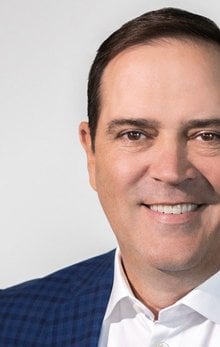
Chuck Robbins
Chair and CEO
George Kurtz
President / CEO & Founder
Jay Chaudhry
CEO, Chairman & Founder

Ken Xie
Founder, Chairman of the Board, and Chief Executive Officer (CEO)
Matthew Prince
CEO & Co-Founder
Nadav Zafrir
Chief Executive Officer
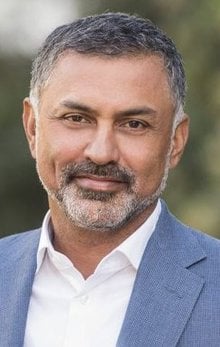
Nikesh Arora
Chairman CEO
Sanjay Beri
CEO & Founder
Satya Nadella
Chairman and CEO

Todd McKinnon
CEO and co-founder