
Company Spotlight: Behind SAP’s ERP Innovations
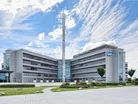
SAP has long been a stalwart of enterprise software. Founded in 1972 in Walldorf, Germany, by five former IBM engineers – Dietmar Hopp, Klaus Tschira, Hans-Werner Hector, Hasso Plattner and Claus Wellenreuther – SAP began with a singular focus: to develop standard application software for real-time data processing.
Over the following decades, the company has evolved into a global leader in enterprise resource planning (ERP) systems, continually innovating to meet the changing needs of businesses worldwide.
The early days: R/1 and R/2 systems
SAP’s journey into ERP began in the 1970s with the creation of its first product, RF – a financial accounting software that laid the groundwork for its future offerings. By 1973, SAP introduced R/1, a single-tier system for financial accounting and reporting. While rudimentary by today’s standards, R/1 demonstrated SAP’s early commitment to creating integrated, real-time business software.
In 1979, SAP launched R/2, a two-tier system designed to run on IBM mainframes. This product marked a significant leap forward, integrating financials and logistics into a single software system. R/2 was revolutionary at the time, offering capabilities such as real-time processing and multi-currency support. Its modular architecture allowed businesses to customise the software to their specific needs, a hallmark of SAP’s ERP philosophy that continues to this day.
The breakthrough: SAP R/3
The 1990s saw a shift in enterprise computing, with the rise of client-server architectures replacing mainframes. Recognising this trend, SAP introduced R/3 in 1992. Built on a three-tier architecture (database, application and presentation layers), R/3 provided unprecedented flexibility and scalability, making it suitable for organisations of all sizes.
R/3’s modular design allowed businesses to implement only the functionalities they needed, such as finance, human resources, or supply chain management. Additionally, its user-friendly graphical interface and compatibility with multiple operating systems and databases made it accessible to a broader audience. By the late 1990s, SAP R/3 had become the industry standard for ERP, cementing SAP’s position as a global leader.
The era of mySAP ERP and NetWeaver
As businesses embraced the internet in the early 2000s, SAP adapted by launching mySAP ERP in 2004. This web-enabled version of its ERP system integrated SAP’s NetWeaver platform, which provided tools for web services, business intelligence, and application integration. MySAP ERP represented a shift towards more interconnected systems, enabling companies to streamline operations across geographic and organisational boundaries.
NetWeaver was particularly significant as it allowed SAP applications to integrate seamlessly with non-SAP software, reducing barriers for companies with diverse IT ecosystems. This period also saw SAP investing heavily in industry-specific solutions, catering to sectors such as manufacturing, retail and healthcare.
The advent of S/4HANA
In 2015, SAP introduced S/4HANA, a next-generation ERP suite built on the SAP HANA in-memory database platform. Unlike traditional relational databases, HANA processes data in real-time, enabling rapid analytics and decision-making. S/4HANA was designed to simplify the ERP landscape, with a streamlined data model that reduced redundancy and improved efficiency.
The introduction of S/4HANA marked a significant milestone in SAP’s history, aligning its ERP offerings with the demands of digital transformation and the growing importance of big data, AI and IoT.
RISE with SAP: Enabling digital transformation
In 2021, SAP launched RISE with SAP, a holistic offering aimed at accelerating businesses’ transition to the cloud. RISE with SAP combines S/4HANA with tools for business process intelligence, cloud infrastructure, and partner-managed services. This subscription-based model simplifies the procurement and implementation of SAP solutions, allowing businesses to focus on innovation rather than IT management.
By offering a modular, scalable approach, RISE with SAP enables organisations to modernise at their own pace, addressing the unique challenges of industries ranging from manufacturing to financial services.
“Every company needs a cloud-first business strategy,” says Eric van Rossum, Chief Marketing Officer for Cloud ERP at SAP. “It’s more important than ever for customers to start their migration and modernisation journey, so they can harness the potential of the latest cloud innovations, including AI and sustainability solutions.”
From its humble beginnings as a financial accounting software provider to its current status as a global ERP leader, SAP’s journey is a testament to innovation and adaptability. Each generation of its ERP offerings, from R/2 and R/3 to S/4HANA, has redefined enterprise software, empowering businesses to optimise operations and embrace digital transformation.
As SAP continues to invest in cloud computing, AI, and sustainability, its ERP systems are poised to play a central role in shaping the future of business. For organisations seeking a reliable, scalable and forward-looking ERP solution, SAP remains an unparalleled choice.
To read the full story in the magazine, click HERE.
Explore the latest edition of Technology Magazine and be part of the conversation at our global conference series, Tech & AI LIVE.
Discover all our upcoming events and secure your tickets today.
Technology Magazine is a BizClik brand