
Will Trump’s Tariffs Threaten Global Technology Trade?
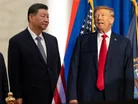
Global technology supply chains face unprecedented disruption as trade tensions escalate between major manufacturing nations, the US and China.
The sector, which has benefited from two decades of increasing international cooperation, now confronts new barriers under US President Trump that could slow the adoption of renewable energy technologies and electric vehicles.
The global technology industry relies heavily on complex international supply networks, with different nations specialising in specific components from semiconductors to batteries.
China produces batteries and solar panels, while European manufacturers focus on wind turbines and electric vehicles and North American companies contribute advanced grid technologies and steel components.
However, this integrated system, which has driven down costs and accelerated technological development, now faces challenges from a new wave of protectionist trade policies – as President Trump's implementation of a 10% tariff on Chinese imports marks a shift in global trade relations.
North American trade relations show signs of strain
Planned 25% tariffs on Canadian and Mexican imports have been temporarily suspended following discussions with Canadian Prime Minister Justin Trudeau and Mexican President Claudia Sheinbaum.

Both nations agreed to enhance border security measures, focusing on illegal immigration and drug trafficking concerns.
Canada and Mexico are significant producers of steel used in wind turbines and electric vehicles and both countries also manufacture energy grid technologies.
Market analysts suggest that reduced imports due to tariffs could lead manufacturers to increase prices globally to maintain profit margins.
Trade restrictions impact battery technology supplies
After the imposition of the tariffs, China immediately filed a complaint with the World Trade Organisation (WTO), with the Chinese Ministry of Commerce suggesting that the tariffs are of a “malicious nature”.
Despite this, Trump has made it clear this is only the beginning, calling his initial tariff spree an “opening salvo”, warning that, if he doesn’t agree with the negotiations, tariffs on China could become “very, very significant”.
China's retaliatory measures include new tariffs on 25 critical minerals, also known as rare earth minerals, which are essential components in lithium-ion batteries.
The International Energy Agency reports that Chinese manufacturers produce 75% of global lithium-ion batteries, which power everything from electric vehicles to smartphones and laptops.
David Victor, Professor of Innovation and Public Policy at the University of California, San Diego, says: "It probably slows down the energy transition because it drives up costs, especially the tariffs on China, and creates chaos in supply chains".
Meanwhile, investment bank Lazard's research indicates that energy storage costs decreased by 89% between 2009 and 2024, while offshore wind project costs fell by 65% – these price reductions were achieved through international trade and competition.
Additionally, the renewable energy sector's growth has relied on trade mechanisms including subsidiaries, feed-in tariffs and competition from international markets – and these factors have been particularly significant in reducing solar technology costs.
Supply chain implications
As one of the world's largest economies, US trade policies influence global supply chains. Reduced imports due to tariffs could prompt manufacturers in Canada, Mexico and China to increase prices in other markets to maintain revenue.
Gernot Wagner, Climate Economist at the Columbia Business School, says: "It is highly disruptive to the global supply chain and of course the clean energy one as well".
Before Trump's tariff announcement, China had begun considering restrictions on battery technologies and critical minerals exports and these materials are crucial components in electric vehicles and energy storage systems that support renewable power generation.
Explore the latest edition of Technology Magazine and be part of the conversation at our global conference series, Tech & AI LIVE.
Discover all our upcoming events and secure your tickets today.
Technology Magazine is a BizClik brand