How Nvidia Posted a 69% Revenue Surge Despite China Setback
For a brief period in 2024, between June and October, Nvidia was the world’s most valuable company.
A strong end to the year put its rival Apple back atop its perch, but Nvidia may be about to claw back supremacy.
The tech powerhouse, run by CEO Jensen Huang, has reported record quarterly revenue of US$44.1bn for Q1 of fiscal 2026, which is a 69% increase from the same period last year.
Nvidia’s financial performance reflects the extraordinary global demand for AI infrastructure.

The California-based company’s data centre revenue reached US$39.bn (up 73% year-on-year) – a display of Nvidia’s utter dominance in AI computing hardware.
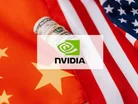
With all that said, the results could have been even more spectacular if not for the regulatory headwinds that Nvidia has had to endure since the new year, with US export restrictions significantly impacting the firm’s extensive trade with China.
“Nvidia just reported a very strong quarter, showing it's still leading the way in AI chips, even with some global challenges,” says Kate Leaman, Chief Market Analyst at AvaTrade.
Export controls create US$4.5bn charge
On 9 April 2025, Nvidia was informed by the US government that export licences would be required for all its H20 products destined for China, as the trade war between the two global superpowers kicked into gear.
It forced the company to take a US$4.5bn charge related to excess inventory and purchase obligations as demand for its H20 portfolio fell.
Prior to the new licensing requirements, H20 sales had reached US$4.6bn in the first quarter of 2025.
The regulations prevented Nvidia from shipping an additional US$2.5bn worth of H20 revenue – a huge sum.
Without this charge, Nvidia’s non-GAAP gross margin would have been 71.3% rather than the reported 61%.
CEO Jensen Huang’s outlook
Despite these challenges, Jensen Huang, Founder and CEO of Nvidia, is very positive about current market conditions and his company’s position in the tech economy.
"Our breakthrough Blackwell NVL72 AI supercomputer — a 'thinking machine' designed for reasoning — is now in full-scale production across system makers and cloud service providers,” he says.
"Global demand for Nvidia's AI infrastructure is incredibly strong. AI inference token generation has surged tenfold in just one year, and as AI agents become mainstream, the demand for AI computing will accelerate."
More than most, Jensen is qualified to speak on the way AI will shape life on Earth in the coming years.
In time, he believes it will become fundamental infrastructure, as essential to modern life as electricity or the internet.
"Countries around the world are recognising AI as essential infrastructure — just like electricity and the internet — and Nvidia stands at the centre of this profound transformation," he explains.
Countries around the world are recognising AI as essential infrastructure — just like electricity and the internet — and Nvidia stands at the centre of this profound transformation.
Nvidia’s gaming division delivers
AI infrastructure wasn’t the only area in which Nvidia recorded huge successes.
The firm’s gaming division achieved record first-quarter revenue of US$3.8bn – up 48% from the previous quarter and up 42% year on year.
This performance exceeded expectations as the company continues expanding its gaming portfolio with its new RTX 5070 and RTX 5060 graphics cards.
The Nintendo Switch 2 announcement, featuring Nvidia processors and AI-powered DLSS technology, represents a significant design win for the company.
Professional visualisation revenue reached US$509m, whilst automotive revenue hit US$567m, up 72% year-on-year.

The future is bright in spite of tariffs
Looking ahead to the second quarter of fiscal 2026, Nvidia expects to record revenue of US$45bn, give or take 2%.
This outlook incorporates an approximately US$8bn loss in H20 revenue due to the export control limitations.
Overall, the company expects its gross margin to be in the mid-70% range.
The regulatory challenges highlight the geopolitical complexities facing technology companies operating in global markets, particularly those providing advanced computing capabilities.
The trading headwinds are not insignificant, of course, but when viewing Nvidia’s balance sheet it’s hard not to see its regulation-related losses as little more than a drop in the ocean.
What is arguably even more important is that the company’s position in the global AI ecosystem seems more secure than ever and the diversity in its portfolio is making it stronger than ever before.
“Nvidia had a standout quarter. Even with political and trade issues, it's leading the AI boom,” says Kate.
Explore the latest edition of Technology Magazine and be part of the conversation at our global conference series, Tech & AI LIVE.
Discover all our upcoming events and secure your tickets today.
Technology Magazine is a BizClik brand